Cricket Betting With Crypto in Nigeria: Formats, Totals Maths, Chase Odds, WAT Match Times and USDT vs Bitcoin Stakes
Welcome bonus for new players + fast crypto payouts. Just helping a brother out.
18+. Crypto deposits. Cloudbet is licensed in Curaçao, not in Nigeria. Ad: we may earn a commission. Bet only what you can afford to lose.
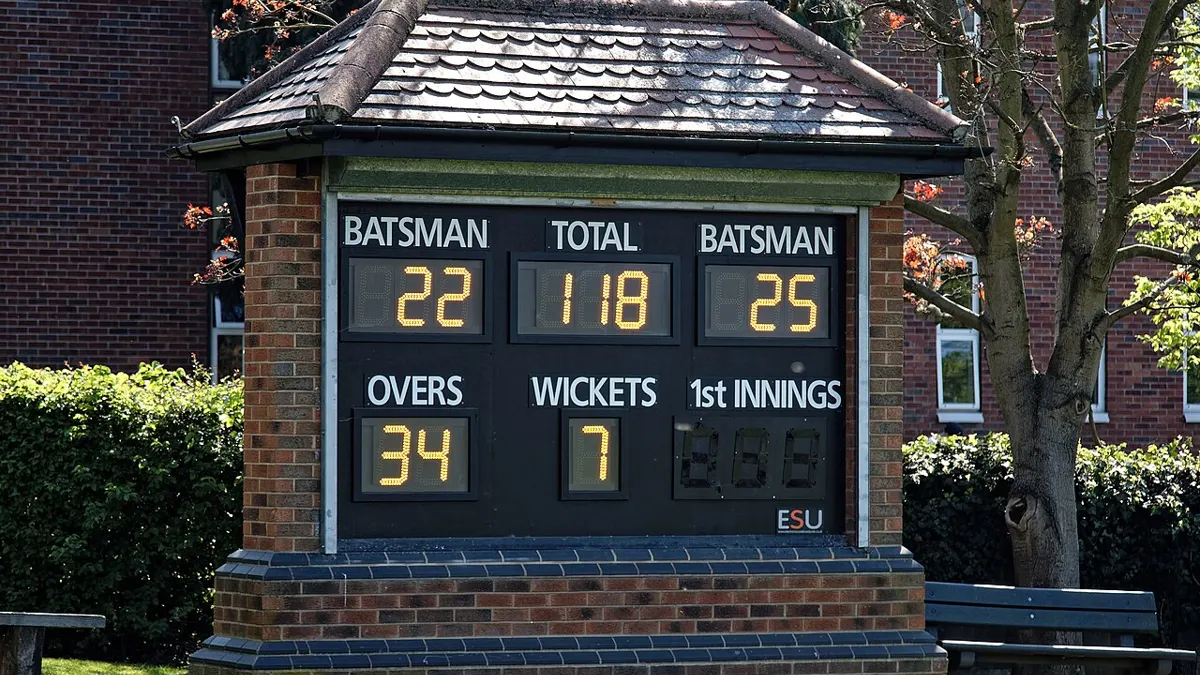
My guy, if you've only ever bet football, cricket can look like a different planet: five-day matches that end in a draw, rain rules with a formula named after three people, and scores like 187 for 6. But once you understand it, cricket is one of the most interesting sports to bet with crypto, because far fewer Nigerian punters study it properly. In this guide I'll walk you through the formats, the main markets, how to price totals and chases with simple numbers, how rain and ties settle, what time the big leagues play in Lagos, and the crypto side most guides skip: why the coin you stake with changes your results, and how network fees quietly eat small deposits.
Betting is for adults 18 and over. Teams here are A and B, and every price, probability, venue average and naira figure is a made-up example to explain the method, not a tip on any real match. Cloudbet, the sportsbook we mention, is licensed in Curaçao and not licensed by any Nigerian state regulator. No strategy guarantees a profit.

The quick answer
Yes, you can bet on cricket with crypto from Nigeria. International crypto sportsbooks list cricket next to football and basketball, and you fund the account with coins like USDT, Bitcoin or Ethereum instead of naira cards or bank transfers. But cricket is not football with a different ball. The formats are different, the markets are different, the settlement rules around rain and ties are different, and the coin you stake with quietly changes your results too.
So this guide does two jobs at once. First, it explains cricket betting properly for someone who grew up on football: formats, markets, totals, chases, rain rules, top batter bets and live betting. Second, it explains the crypto side the way a friend would: which coin to stake in, what network fees do to small deposits, why a Bitcoin stake can win the bet and still lose you money, and how to keep a clean record. Every number in the tables was worked out by script, and every price, team and naira figure is a made-up example to show the method, not a tip.
- Formats: Tests, One-Day Internationals, T20s and the shorter novelty formats behave very differently for betting.
- Markets: match winner, totals, top batter, method of dismissal, session and powerplay runs, and outrights.
- Maths: break-even, bookmaker margin, total-runs probabilities and required run rates in a chase.
- Rules: rain-reduced matches, the Duckworth–Lewis–Stern method, ties, Super Overs and draws.
- Crypto: stablecoin versus Bitcoin stakes, network fees, wrong-network mistakes and withdrawals.
- Staking: simulated seasons, Kelly sizing and why accumulators bleed money faster in cricket.
Why cricket is worth a Nigerian punter's attention
Most of us in Nigeria were raised on the Premier League, the Super Eagles and NPFL. Cricket feels foreign. That is exactly why it can be interesting. A big chunk of the world's betting volume on cricket comes from South Asia, and bookmakers price the major matches well. But there are hundreds of smaller matches every year, across franchise leagues, domestic tournaments and associate nations, where the prices are set with less attention. If you take the time to learn the sport, you are not competing with every Lagos punter who has an opinion on Arsenal.
Cricket also has a rhythm that suits careful betting. A T20 match lasts about three and a half hours. An ODI takes most of a day. A Test can take five days. In between balls there is time to think, and there are natural break points (end of the powerplay, the innings break, lunch and tea in Tests) where the situation is clear and you can decide calmly.
Nigeria has its own cricket story too. The national teams are run by the Nigeria Cricket Federation and play in African and ICC qualifying events, and the women's side has built a following. You may not find many markets on Nigerian matches, but if you follow the sport, those are the games where you will feel closest to the action. Don't expect bookmakers to price them; when they do, the limits will be small and the margins wide.
Cricket for football people, in five minutes
If you have never sat through a match, here is the minimum you need before you stake a single satoshi.
- Two teams of eleven take turns. One team bats and tries to score runs; the other bowls and fields and tries to get ten batters out. Then they swap.
- An over is six legal balls bowled by one bowler. Wides and no-balls add a run and don't count as legal balls.
- An innings ends when ten wickets fall or the overs run out (in limited-overs cricket). In Tests, a team can also declare.
- Runs come from running between the wickets, hitting the ball to the boundary (four runs along the ground, six runs over the rope in the air) and extras.
- Wickets fall by being bowled, caught, leg before wicket (LBW), run out, stumped and a few rarer ways.
- The team batting second chases a target. They win as soon as they pass the first team's total. If they fall short when the overs or wickets run out, the bowling side wins.
That last point is the heart of limited-overs betting. The second innings is a race between runs needed and balls left, with wickets as the safety margin. Most live betting and many pre-match opinions come down to how teams handle a chase.
The formats and what each one means for your bets
The single most important thing to check on any cricket bet is the format. A team that is brilliant in T20s can be ordinary in Tests, and the markets themselves change shape.
| Format | Length | Can it be a draw? | Betting character |
|---|---|---|---|
| Test match | Up to five days, two innings each | Yes, often | Three-way match odds, weather and pitch matter hugely, long swings in price |
| One-Day International (ODI) | 50 overs per side | No (ties are rare) | Totals around the 250–330 range in many conditions, steadier than T20 |
| T20 (international and franchise) | 20 overs per side | No, a tie usually goes to a Super Over | High variance, fast live markets, the most betting volume |
| The Hundred | 100 balls per side | No | Like T20 but shorter; check how the bookmaker defines "overs" or sets of balls |
| T10 and other short events | 10 overs per side | No | Very random; treat it as entertainment, not a strategy |
Here is how I'd think about each one as a punter in Nigeria.
Tests reward patience and homework. The draw is a real outcome, so the match market has three prices, and weather forecasts matter more than in any other sport you know. If rain wipes out a day, the draw shortens fast. Pitches change over five days, usually getting harder to bat on as cracks appear and spinners get more grip. That is why the side batting last is often at a disadvantage.
ODIs are the middle ground. Fifty overs is long enough that the better side usually wins, but short enough that one great innings can flip it. The totals markets are more predictable than in T20 because there is more time for things to average out.
T20s are where most of the action is, and where most punters lose. Twenty overs leave little room for the better team's quality to show. A single over can swing 20 runs. That randomness means you need bigger edges to bet, and smaller stakes for each bet.
The Hundred, T10 and other short events push the randomness further. Fine for fun, but don't let a short format fool you into thinking you've found a pattern after a few wins.
The competitions you'll see on the board
You will see dozens of competitions listed, but most of the betting liquidity sits in a handful. Months below are typical windows only; schedules move, especially around international tours and big tournaments, so always check the official fixture list.
| Competition | Where | Format | Usual window |
|---|---|---|---|
| ICC men's and women's World Cups and T20 World Cups | Rotating hosts | ODI or T20 | Varies by edition |
| Indian Premier League (IPL) | India | T20 | Roughly March to May |
| Big Bash League (BBL) | Australia | T20 | Roughly December to January |
| SA20 | South Africa | T20 | Roughly January to February |
| Pakistan Super League (PSL) | Pakistan | T20 | Has moved around; check each season |
| The Hundred | England | 100-ball | Roughly July to August |
| Caribbean Premier League (CPL) | West Indies | T20 | Roughly August to September |
| Bilateral Test, ODI and T20 series | All over | All formats | All year |
The big leagues have the tightest prices and the most information. Smaller domestic competitions have softer prices but also lower limits and, sometimes, integrity concerns (more on that later).
Match times in Nigeria (WAT)
Nigeria runs on West Africa Time, one hour ahead of UTC, and we don't change our clocks. Cricket countries do change theirs (or don't) on their own schedules, so the gap moves during the year. Here is how typical start times convert. The local start times are common examples, not a fixture list.
| Where the match is | Local time zone | Gap to Nigeria | Example local start | In Lagos and Abuja |
|---|---|---|---|---|
| India | IST (UTC+5:30, no daylight saving) | 4 h 30 min ahead | 7:30 PM evening game | 3:00 PM |
| India | IST | 4 h 30 min ahead | 3:30 PM afternoon game | 11:00 AM |
| Pakistan | PKT (UTC+5) | 4 h ahead | 8:00 PM | 4:00 PM |
| South Africa | SAST (UTC+2) | 1 h ahead | 5:30 PM | 4:30 PM |
| England, summer | BST (UTC+1) | Same time | 6:30 PM | 6:30 PM |
| Sydney or Melbourne, southern summer | AEDT (UTC+11) | 10 h ahead | 7:15 PM | 9:15 AM |
| Perth, all year | AWST (UTC+8) | 7 h ahead | 6:00 PM | 11:00 AM |
| New Zealand, southern summer | NZDT (UTC+13) | 12 h ahead | 7:00 PM | 7:00 AM |
| Barbados, Trinidad, Guyana | UTC−4 | 5 h behind | 7:00 PM | 12:00 AM (midnight) |
| Jamaica | UTC−5 | 6 h behind | 7:00 PM | 1:00 AM |
This is honestly good news. Indian evening games land in our afternoon, South African and English evening games land in our evening, and Australian night games land in our morning. Only Caribbean night games force you to stay up. If you plan to bet live, choose competitions whose matches fall in your waking hours. Half-asleep live betting at 1 AM is how people blow a week's budget.
Odds, break-even and margin before anything else
Every cricket bet is a price, and the price only makes sense against a probability. For decimal odds, the break-even win rate is 1 divided by the odds:
| Decimal odds | Win rate you need to break even |
|---|---|
| 1.40 | 71.43% |
| 1.60 | 62.50% |
| 1.80 | 55.56% |
| 1.90 | 52.63% |
| 2.00 | 50.00% |
| 2.20 | 45.45% |
| 2.60 | 38.46% |
| 3.00 | 33.33% |
Now add the two prices in a two-way match market together (as implied probabilities) and you see the bookmaker's cut. Remove it and you get the fair price:
| Team A odds | Team B odds | Book total | Fair chance A | Fair odds A / B |
|---|---|---|---|---|
| 1.80 | 2.00 | 105.56% | 52.6% | 1.90 / 2.11 |
| 1.50 | 2.55 | 105.88% | 63.0% | 1.59 / 2.70 |
| 1.25 | 3.80 | 106.32% | 75.2% | 1.33 / 4.04 |
| 1.90 | 1.90 | 105.26% | 50.0% | 2.00 / 2.00 |
The fair-price method here simply shares the margin out in proportion; real books often load more margin on the outsider, so treat the fair numbers as a rough guide. The lesson stays the same: a 5% to 6% margin on a two-way market is normal, and you need to beat it before you make a kobo. Compare prices across a couple of sites before you bet, because a move from 1.80 to 1.87 on the same outcome is worth more than most "tips" you will ever read. If decimal odds are new to you, our guide to decimal odds and the odds calculator will help.
Match winner markets, format by format
The match winner (sometimes called "match odds" or "to win") is the simplest cricket bet. But how it settles depends on the format and the bookmaker's rules.
Limited-overs match winner
In ODIs and T20s there are usually only two outcomes, because ties are rare and T20 ties are typically settled by a Super Over. Read the market rules: some books settle on the official result including the Super Over, while others treat a tie in the main match as a dead heat (paying half your stake at full odds and losing the other half) for markets that don't include the Super Over. If a match is abandoned without a result, most books void match winner bets, but the exact rule can vary.
Test match odds: the three-way market
Tests have three outcomes: Team A wins, Team B wins, or the draw. Here is a made-up example to show how the margin hides in three prices:
| Outcome | Odds | Fair chance after removing margin | Fair odds |
|---|---|---|---|
| Team A | 2.40 | 40.3% | 2.48 |
| Draw | 3.40 | 28.5% | 3.51 |
| Team B | 3.10 | 31.2% | 3.20 |
The three prices add up to a book of 103.34%, so this particular market is quite tight. In real life the draw price is the part to think hardest about. It depends on weather, pitch, how quickly each side scores and whether the match starts on time. A Test with two rain-affected days and a flat pitch can make the draw the favourite, even when one team is clearly stronger.
Tests also have the "draw no bet" market at some books, which removes the draw and refunds you if it happens. It is a handy way to back a stronger team in a match where weather worries you, but the price is lower to pay for the refund.
Totals: pricing team runs with a simple model
Totals markets ask whether a team will score over or under a line, like 160.5 runs in a T20 innings. Here's a straightforward way to think about them. Imagine the first-innings total in a certain ground and set of conditions is roughly bell-shaped around an average, with some spread. You don't need to be perfect; you need a consistent method you can check against the line.
Below are two made-up "venues". Venue X averages 165 with a spread (standard deviation) of 22 runs. Venue Y is a batting paradise averaging 180 with a spread of 24. Here is the chance of going over common lines:
| Line | Venue X (avg 165, spread 22) | Venue Y (avg 180, spread 24) |
|---|---|---|
| Over 155.5 | 66.7% | 84.6% |
| Over 160.5 | 58.1% | 79.2% |
| Over 165.5 | 49.1% | 72.7% |
| Over 170.5 | 40.1% | 65.4% |
| Over 175.5 | 31.7% | 57.4% |
| Over 180.5 | 24.1% | 49.2% |
Two things jump out. First, a five-run move in the line changes the probability by around eight or nine percentage points near the middle. That's a lot, which is why line shopping matters more in totals than almost anywhere else. Second, the venue average does most of the work. If you know a ground plays 15 runs higher than average and the book hasn't adjusted, that is where an edge comes from.
A worked example: at Venue X, a book offers over 160.5 at 1.90 and under at 1.90. Your model says over has a 58.1% chance, so the fair odds are about 1.72 for the over and 2.39 for the under. At 1.90 the over would be worth about +10.4% in expected value, and the under about −20.4%. Sounds great, but be honest with yourself: bookmakers set lines very close to the true middle in big leagues. A gap that large usually means your model is missing something (team news, a slow pitch, dew forecast, a new ball rule) rather than that you've found free money.
For ODIs, the same idea applies with bigger numbers. With an average of 270 and a spread of 40, the chance of going over 250.5 is 68.7%, over 270.5 is 49.5%, and over 290.5 is 30.4%. Note how the spread is wider in absolute runs, but relative to the total, ODI scores are less wild than T20 scores.
Powerplay and session runs
Many books offer lines on the first six overs of a T20 innings (the powerplay, when fielding restrictions apply) or on other blocks of overs. These shorter markets move fast and depend heavily on the opening batters and the new-ball bowlers. Using a made-up average of 48 runs with a spread of 9:
| Powerplay line | Chance of going over |
|---|---|
| Over 42.5 | 72.9% |
| Over 45.5 | 60.9% |
| Over 48.5 | 47.8% |
| Over 51.5 | 34.9% |
The tighter the window, the more one event matters. Two early wickets can kill a powerplay total, and one aggressive opener can blow it open. Treat these as smaller-stake bets. In Tests, books sometimes offer "session runs" between lunch and tea, which are driven by pitch, weather and the match situation (a team trying to save a draw will bat slowly on purpose).
Top batter, top bowler and player markets
"Top team batter" asks which player will score the most runs for one team. "Top team bowler" asks who will take the most wickets. These markets are popular because they feel like you're backing a person, not a team, and the prices look big.
But look at what a typical board does to you. Here is a made-up top batter market for one team, with eleven prices: 4.0, 4.5, 5.0, 6.0, 7.0, 9.0, 11.0, 15.0, 21.0, 26.0 and 34.0. Add up the implied probabilities and the book comes to 136.6%. That's a margin of more than a third. Compare that with a match winner market at 105% or 106%. In plain terms, top batter boards are expensive, and you need a strong, specific reason to bet them.
Things that matter in these markets:
- Batting order. Openers face the most balls on average. A number seven might not bat at all. Always check the confirmed line-up, which usually comes out at the toss.
- Dead-heat rules. If two batters tie on top score, most books apply dead-heat rules, cutting your payout. Read the rule.
- Non-runners. If your player doesn't play, the bet is usually void, but if he plays and doesn't bat, it usually stands and loses. That catches people every season.
- Role changes. A batter promoted up the order for one match changes the whole picture. Watch team news closely.
Player props like "runs over or under 24.5" or "to score a fifty" are often better than the top batter board, because they are two-way markets with smaller margins. The same homework applies: role, conditions, bowling attack and recent workload.
The toss, the pitch and dew
Cricket has a coin toss that decides who bats first, and people love to bet around it. The toss itself is a coin flip, so don't pay a margin to guess it. What matters is what the toss tells you about the match.
- Chasing versus setting. At some grounds, especially for night matches in humid places, dew makes the ball wet and hard to grip in the second innings. Bowling gets harder, so teams prefer to chase. If a team wins the toss and bats first anyway, ask why.
- Pitch type. Green, grassy pitches help seam bowlers early. Dry, cracked pitches help spinners later. Flat pitches favour batters all match long. Pitch reports before the match are worth reading.
- Ground size. Short boundaries mean more sixes and higher totals; large grounds favour bowlers and running between the wickets.
- Weather. Overcast skies can help swing bowling. Rain brings in the settlement rules below.
The best pre-match bets often come in the minutes after the toss and line-ups. Prices adjust, but sometimes slowly at smaller books, and you have new information that you didn't have an hour earlier.
Rain, Duckworth–Lewis–Stern, ties and abandoned matches
This is the section that saves you from angry messages to customer support. Cricket has more weather and settlement quirks than any sport you know.
Rain-reduced limited-overs matches
When rain cuts overs in an ODI or T20, the official result can be decided using the Duckworth–Lewis–Stern (DLS) method, which sets a revised target based on the resources (overs and wickets) each team had. For match winner bets, books usually settle on the official result, as long as a result is declared. If there's no result, the bet is usually void.
Totals markets are trickier. Many books void innings runs or match runs bets if the scheduled overs are reduced after the bet was placed, unless the result was already determined. Others have different cut-offs. Read the rules page for the specific sportsbook before you bet totals in the rainy season of any country.
Ties and Super Overs
In T20 cricket, a tie usually leads to a Super Over: each team bats one over, and the higher scorer wins. Whether the Super Over counts for your bet depends on the market and the book. Many match winner markets include it; many totals and player markets only count the main match. When in doubt, ask support before betting, not after.
Draws in Tests
A Test that runs out of time without a result is a draw, and it settles as a draw in the three-way market. That's different from a "no result" in limited-overs cricket. If you backed Team A in a Test match and it rained for three days, you lose; you don't get a refund unless you took draw no bet.
Abandoned and postponed matches
If a match is abandoned without a ball bowled, or postponed beyond a set time window, bets are usually voided. The time window is a book rule, so check it. Outright bets on a tournament usually stand even if individual matches are abandoned.
Live betting: the chase in numbers
Live cricket betting is exciting, and the second innings of a limited-overs match is where it lives. The key number is the required run rate: runs still needed divided by overs left. Here are some made-up T20 chase positions:
| Target | Overs gone | Score | Runs needed | Required run rate |
|---|---|---|---|---|
| 171 | 10 | 80 | 91 | 9.10 per over |
| 171 | 10 | 90 | 81 | 8.10 per over |
| 171 | 15 | 120 | 51 | 10.20 per over |
| 171 | 15 | 130 | 41 | 8.20 per over |
| 181 | 16 | 140 | 41 | 10.25 per over |
| 181 | 18 | 160 | 21 | 10.50 per over |
The required run rate alone is not enough. Wickets in hand matter just as much. A chasing team needing 10 an over with eight wickets in hand can swing freely; the same team with two wickets left has to protect its last batters. When you see a live price, ask three questions: how many runs per ball are needed, how many wickets are left, and who is still to bat or bowl? Death overs (the last four or five) are usually bowled by the team's best bowlers, so a required rate of 10 might be harder than it looks in the middle overs.
Some practical live rules from experience:
- Don't chase every ball. Prices move after every delivery, and the delay between what you see on a stream and the real action can be several seconds. Books protect themselves against that, so trying to beat them ball by ball is a losing game.
- Bet at break points. End of the powerplay, the innings break and the strategic time-outs in some leagues are calmer moments to reassess.
- Know your number before the match. If you think Team A is 60% before the toss, write it down. Then you can tell whether a live price is a genuine overreaction or just you getting excited.
Our guide to crypto live betting covers the general live discipline in more detail.
Hedging and cash-out, done with a calculator
Say you backed Team A before the match at 2.50 for US$20. Team A starts brilliantly, and now Team B is available at 2.70. If you place a hedge on Team B for about US$18.52, you lock in roughly US$11.48 profit whichever team wins: if A wins, 20 × 2.50 = 50 back, minus your 20 stake and the 18.52 hedge; if B wins, 18.52 × 2.70 = 50 back, minus the same 38.52 total staked.
Cash-out buttons do this for you, but they usually price in another margin. Before you click, work out what a manual hedge would give you and compare. Sometimes cash-out is close to fair; often it isn't. And remember: hedging isn't automatically smart. If your original bet was good value, hedging every time cuts your long-run profit in exchange for less swing. Use it when you genuinely need to lock in money, not because you're nervous.
Outrights: tournament winner bets
Outright markets ask who will win a whole competition, like a franchise league or a World Cup. They tie up your money for weeks, and the margins are usually much bigger than on single matches, because the book has to price every team and can pad each one a little.
When outrights can make sense:
- Before squads are fully priced in. Franchise leagues often have auctions or drafts. If you follow squad building closely, early prices can lag behind reality.
- Format quirks. Some leagues reward finishing top of the table with an extra chance in the playoffs. Teams that are likely to finish first or second are worth more than their raw strength suggests.
- Each-way or top-four style markets. These can be better value than outright winner prices in big fields, but check the terms.
When they don't make sense: when you're just backing your favourite team for fun at a short price. Your money is locked up, your coin may move in value while you wait (more on that below), and the margin is heavy.
Accumulators: why cricket punishes them
Football punters in Nigeria love a big acca. In cricket, it's even more dangerous, because limited-overs results are noisier and the margins stack up. Take a made-up example where every leg is a two-way market at 1.80 against 2.00, so the fair chance of each favourite is about 52.6%.
| Number of legs at 1.80 | Expected return per bet |
|---|---|
| 1 (single) | −5.3% |
| 2 | −10.2% |
| 3 | −15.0% |
| 4 | −19.4% |
| 5 | −23.7% |
| 6 | −27.7% |
A three-leg acca at 1.80 each pays 5.83, which feels exciting. But the true chance of landing all three is about 14.6%, so on average you lose about 15% of your stake each time. Every leg you add multiplies the bookmaker's edge. If you're going to play accas, keep them to two or three legs you'd happily back as singles, and stake less than you would on a single. Our guide on accumulator bets goes deeper.
18+. Crypto deposits. Cloudbet is licensed in Curaçao, not in Nigeria. Ad: we may earn a commission. Bet only what you can afford to lose.
Funding cricket bets with crypto: the part most guides skip
Here's where the crypto side really changes your results. Most crypto sportsbooks let you deposit in several coins and bet in that coin, or show your balance in a currency of your choice. That sounds like a small detail. It isn't.
Stablecoin versus Bitcoin stakes
A stablecoin like USDT is designed to track the US dollar. Bitcoin floats freely. When you bet in Bitcoin, you are making two bets at once: one on the cricket, one on the Bitcoin price. Here's a made-up example. You stake 0.001 BTC at odds of 1.90 when Bitcoin is worth US$60,000, so your stake is worth US$60. You win, and you get back 0.0019 BTC. What that's worth depends on where Bitcoin is when you check:
| Bitcoin price when you check | Value of 0.0019 BTC returned | Gain versus US$60 starting value | Same bet in USDT, profit |
|---|---|---|---|
| US$54,000 | US$102.60 | US$42.60 | US$54.00 |
| US$57,000 | US$108.30 | US$48.30 | US$54.00 |
| US$60,000 | US$114.00 | US$54.00 | US$54.00 |
| US$63,000 | US$119.70 | US$59.70 | US$54.00 |
| US$66,000 | US$125.40 | US$65.40 | US$54.00 |
And if you lose, your 0.001 BTC is gone either way, whether Bitcoin is at US$54,000 or US$66,000. The point: if you want to judge whether your cricket betting works, stake in a stablecoin. Otherwise Bitcoin's swings hide your real results. A good month on the pitch can look bad because Bitcoin fell, and a bad month can look fine because Bitcoin pumped. Outrights make this worse, because your money sits in the market for weeks.
Network fees on small deposits
Every on-chain transfer pays a network fee, and some exchanges and sportsbooks add their own withdrawal charges. On small amounts, fees eat a big slice. Here's what a fixed fee does to different deposit sizes (fee amounts are made-up examples):
| Deposit | US$0.50 fee | US$1 fee | US$2 fee |
|---|---|---|---|
| US$10 | 5.00% | 10.00% | 20.00% |
| US$20 | 2.50% | 5.00% | 10.00% |
| US$50 | 1.00% | 2.00% | 4.00% |
| US$100 | 0.50% | 1.00% | 2.00% |
| US$200 | 0.25% | 0.50% | 1.00% |
Compare that with the bookmaker's margin of around 5% on a match winner market. A US$1 fee on a US$10 deposit costs you twice the bookmaker's cut before you even place a bet. So deposit less often in bigger chunks you've budgeted for, rather than topping up US$10 at a time. For rough naira context only, at a made-up rate of ₦1,500 per US$1, US$10 is ₦15,000, US$20 is ₦30,000, US$50 is ₦75,000 and US$100 is ₦150,000. Your real rate will differ.
Pick the right network, every time
USDT exists on several blockchains. TRON (TRC-20), Ethereum (ERC-20) and others each have different fees and speeds. The address format and the network you choose on the sending side must match what the sportsbook's deposit page says. Send USDT on the wrong network and the funds can be lost or stuck, and recovery, if it's possible at all, is slow and sometimes charged.
- Copy the deposit address fresh from the cashier every time; don't reuse an old one from your notes.
- Check the network name on both screens before you press send.
- If a memo or tag is required, include it.
- For your first deposit at any site, send a small test amount, wait for it to arrive, then send the rest.
Our step-by-step guides on crypto deposits and depositing Bitcoin at Cloudbet walk through the screens.
Getting crypto in the first place
Many Nigerians buy USDT through exchange peer-to-peer (P2P) markets, where you pay a seller in naira and the exchange holds the crypto in escrow until you confirm. If you go that route, only use the exchange's built-in escrow, only release or pay inside the platform's flow, never settle trades on WhatsApp or Telegram, and check that the name on the bank account matches the seller's verified name. P2P buy and sell rates differ, so the round trip from naira to USDT and back costs you a spread on top of any fees. Keep your trade receipts; you'll want them for your own records and if a bank ever asks questions.
Withdrawals
Withdrawals are where you find out whether a sportsbook is worth using. At Cloudbet, per its help centre when we checked, the minimum withdrawal varies by coin, the network fee is shown before you confirm, and withdrawals are typically processed within 24 hours. Its terms also say that once your cumulative deposits reach around US$2,200, you have to complete identity checks (ID, proof of address and a face check) to lift limits. Rules change, so read the current terms before you deposit. For a fuller picture of timings, see our page on Cloudbet withdrawal times in Nigeria and our wider guide to crypto withdrawals at betting sites.
A good habit: withdraw profits regularly instead of leaving everything in the sportsbook. Money sitting in your betting balance has a way of getting re-staked.
What to look for in a crypto sportsbook for cricket
Not every crypto sportsbook treats cricket seriously. Some list the big leagues and nothing else; others cover domestic competitions and women's cricket in depth. Before you deposit anywhere, run through this list:
| What to check | Why it matters for cricket | How to check |
|---|---|---|
| Licence and terms | Tells you who regulates the site and what rules you're agreeing to | Footer of the site and the terms page |
| Cricket coverage | You want the formats and competitions you actually follow | Browse the cricket section before signing up |
| Margins on match odds | Lower margins mean better long-run returns | Add up implied probabilities on a few matches |
| Rain, tie and Super Over rules | Decides how your bets settle in the messy cases | Sports rules page, cricket section |
| Live markets and suspensions | Cricket live markets suspend often; you want them back quickly | Watch a live match on the site before betting |
| Coins and networks | Cheap networks for USDT save you money on every deposit | Cashier or deposit page |
| Withdrawal minimums and timing | Small minimums and quick processing keep your money flexible | Help centre and terms |
| Identity checks | Know when you'll be asked for ID before it surprises you mid-withdrawal | Terms and verification pages |
| Responsible gambling tools | Deposit limits, time-outs and self-exclusion keep you in control | Account settings or responsible gambling page |
If a site can't answer these questions clearly, or support dodges them, move on. There's no shortage of places to bet. For a broader look at how crypto prices compare with traditional books, read our guide to crypto betting odds.
Cricket markets at a glance
Here's a quick map of the most common cricket markets, how they usually settle and how I'd rate them for a learner. "Margin" is a rough guide from typical boards, not a promise about any site.
| Market | What you're betting on | Typical margin | Learner rating |
|---|---|---|---|
| Match winner (limited overs) | Which team wins, usually including any Super Over | Low | Good place to start |
| Test match odds | Team A, Team B or the draw | Low to medium | Good once you understand weather and pitches |
| Draw no bet | Team wins, refund on a draw | Low to medium | Useful in rain-threatened Tests |
| Innings runs over/under | Total runs in one innings | Low to medium | Good if you study venues |
| Powerplay or session runs | Runs in a block of overs | Medium | Small stakes only |
| Player runs over/under | One batter's score | Medium | Decent with line-up homework |
| Top team batter or bowler | Best performer in a team | High | Mostly for fun |
| Method of dismissal and specials | How a wicket falls, number of sixes and so on | High | Entertainment only |
| Outright winner | Tournament champion | High | Small, early, well-researched bets only |
A weekly routine that keeps you sharp
The punters who last are the ones with a routine, not the ones with the hottest tips. Here's a simple weekly rhythm that works around a normal Nigerian working week:
- Sunday evening: look at the coming week's fixtures in the one or two competitions you follow. Note which matches fall in your waking hours in WAT.
- Before each match day: check venue history, recent totals, team news and weather. Write down your rough probabilities and totals.
- At the toss: confirm line-ups, compare with your notes, and only then decide whether to bet. Place pre-match bets in USDT at sensible stakes.
- During the match: if you bet live, do it at the break points, and only if the price is clearly away from your number.
- After the match: log the result and the closing price. Don't add a new bet to "win it back".
- End of the month: review your record, withdraw some profit if you have any, and adjust your budget for next month.
Specialise. It's far better to know one league inside out than to throw money at every match on the board. If you also follow other sports, the same approach applies; for example, our guide on how to bet on tennis in Nigeria uses a similar routine for another sport that runs in our daytime.
Build a simple rating before you bet
You don't need a fancy computer model to bet cricket sensibly. You need a repeatable way to turn what you know into a probability, so you can compare it with the price. Here's a simple routine I'd suggest for limited-overs matches:
- Start from the market. Remove the margin from the match odds to get the fair split. That's your starting point, because the market already knows a lot.
- Adjust for things you know better. Confirmed line-ups, a key bowler missing, a pitch that's been playing slow all tournament, a dew forecast, a team that's travelled overnight. Each adjustment should be small, a couple of percentage points at most, unless the news is huge.
- Write your final number down before you look at the price again.
- Bet only if the gap is big enough. A 1% edge isn't worth the risk in T20s. Look for at least 3% to 5% in expected value, and more in the noisiest formats.
For totals, do the same with the venue average. Here's why the average matters so much. At a made-up venue with a spread of 22 runs, here's the chance of going over 165.5 depending on what the true average really is:
| True average total | Chance of over 165.5 | Fair odds for the over |
|---|---|---|
| 160 | 40.1% | 2.49 |
| 165 | 49.1% | 2.04 |
| 170 | 58.1% | 1.72 |
| 175 | 66.7% | 1.50 |
A five-run error in your venue average moves the fair price a lot. So be humble about your averages. Use recent seasons at the same ground, adjust for the format and the ball, and don't trust a sample of three matches.
A worked example, start to finish
Let's put it together with a made-up T20 match between Team A and Team B at Venue X, staked in USDT. Again, everything here is invented to show the process.
- Market: Team A 1.80, Team B 2.00. Fair split after margin: about 52.6% / 47.4%.
- Your adjustments: Team B's main strike bowler has been ruled out, and the pitch at Venue X has been helping spinners, where Team A is stronger. You land on 58% for Team A.
- Value check: at 1.80, a 58% chance gives an expected return of +4.4%. Team B at 2.00 would be −16.0% on your numbers, so that side is out.
- Stake size: full Kelly at these numbers would be 5.5% of your bankroll. That's too aggressive for a model you built yourself, so use a quarter of it: 1.375%. On a US$300 bankroll, that's about US$4.13. Round to US$4.
- Coin: USDT, so the result reflects the cricket only.
- Record: write down the date, match, market, odds taken, your probability, stake and result.
If Team A wins, you get back US$7.20 for a US$3.20 profit. If they lose, you're down US$4. Neither result tells you much on its own. What matters is whether, over hundreds of bets, your numbers beat the prices you took.
Staking: what a season of cricket bets really looks like
Cricket seasons are long, and the variance is brutal, especially in T20s. To show what that means, I simulated 20,000 runs of 200 bets each, with a US$300 bankroll and a flat US$10 stake at odds of 1.90:
| True win rate | Average bankroll after 200 bets | Median bankroll | Runs that ended ahead | Runs that went bust along the way |
|---|---|---|---|---|
| 50.00% (a coin flip at 1.90) | US$201.80 | US$200.00 | 21.3% | 11.4% |
| 52.63% (exact break-even) | US$299.20 | US$295.00 | 48.5% | 2.8% |
| 55.00% (a genuinely skilled punter) | US$391.60 | US$390.00 | 74.2% | 0.5% |
Look at the first row carefully. Even a punter with no edge at all ends ahead in more than one in five runs, just through luck. That's why a good month means very little. And even the skilled 55% punter finishes behind in about a quarter of 200-bet stretches. If that happens to you, it doesn't automatically mean your method is broken.
For sizing, the Kelly formula gives a guide. At odds of 1.90, full Kelly suggests staking 0.78% of your bankroll if you win 53% of the time, 5.0% at 55%, and 9.22% at 57%. Almost nobody truly knows their win rate that precisely, so most experienced punters use a quarter or a half of Kelly, or just flat stakes of 1% to 2% of the bankroll. Our staking plan guide explains the options.
Keep records, and judge them honestly
A simple spreadsheet beats memory every time. Memory remembers the big wins and forgets the boring losses. For each bet, log the date, competition, format, market, odds, stake, coin, your estimated probability, the closing odds if you can see them, and the result.
Then judge your results with the right yardstick. Suppose after 40 bets at average odds of 1.90 you've won 23. That's a 57.5% win rate, 3.7 units of profit and a return of 9.25% on turnover. Lovely. But over 40 bets, the natural wobble in a break-even punter's win rate is about 7.9 percentage points either way. After 200 bets it's about 3.5 points, and after 500 bets about 2.2 points. In other words, 40 bets tell you almost nothing. Give it hundreds of bets before you decide you're good, and keep stakes small until then.
A more useful early signal is closing line value. If you regularly take prices that are better than the final price before the match starts (for example, you take 1.95 and it closes at 1.85), you're probably doing something right, even if results haven't caught up yet.
Women's cricket and smaller nations
Women's international and franchise cricket has grown a lot, and so have the betting markets. Prices can be softer because fewer people study them, but limits are often lower and information about line-ups and conditions can be harder to find. The same applies to associate nations, the countries outside the full-member group, which include Nigeria. If you follow these teams closely, you may know more than the book. Just keep stakes small, because thin markets can move sharply on small amounts and limits will cap you quickly.
Integrity: be careful with obscure matches
Cricket has a long history of corruption scandals, from match-fixing to "spot-fixing" of single deliveries, mostly involving illegal betting markets. Governing bodies run anti-corruption units, and most matches are clean. But a few things should make you cautious:
- Very obscure leagues or exhibition events you've never heard of, with live markets that move strangely.
- Markets on single events like a no-ball or wide in a specific over.
- Telegram or WhatsApp groups selling "fixed match" information. These are scams aimed at punters. Nobody with real inside information sells it to strangers for a fee.
If something looks too strange, skip it. There are plenty of normal matches to bet on.
Common mistakes I see Nigerian punters make with cricket
- Betting without knowing the format. Backing a Test specialist team in a T20, or forgetting the draw exists in a Test.
- Ignoring rain rules. Then being shocked when a totals bet is voided or a DLS result settles a match.
- Betting top batter before the line-up is out. Your man is listed at number six, then doesn't bat.
- Staking in Bitcoin without realising it. Then not knowing whether the month was good or bad.
- Tiny, frequent deposits. Paying 5% or 10% in fees before a ball is bowled.
- Six-leg cricket accas. Every leg multiplies the margin, and T20 results are noisy.
- Chasing losses with live bets late at night. Caribbean games at midnight have finished more bankrolls than any bowler.
- Buying "sure" tips. If someone had a guaranteed winner, they wouldn't need your ₦5,000.
Myths worth dropping
- "The toss winner always wins." The toss gives an advantage at some grounds in some conditions. It's a factor, not a verdict.
- "Big totals always get chased on small grounds." Small grounds help both teams. Pressure, wickets and the quality of death bowling still matter.
- "Crypto sportsbooks pay better odds." Some have competitive prices, some don't. The coin doesn't change the margin; compare like for like.
- "Bitcoin stakes are free money when the price rises." They're just a second bet. When the price falls, you lose on that bet too.
Cricket betting glossary
- Powerplay: the opening overs of a limited-overs innings when fielding restrictions apply.
- Death overs: the last few overs of a limited-overs innings, when batters attack hardest.
- Required run rate: runs still needed divided by overs left in a chase.
- DLS: the Duckworth–Lewis–Stern method used to set revised targets in rain-affected limited-overs matches.
- Super Over: a one-over-per-side tiebreaker used in many T20 competitions.
- Draw no bet: a market that refunds your stake if the match is drawn.
- Dead heat: a rule that splits your payout when two selections tie, such as two batters on the same top score.
- Stablecoin: a crypto token designed to track a currency like the US dollar, such as USDT.
- Network fee: the cost of moving crypto on a blockchain, paid to the network, not the sportsbook.
Your checklist before every cricket bet
- Which format is it, and can the match be drawn?
- Have the toss and line-ups been confirmed?
- What do the pitch report and weather say, including dew for night games?
- What's the fair price after removing the margin, and what's your number?
- Is the expected value big enough for the format's randomness?
- Have you read the rain, tie and Super Over rules for this market?
- Are you staking in a stablecoin, on the right network, in a size that fits your bankroll?
- Is the match at a time when you're awake and thinking clearly?
- Have you logged the bet?
Is it legal, and what about tax?
Since the Supreme Court's November 2024 judgment, gambling in Nigeria is regulated by the states, with the national regulator keeping a role in the FCT. Crypto sportsbooks that take players from Nigeria are generally offshore. Cloudbet, which we mention on this site, is licensed in Curaçao and is not licensed by any Nigerian state regulator, so you won't get the protections of a locally licensed operator if there's a dispute. Read our page on whether online betting is legal in Nigeria and decide with your eyes open.
On tax, rules on betting winnings and crypto gains can change, and your situation matters. Keep your records and check with a qualified tax adviser. Our betting tax guide covers the general picture.
Bet responsibly
Cricket can run almost around the clock if you follow every league, and crypto makes deposits fast. That combination is exactly why you need limits. Set a monthly budget you can afford to lose, decide your stake sizes in advance, and never borrow to bet. If betting stops being fun, take a break and talk to someone. Gamble Alert, a Nigerian nonprofit, is available 24/7 on +234 916 295 7989, or toll-free on +234 705 889 0073 and +234 705 889 0074. You can also read our responsible gambling page for tools and tips. Betting is for adults 18 and over.
My take
Cricket betting with crypto can be one of the more thoughtful corners of sports betting for a Nigerian punter, precisely because fewer of us study it. But the edge only comes if you respect the sport's quirks and the crypto plumbing. Learn the formats, read the settlement rules, price totals and chases with a simple method, stake in a stablecoin, deposit in sensible chunks on the right network, and keep honest records. Do that, keep your stakes small while you learn, and cricket becomes a sport you understand, not just another line on a slip. And if you'd rather bet on football you already know, our guide to crypto betting sites in Nigeria is a good place to start.
Questions punters ask
Can I bet on cricket with crypto from Nigeria?
Yes, many international crypto sportsbooks offer cricket markets and accept coins like USDT and Bitcoin. They are offshore and not licensed by any Nigerian state regulator, so read the terms and bet only what you can afford to lose.
Which coin is best for cricket betting?
A stablecoin like USDT is usually best if you want your results to reflect the cricket only. Betting in Bitcoin adds a second bet on the Bitcoin price, which can hide whether your cricket betting is actually working.
What time do IPL matches start in Nigeria?
India is 4 hours 30 minutes ahead of Nigeria. A 7:30 PM evening game in India starts at 3:00 PM in Lagos, and a 3:30 PM afternoon game starts at 11:00 AM. Always check the official fixture list.
What happens to my bet if rain affects a cricket match?
Match winner bets usually settle on the official result, including results decided by the Duckworth–Lewis–Stern method, and are usually void if there is no result. Totals bets are often void if overs are reduced after you bet. Rules differ by sportsbook, so check before you bet.
Does a Super Over count for my bet?
It depends on the market and the sportsbook. Many match winner markets include the Super Over, while many totals and player markets only count the main match. Read the cricket rules page.
Can a cricket match end in a draw?
Test matches can end in a draw if time runs out. Limited-overs matches like ODIs and T20s don't have draws in the same way; ties are rare and T20 ties usually go to a Super Over.
Are top batter bets good value?
Usually not. In our made-up eleven-player example, the board added up to 136.6%, a margin of more than a third. Player runs over/under markets are often cheaper.
Where can I get help if betting stops being fun?
Gamble Alert is available 24/7 on +234 916 295 7989, or toll-free on +234 705 889 0073 and +234 705 889 0074.
18+. Crypto deposits. Cloudbet is licensed in Curaçao, not in Nigeria. Ad: we may earn a commission. Bet only what you can afford to lose.
If betting has stopped being fun, talk to someone. Gamble Alert, a Nigerian non-profit, runs a free, confidential 24/7 helpline: +234 916 295 7989, toll-free +234 705 889 0073 / 0074. Source: gamblealert.org.