Decimal Odds Explained for Nigerian Bettors: Returns, Probability and Margin
Welcome bonus for new players + fast crypto payouts. Just helping a brother out.
18+. Crypto deposits. Cloudbet is licensed in Curaçao, not in Nigeria. Ad: we may earn a commission. Bet only what you can afford to lose.
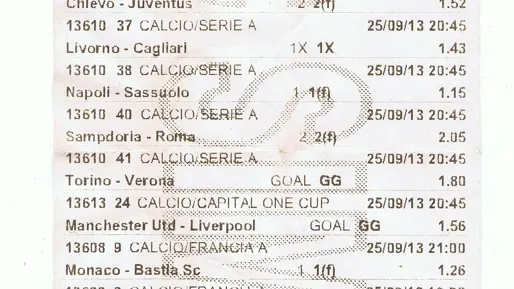
My brother, almost every betting coupon in Nigeria shows decimal odds: 1.45, 2.10, 3.75. Most punters know "bigger number, bigger payout", but stop there. This page is decimal odds explained the Nigerian way: what the number means, how to turn it into naira, how to read the probability inside it, and how to catch the bookmaker's hidden cut so you stop overpaying for the same bet.
18+ only. Since the Supreme Court judgment of 22 November 2024 (SC/1/2008), the National Lottery Act 2005 no longer applies nationwide except in the FCT; states regulate gambling (for example the LSLGA in Lagos), and the NLRC covers the FCT. Cloudbet, which we link for crypto sports betting, is licensed in Curaçao and is not licensed by any Nigerian state regulator. Every price and naira figure below is an illustration, not a tip.
The one-line definition
A decimal price tells you how much comes back to you for every ₦1 staked if the bet wins, including your stake. So odds of 2.50 mean ₦1 returns ₦2.50: your ₦1 back plus ₦1.50 profit. That is the whole idea. Everything else on this page is just using that one rule well.
- Total return = stake × decimal odds
- Profit = stake × (decimal odds − 1)
- Implied probability = 1 ÷ decimal odds
Keep those three formulas in your head and you can read any coupon from any book, in any country.
Quick naira table for a ₦1,000 stake
Here are common prices with returns, profit, implied probability and the same price in fractional and American styles you may see on foreign sites:
| Decimal | Implied % | Fractional | American | Return on ₦1,000 | Profit |
|---|---|---|---|---|---|
| 1.10 | 90.9% | 1/10 | −1000 | ₦1,100 | ₦100 |
| 1.20 | 83.3% | 1/5 | −500 | ₦1,200 | ₦200 |
| 1.25 | 80.0% | 1/4 | −400 | ₦1,250 | ₦250 |
| 1.40 | 71.4% | 2/5 | −250 | ₦1,400 | ₦400 |
| 1.50 | 66.7% | 1/2 | −200 | ₦1,500 | ₦500 |
| 1.60 | 62.5% | 3/5 | −167 | ₦1,600 | ₦600 |
| 1.80 | 55.6% | 4/5 | −125 | ₦1,800 | ₦800 |
| 1.90 | 52.6% | 9/10 | −111 | ₦1,900 | ₦900 |
| 2.00 | 50.0% | 1/1 (evens) | +100 | ₦2,000 | ₦1,000 |
| 2.20 | 45.5% | 6/5 | +120 | ₦2,200 | ₦1,200 |
| 2.50 | 40.0% | 3/2 | +150 | ₦2,500 | ₦1,500 |
| 3.00 | 33.3% | 2/1 | +200 | ₦3,000 | ₦2,000 |
| 4.00 | 25.0% | 3/1 | +300 | ₦4,000 | ₦3,000 |
| 5.00 | 20.0% | 4/1 | +400 | ₦5,000 | ₦4,000 |
| 6.00 | 16.7% | 5/1 | +500 | ₦6,000 | ₦5,000 |
| 10.0 | 10.0% | 9/1 | +900 | ₦10,000 | ₦9,000 |
| 21.0 | 4.8% | 20/1 | +2000 | ₦21,000 | ₦20,000 |
Note the pattern: 2.00 is the middle. Below 2.00 you risk more than you can win (favourite). Above 2.00 you can win more than you risk (underdog). Odds can never be below 1.00, because 1.00 would mean you only get your stake back.
Implied probability: the number hidden in every price
Every decimal price is also a statement about how likely something is. 1 ÷ 1.80 = 0.556, so a 1.80 price says "about a 55.6% chance". That is the break-even line: if the outcome really happens more often than 55.6%, backing it at 1.80 makes money in the long run; less often, it loses money.
This is the single most useful habit you can build. Before you bet, ask: "Do I honestly believe this happens more than 1 ÷ odds of the time?" If you cannot say yes with a straight face, skip the bet.
Expected value in naira
Expected value is what a bet is worth on average if you could place it many times. The formula with decimal odds is simple:
EV = (your probability × odds × stake) − stake
Say a home win is priced at 2.10 and you rate it at 50%. On ₦1,000: 0.50 × 2.10 × 1,000 − 1,000 = +₦50. If your honest number is 45%, EV becomes 0.45 × 2,100 − 1,000 = −₦55. The odds did not change; your read did. An away win at 3.60 with a true 30% chance is 0.30 × 3,600 − 1,000 = +₦80; at 25% it is −₦100.
No single bet proves anything. EV only shows itself over many bets, which is why recording your bets matters more than any one result.
The bookmaker margin (overround)
Add up the implied probabilities of every outcome in a market. On a fair coin flip both sides would be 2.00, totalling 100%. Real books add a margin so the total is above 100%.
| Outcome | Decimal | Implied % | No-margin % | Fair odds |
|---|---|---|---|---|
| Home | 2.10 | 47.6% | 45.1% | 2.22 |
| Draw | 3.30 | 30.3% | 28.7% | 3.49 |
| Away | 3.60 | 27.8% | 26.3% | 3.81 |
| Total | 105.7% | 100% |
That 5.7% is the book's built-in edge on this market. To remove it, divide each implied probability by the total (105.7%). Now you have the market's honest view, and the fair odds show what the price would be with no cut. On a two-way market like over/under at 1.90 and 1.90, the total is 105.3%, so each side has about a 2.6-point cut built in.
Lower total means better value for you. Margins on popular top-league 1X2 markets are usually lower than on correct score, player props or small domestic leagues, where totals of 110–130% are common.
Why the same bet pays differently on different books
Because margins and opinions differ, two books can show 1.85 and 1.95 for the same outcome. That gap looks small, but on ₦10,000 it is the difference between ₦18,500 and ₦19,500 back, and over a season of bets it adds up to real money. Line shopping, meaning checking more than one book before you bet, is the easiest edge most Nigerian punters ignore.
Worked example: you place 200 bets of ₦2,000 each at average odds of 1.90, winning 54% of them. Return is 200 × 0.54 × 1.90 × 2,000 = ₦410,400 against ₦400,000 staked, a profit of ₦10,400. Same bets at 1.95: 200 × 0.54 × 1.95 × 2,000 = ₦421,200, a profit of ₦21,200. Same picks, double the profit, just by taking better prices.
Decimal odds and accumulators
For an accumulator (acca), multiply the decimal odds of every leg. Four legs at 1.55, 1.70, 1.85 and 2.10 give 1.55 × 1.70 × 1.85 × 2.10 = 10.24. A ₦500 stake returns about ₦5,118 if all four win.
The catch: margins multiply too. If each leg carries about a 5% cut, a four-leg acca carries roughly 20% combined. That is why big accas look tempting but are usually a poor deal compared with singles. Use our accumulator calculator to check, and see our 2 odds strategy for why chasing big totals tends to backfire.
Converting from other formats
Foreign tipsters and sites sometimes use other styles. Here is how to convert to decimal:
- Fractional to decimal: divide the top by the bottom and add 1. So 5/2 is 2.5 + 1 = 3.50; 4/6 is 0.667 + 1 = 1.67.
- American positive to decimal: divide by 100 and add 1. So +250 is 3.50.
- American negative to decimal: divide 100 by the number (ignoring the minus) and add 1. So −200 is 0.5 + 1 = 1.50.
Or skip the arithmetic and paste any price into our odds calculator.
Reading odds movement
When a price shortens (for example 2.40 to 2.10), the market thinks the outcome has become more likely, or money is coming in on it. In probability terms that is 41.7% moving to 47.6%. When a price drifts (2.10 to 2.40), the opposite. Moves can come from team news, weather, or simply big bets. If you bet early at 2.40 and the price closes at 2.10, you "beat the closing line", which over many bets is a strong sign your judgement is good.
18+. Crypto deposits. Cloudbet is licensed in Curaçao, not in Nigeria. Ad: we may earn a commission. Bet only what you can afford to lose.
Short odds versus long odds: which is better?
Neither. This is one of the biggest myths on Nigerian betting groups. Some punters swear by "safe" short odds, others chase long shots for the big payout. The decimal number alone tells you nothing about value. A 1.30 favourite can be a great bet if it truly wins 82% of the time, and a terrible bet if it only wins 72%. A 6.00 outsider can be value at a true 20% chance and a waste at 12%.
What changes with the size of the price is variance. Short-odds bettors see many small wins and occasional painful losses that wipe out a week of profit. Long-odds bettors face long losing streaks broken by big wins. Both can work, and both can ruin you, depending on whether the prices you take are better than the true chances. Pick the style that suits your patience, but judge every bet on implied probability versus your own estimate, never on how comfortable the number looks.
A note on rounding and displayed odds
Books round prices to two decimal places, and some show odds like 1.33 when the "true" fraction is one-third (1.333...). On small stakes the difference is tiny, but when you compare markets or calculate margins, use the exact displayed price and expect small rounding gaps. Also note that some apps let you switch between decimal, fractional and American displays in settings; the underlying price stays the same.
Odds on live bets
Decimal odds work the same in-play; they just change fast. A favourite at 1.50 before kick-off might be 3.20 after conceding early. The same three formulas apply: return, profit and implied probability. The danger in-play is emotion, not maths. Decide your price threshold before the match, and stick to it. More in our live betting guide.
Handicaps and totals in decimal
Handicap and over/under markets also use decimal odds, usually close to 1.90 on each side. The price tells you the payout; the line (−1, +0.5, over 2.5) tells you the condition. Do not confuse the two. A −1.5 handicap at 2.40 does not mean the team is weak; it means winning by two or more goals is harder than simply winning. For how handicap lines settle, see handicap in betting, and for draw-no-bet pricing, DNB meaning.
Common decimal odds mistakes
- Forgetting the stake is included. 1.50 on ₦1,000 is ₦500 profit, not ₦1,500.
- Treating short odds as safe. 1.20 still loses about one time in six on its own terms, and the payout barely covers the risk.
- Thinking long odds are "due". A 10.0 outsider losing five times in a row does not make the sixth more likely.
- Ignoring the margin. Two books, same match, different totals. Always prefer the lower one.
- Stuffing accas because the total looks big. Multiplied odds mean multiplied margins.
A quick routine before every bet
- Write your own probability for the outcome.
- Convert the price: 1 ÷ odds.
- Compare: is your number clearly above the implied one?
- Check at least one other book for a better price.
- Stake 1–2% of your betting bankroll and record the bet.
Our staking plan guide covers bankroll sizing in more depth.
Odds and currency for crypto bettors
If you fund with crypto such as USDT, the decimal odds are the same; only the currency changes. Your naira value moves with the exchange rate, so track results in one currency to avoid fooling yourself. Before depositing, check the network the cashier supports and any withdrawal fee.
Licensing and tax
States regulate gambling after the 22 November 2024 Supreme Court judgment, and the NLRC covers the FCT. Cloudbet is licensed in Curaçao only and is not licensed by any Nigerian state regulator. See is online betting legal in Nigeria and betting tax in Nigeria.
Know your limits
Understanding odds helps you avoid bad bets, but it does not make betting a job. If betting stops being fun, stop. Gamble Alert offers 24/7 help on +234 916 295 7989, or toll-free on +234 705 889 0073 / 0074. Visit our responsible gambling page for tools and tips.
Bottom line
Decimal odds are simple once you see the three rules: stake times odds is your return, odds minus one is your profit, and one divided by odds is the implied chance. Use the implied chance to judge value, strip out the margin to see the fair price, and shop around before every bet. 18+ only. Cloudbet is licensed in Curaçao and is not licensed by any Nigerian state regulator.
Questions punters ask
What does 1.50 odds mean?
Every ₦1 staked returns ₦1.50 if the bet wins, including your stake. So ₦1,000 returns ₦1,500, which is ₦500 profit. The implied chance is about 66.7%.
How do I calculate winnings with decimal odds?
Multiply your stake by the odds for the total return, then subtract the stake for profit.
How do I find the probability from decimal odds?
Divide 1 by the decimal odds. For example, 1 ÷ 2.50 = 0.40, or a 40% implied chance.
Is Cloudbet licensed in Nigeria?
No. Cloudbet is licensed in Curaçao and is not licensed by any Nigerian state regulator.
Where can I get help with gambling in Nigeria?
Gamble Alert: +234 916 295 7989; toll-free +234 705 889 0073 or +234 705 889 0074.
18+. Crypto deposits. Cloudbet is licensed in Curaçao, not in Nigeria. Ad: we may earn a commission. Bet only what you can afford to lose.
If betting has stopped being fun, talk to someone. Gamble Alert, a Nigerian non-profit, runs a free, confidential 24/7 helpline: +234 916 295 7989, toll-free +234 705 889 0073 / 0074. Source: gamblealert.org.