How to Bet on Tennis in Nigeria: Surfaces, Serve-Hold Maths, Set Betting, Game Lines and WAT Match Times
Welcome bonus for new players + fast crypto payouts. Just helping a brother out.
18+. Crypto deposits. Cloudbet is licensed in Curaçao, not in Nigeria. Ad: we may earn a commission. Bet only what you can afford to lose.
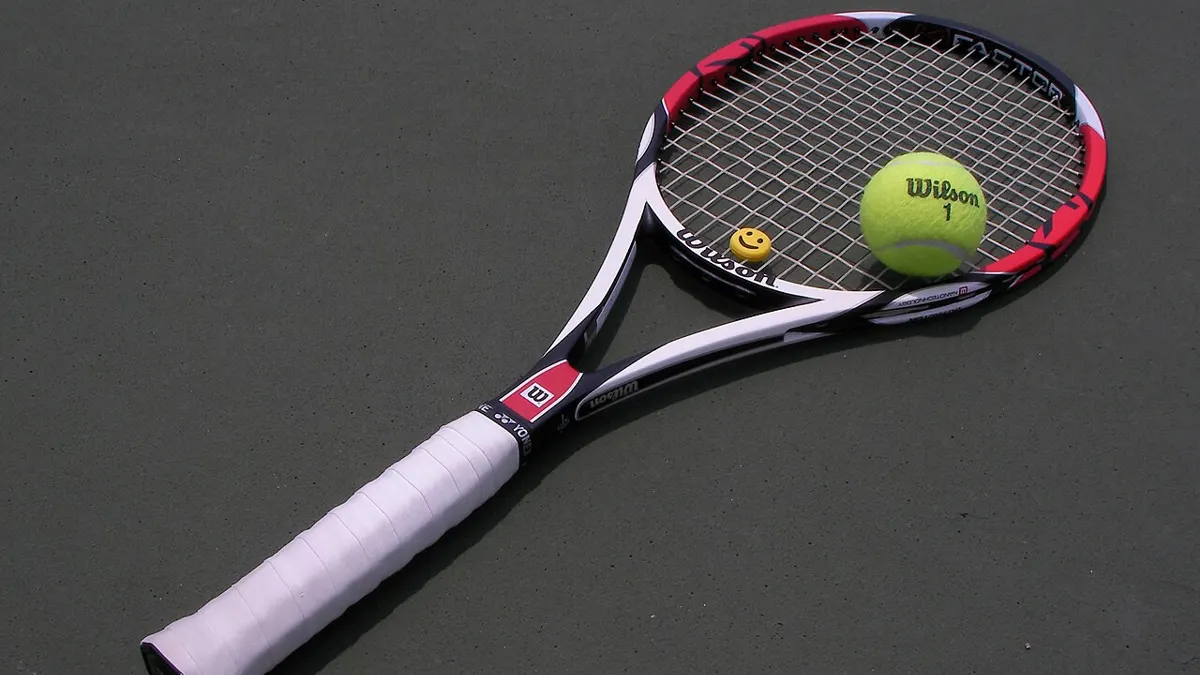
My brother, tennis is one of the best sports to bet on from Nigeria if you take it seriously, and one of the fastest ways to lose money if you don't. There are matches almost every day of the year, there are only two players to study instead of twenty-two, and the scoring system has clean maths behind it. People search for how to bet on tennis in Nigeria because the markets are everywhere on betting sites, but very few guides explain how a tennis price is actually built. That's what this page does, step by step, with numbers you can check yourself.
18+ only. Since the Supreme Court judgment of 22 November 2024 (SC/1/2008), gambling in Nigeria is regulated by each state, for example the LSLGA in Lagos, while the NLRC covers the FCT. Cloudbet, the crypto sportsbook we link to, is licensed in Curaçao and is not licensed by any Nigerian state regulator. Every price and naira figure on this page is an example or a script-computed estimate, not a live odd.

Tennis betting in one minute
Before we touch odds, let's get the structure clear, because tennis is organised differently from football:
- Men's tennis runs on the ATP Tour, with smaller Challenger events below it and ITF events below that.
- Women's tennis runs on the WTA Tour, again with lower-level events underneath.
- The four Grand Slams (Australian Open, Roland-Garros, Wimbledon and the US Open) are the biggest tournaments. Men play best of five sets there; women play best of three.
- Almost everything else is best of three sets for both men and women.
- A set is won by the first player to six games with a two-game lead. At 6-6 most sets go to a tie-break, first to seven points with a two-point lead. Since 2022 the four Slams use a first-to-ten tie-break at 6-6 in the deciding set.
Two things follow from this. First, the format (best of three or best of five) changes how often the better player wins, and we'll put numbers on that below. Second, because a match is a long chain of service games, small differences in serving and returning add up to big differences in match odds. That's the key idea behind every tennis price.
The tennis calendar from Nigeria
Tennis is played almost all year, moving around the world, which means match times in West Africa Time (WAT, which is UTC+1 all year, no daylight saving) jump around too. Here's the rough shape of the season and what it means for you:
| Event | Usual month | Surface | Time difference to WAT | What that means |
|---|---|---|---|---|
| Australian Open | January | Hard court | Melbourne is about 10 hours ahead | Day matches land in the small hours of the night in Nigeria; evening sessions in Melbourne are morning for you |
| Roland-Garros | Late May to early June | Clay | Paris is 1 hour ahead | Comfortable daytime betting |
| Wimbledon | Late June to July | Grass | London is on the same time as WAT in summer | Easiest Slam to follow from Nigeria |
| US Open | Late August to early September | Hard court | New York is 5 hours behind | Night-session matches often run past midnight WAT |
Between the Slams there are smaller tour events every week: a long run of hard-court tournaments early in the year, a clay swing in spring, a short grass season in June, more hard courts in late summer and autumn, and indoor events late in the year. Always check the official order of play for the exact start time, because tennis schedules are "not before" times, not fixed kick-offs. A match listed third on a court might start two hours late if the earlier matches run long.
The night-time matches matter more than people think. Betting at 2 AM, tired, after a few losing slips, is where a lot of Nigerian punters make their worst decisions. If the match is on in the middle of the night, place any pre-match bet before you sleep or skip it.
Why the surface changes everything
Tennis is played on three main surfaces, and each one changes how much the serve dominates:
- Clay is slow. The ball bounces high and loses speed, so returners get more balls back and rallies are longer. Servers hold less often, and breaks of serve are common.
- Hard courts sit in the middle. Speeds vary from tournament to tournament, and indoor hard courts often play quicker than outdoor ones.
- Grass is fast and low. Big servers win a lot of free points, holds are frequent and tie-breaks happen more often. Our Wimbledon betting guide goes deep on the grass season.
To show the effect, here's an illustrative example. In each row, Player A wins three percentage points more of his service points than Player B. The base serve numbers are made-up but realistic examples for each surface; the hold rates and match chances come from a standard tennis scoring model:
| Surface (example) | A wins on serve | B wins on serve | A holds | B holds | A wins a set | A wins best of 3 |
|---|---|---|---|---|---|---|
| Clay | 61% | 58% | about 75.6% | about 69.3% | about 60.2% | about 65.1% |
| Hard | 65% | 62% | about 83.0% | about 77.6% | about 59.9% | about 64.7% |
| Grass | 69% | 66% | about 88.8% | about 84.6% | about 59.5% | about 64.1% |
Look closely. The same three-point serve gap gives almost the same match chance on every surface, but the way the match unfolds is very different. On clay you'll see lots of breaks and fewer tie-breaks. On grass, holds are so frequent that one break can decide a set, and tie-breaks are common. That matters a lot for game totals, tie-break markets and live betting, even when the match winner price barely moves.
What does change match odds by surface is that players are not equally good on every surface. A player who wins 66% of his service points on grass might only win 60% on clay. Always judge a player on the surface he's about to play, not on his overall record.
The serve-hold idea: where every tennis price starts
Here is the single most useful table in tennis betting. If a player wins a certain share of the points on his own serve, this is how often he holds his service game, from the standard game model (including deuce):
| Service points won | Service games held |
|---|---|
| 55% | about 62.3% |
| 58% | about 69.3% |
| 60% | about 73.6% |
| 62% | about 77.6% |
| 64% | about 81.3% |
| 66% | about 84.6% |
| 68% | about 87.5% |
| 70% | about 90.1% |
See how the numbers stretch. Going from 60% to 70% of points on serve isn't a small change; it takes a player from losing his serve about one game in four to losing it about one game in ten. A game is a mini-match of points, a set is a mini-match of games and a match is a mini-match of sets, so each layer magnifies the edge. That is why a player who is only slightly better point for point can be a heavy favourite for the whole match.
From points to a match price
Now put two players together. Below, Player B always wins 62% of his service points (a solid hard-court level in this example), and we change Player A. The match chances come from the same model, run through sets and tie-breaks:
| A on serve | B on serve | A wins a set | A wins best of 3 | Fair odds best of 3 (A / B) | A wins best of 5 | Fair odds best of 5 (A / B) |
|---|---|---|---|---|---|---|
| 62% | 62% | 50.0% | 50.0% | 2.00 / 2.00 | 50.0% | 2.00 / 2.00 |
| 64% | 62% | about 56.7% | about 59.9% | 1.67 / 2.50 | about 62.4% | 1.60 / 2.66 |
| 66% | 62% | about 63.0% | about 69.1% | 1.45 / 3.24 | about 73.4% | 1.36 / 3.75 |
| 68% | 62% | about 68.9% | about 77.0% | 1.30 / 4.36 | about 82.3% | 1.22 / 5.64 |
| 70% | 62% | about 74.3% | about 83.5% | 1.20 / 6.08 | about 88.9% | 1.13 / 8.98 |
In this model, "A on serve 66%, B 62%" doesn't mean A is a much better player in plain words. It means A wins four more points out of every hundred he serves. Yet that turns into about a 69% chance in a best-of-three match. Small edges, big prices.
One honest caveat: this simple model assumes each point is independent and that players serve at a steady level. Real tennis has nerves, injuries, tactics and players who raise their level on big points. Bookmakers use far more data than this. Use the model to understand prices and spot obvious mistakes, not to believe you've beaten the market because of one table.
Best of three versus best of five
The table above shows something every tennis punter should know: the better player wins more often in best of five. In the 66% vs 62% example, A goes from about 69.1% in best of three to about 73.4% in best of five. In the 70% vs 62% example, from about 83.5% to about 88.9%.
The reason is simple: more sets mean more chances for the stronger player's edge to show, and fewer chances for one hot set from the underdog to steal the match. In practical terms:
- Upsets are more common in best-of-three events, including women's Slams and almost all regular tour events.
- In men's Slams, short-priced favourites are shorter for a reason. Betting the outsider "because upsets happen" is more expensive there.
- Best-of-five matches are long. Fitness, heat and the previous round's length matter more, especially in the first week of a Slam.
The main tennis markets explained
Here's what you'll see when you open a tennis match on most betting sites:
- Match winner (moneyline): who wins the match. No draw in tennis, so it's a two-way market.
- Set betting (correct score in sets): 2-0, 2-1, 1-2, 0-2 in best of three; 3-0 through 0-3 in best of five.
- Game handicap: one player gets a head start in games across the whole match, for example −3.5 games for the favourite.
- Set handicap: for example −1.5 sets, which in best of three means the favourite must win 2-0.
- Total games: over or under a line such as 22.5 games in the match.
- Total sets: in best of three, "over 2.5 sets" simply means the match goes to a deciding set.
- First set winner and first-set game lines.
- Tie-break in the match: yes or no.
- Player props: aces, double faults and similar, on some matches. Availability depends on the book and the event.
If decimal prices and implied probability are new to you, read decimal odds explained first, then come back. The rest of this guide assumes you can turn a price into a percentage (100 ÷ odds).
Set betting: where the shape of the match pays
Using the 66% vs 62% best-of-three example from earlier, a simulation of 100,000 matches gave these set scores:
| Set score | Chance | Fair odds |
|---|---|---|
| A 2-0 | about 39.9% | 2.51 |
| A 2-1 | about 29.3% | 3.41 |
| B 2-1 | about 17.3% | 5.78 |
| B 2-0 | about 13.5% | 7.41 |
Now imagine a site prices that same match at 2.30 / 3.30 / 5.20 / 6.20. Add up 1 ÷ each price and you get about 109.1%. That's a margin of roughly 8% to 9% built into the set betting market, noticeably more than a typical match-winner market. Set betting looks attractive because the prices are bigger, but you're paying more for every naira you stake. Use it when you have a clear view on the shape of the match (for example, a favourite who usually starts slowly), not just as a way to get bigger odds on the same opinion.
Game handicaps and total games
This is where tennis maths gets interesting, because games markets depend on how often each player holds, not just who wins. From the same 100,000-match simulation of the 66% vs 62% best-of-three example:
| Market | Chance |
|---|---|
| A −1.5 games | about 62.4% |
| A −2.5 games | about 54.5% |
| A −3.5 games | about 42.7% |
| A −4.5 games | about 28.4% |
| A −5.5 games | about 16.4% |
Notice that A wins the match about 69% of the time, but covers −3.5 games only about 43% of the time. Why? Because when A loses a set, the games count gets closer, and even when A wins in straight sets, a 7-6 6-4 win is only +3. A lot of punters take the favourite at −3.5 or −4.5 thinking "he will win easily" without realising how many matches end close on games.
| Total games line | Chance of over |
|---|---|
| 19.5 | about 78.6% |
| 20.5 | about 71.1% |
| 21.5 | about 66.0% |
| 22.5 | about 57.7% |
| 23.5 | about 51.4% |
In this simulation the average match had about 25 games, the middle result was 25, and 80% of matches landed between 18 and 33 games. That wide spread is the nature of tennis totals: a match can finish 6-3 6-2 (17 games) or 7-6 6-7 7-6 (39 games). Totals lines are mostly about two things: how often both players hold (big servers mean more games and tie-breaks), and how likely a deciding set is (close matches mean more games). In this example about 45% of matches had at least one tie-break.
A quick sanity check before any games bet: if you think the favourite wins easily, that pushes the total down and the handicap toward covering. If you think the match is close, the total goes up and the handicap gets harder to cover. Don't back the favourite −4.5 games and the over 23.5 together without thinking; those two bets mostly want different matches.
Reading the margin on a tennis match
Say a site prices our 66% vs 62% match at 1.40 for A and 2.90 for B. Add 1 ÷ 1.40 and 1 ÷ 2.90 and you get about 105.9%. So the book's margin is just under 6%. Our fair prices from the model were 1.45 and 3.24.
Here's what that means for a ₦1,000 bet if the model's 69.1% is right:
| Bet | Price | Expected result per ₦1,000 |
|---|---|---|
| A to win | 1.40 | about −₦33 |
| A to win (better price at another site) | 1.50 | about +₦37 |
| B to win | 2.90 | about −₦104 |
| B to win (better price at another site) | 3.40 | about +₦51 |
Same match, same opinion, completely different value depending on the price you take. That's why comparing prices across books matters so much in tennis, where small differences are common. Use our odds calculator to check the margin on any match before you bet.
Two more patterns worth knowing. Lower-level matches (Challengers, ITF) usually carry wider margins than big tour matches, because there's less money and less information. And novelty or prop markets usually carry the widest margins of all.
The "safe favourites" accumulator trap
Every punter has done this: four favourites at 1.30 each, stacked into one slip that pays about 2.86 times your stake. It feels safe because each player "should" win.
The maths says otherwise. A price of 1.30 implies about 76.9%. If the true chance of each favourite winning is a bit lower, say 74%, the chance all four win is about 30%, and your average return is about 85.6% of what you stake. Even if each favourite is a fair 75% shot, all four win only about 31.6% of the time and you get back about 90.4% on average. In other words, you lose roughly 10% to 15% of your stake on average, and you lose the whole slip about seven times out of ten.
Tennis favourites also carry a special risk football doesn't: retirements. A player who picks up a knock in the first set can retire, and depending on the book's rules, your slip can die on a match the favourite was winning. If you like accas, check the payout with our accumulator calculator and keep them short.
Where real edges in tennis come from
Bookmakers price tennis with a lot of data. If you want an edge, you need information or judgment they might be slow on. These are the areas where careful punters look:
- Surface switches. The first week after the tour changes surface (hard to clay, clay to grass) is when form tables mislead most. A player's last ten results might all be on a different surface.
- Fatigue and scheduling. A player who won a long three-setter late last night and plays again early today is not the same player. Check how long the previous match was and when it finished.
- Travel and time zones. Players flying across continents from one week to the next sometimes start slowly.
- Conditions. Heat, wind, altitude, indoor or outdoor, and the speed of the specific court all shift how much the serve dominates.
- Motivation. A player defending big ranking points or chasing a qualification spot can play differently from one who's already thinking about next week.
- Return quality. Most casual punters only look at the serve. A great returner facing a big server can turn a "big server wins easily" match into a long fight.
None of these guarantee anything. They're reasons to have an opinion different from the price. Write your reason down before every bet, and later you'll see whether your reasons actually make money.
Lower-tier tennis: be very careful
Many sites list Challenger and ITF matches all day and all night. They look like easy money because the players are unknown and the prices seem "wrong". Be careful for three reasons:
- Information is thin. Fewer stats, less coverage and players you can't really study.
- Margins are wider, so you need to be even more right to win.
- Integrity risk is real. Tennis has an independent body, the International Tennis Integrity Agency, that investigates match-fixing, and many of the cases over the years have involved lower-level events. Strange price movements happen there more often.
Anyone selling "fixed tennis matches" on WhatsApp or Telegram is either scamming you or inviting you into something criminal. Walk away. Our guide on betting groups in Nigeria explains how those schemes usually work.
18+. Crypto deposits. Cloudbet is licensed in Curaçao, not in Nigeria. Ad: we may earn a commission. Bet only what you can afford to lose.
Tie-break markets
"Will there be a tie-break in the match?" is a simple yes-or-no market, but the answer depends almost entirely on how often both players hold serve. In our 66% vs 62% hard-court simulation, about 45% of best-of-three matches had at least one tie-break. In the closer 64% vs 62% example it was about 44%, almost the same, because both players were still holding most of their service games.
What moves the tie-break number most is the level of both serves together, not the gap between the players. Two big servers on a quick court push the chance up a lot; two strong returners on slow clay push it down. If you want to play this market, ask one question: how often will either player get broken? If the honest answer is "rarely", the yes side deserves a look. If breaks will be common, the no side usually makes more sense. As always, compare the price with your own estimate and remember these specials often carry a bigger margin than the match winner.
Men's and women's tennis are priced differently
You'll see both on every betting site, and the same model applies to both, but the inputs are different. In general, breaks of serve are more common in women's tennis, which means a single break is less decisive and comebacks within a set happen more often. That affects live betting most: a break down early in a set is not the same disaster it can be in a big-serving men's match.
Format matters too. Women play best of three everywhere, including the Slams, so upsets on the biggest stages are more likely than in the men's draw, where best of five protects the favourite. If you bet both tours, keep separate records, because your judgment might be sharp on one and poor on the other.
Live tennis betting
Tennis is one of the most popular live-betting sports in the world, and it's easy to see why: prices move after every point. But live tennis is also where discipline breaks down fastest. A few things to understand:
- Momentum is mostly in your head. In the model, every service game is a fresh coin toss weighted by the server's hold rate. A break of serve feels huge, but a player who holds 84% of the time and is down a break still wins plenty of sets.
- Breaks are worth more on fast courts. On grass, where holds are frequent, being a break down late in a set is harder to recover than on clay, where breaks come back more often.
- Delays hurt you. The stream or score you see is often a few seconds behind the court. Bookmakers know this, and some markets are suspended during points. Don't try to "beat the feed".
- Live margins are often wider than pre-match. Every extra live bet pays that margin again.
- Injuries and medical time-outs can be real or tactical. Don't jump in just because a player took a time-out.
Our crypto live betting guide covers live betting habits in general. For tennis specifically, set a rule before the match: maximum two live bets, and none after you've lost one.
Retirements and settlement rules
This is the part most punters never read until it costs them. In tennis, a player can retire mid-match through injury or illness. What happens to your bet depends entirely on the book's rules. Common approaches you'll find include:
- Match winner bets are void if the match isn't completed.
- Match winner bets stand if at least one set (or a stated amount of play) is completed, and the player who advances is the winner.
- Markets already decided before the retirement (for example, first set winner) stand, while undecided markets are void.
Each sportsbook writes its own rules, and they can differ for match winner, set betting, games handicaps and totals. Read the tennis rules section of any site before you bet, especially on long accumulators, and keep screenshots of your slips. Also note that a walkover (a player withdrawing before the match starts) is usually treated differently from a retirement, and changes of venue or surface can affect settlement too.
Build a simple tennis rating of your own
You don't need to be a data scientist. A spreadsheet with these columns, kept honestly, will teach you more than any tipster:
- Player, surface, and the event level.
- Service points won and return points won over the player's recent matches on that surface (many tennis stats sites show these).
- Your estimate of each player's chance of winning their service points in this specific match.
- The model's match chance (use the tables above as a rough guide), and the best price available.
- The result and the closing price.
The closing price is important. If the prices you take are regularly bigger than the price just before the match starts, your judgment is probably adding value even when individual bets lose. If you're regularly taking worse prices than the close, the market is telling you something.
Staking: how long does it take to know if you're good?
Most tennis bets on handicaps and totals are priced around 1.85. At that price, you need to win about 54.1% just to break even. Here's what 40,000 simulated punters saw over 200 bets of ₦1,000 each at 1.85, at three different true win rates:
| True win rate | Average result | Middle result | Unlucky 10% | Lucky 10% | Share who finished ahead |
|---|---|---|---|---|---|
| 52% | about −₦7,600 | about −₦7,600 | about −₦24,250 or worse | about +₦9,050 or better | about 26% |
| 54% | about −₦100 | about −₦200 | about −₦16,850 or worse | about +₦16,450 or better | about 48% |
| 56% | about +₦7,100 | about +₦7,200 | about −₦9,450 or worse | about +₦23,850 or better | about 69% |
Two lessons. First, even a genuinely skilled punter at 56% loses money over 200 bets almost one time in three. Second, a losing punter at 52% finishes ahead about one time in four, which is why so many people believe they're good when they're not. Flat stakes and a long, honest record are the only way through. Our staking plan guide goes deeper.
Break-even win rates for common tennis prices:
| Price | Break-even win rate |
|---|---|
| 1.30 | 76.9% |
| 1.50 | 66.7% |
| 1.85 | 54.1% |
| 2.20 | 45.5% |
| 3.00 | 33.3% |
Shopping for prices
We showed earlier that 1.40 versus 1.50 on the same favourite turns a losing bet into a winning one in the model. In tennis, prices across books often differ by a few points, especially on lower-level matches and on games markets. Practical habits:
- Have accounts at more than one book, funded with small amounts.
- Decide the minimum price you'll accept before you open the betting site, based on your own estimate.
- If the price has dropped below your number, skip the bet. There's always another match tomorrow.
- Don't confuse price shopping with arbitrage. If you want to understand the difference, see our arbitrage betting guide.
Funding a tennis account from Nigeria
Cloudbet, the sportsbook we link to, works in crypto. If you're new to that, our guides on depositing bitcoin at Cloudbet and which coins to use for betting walk you through it. A few tennis-specific tips:
- Stablecoins like USDT keep your bankroll steady while you wait for the next tournament; bitcoin's price can swing between your deposit and your bet.
- Night matches at the Australian Open or US Open are a bad time to be waiting for a deposit to confirm. Fund your account in the afternoon if you plan to bet late.
- Check withdrawal minimums and network fees in the cashier before depositing small amounts. Our crypto withdrawal guide explains what to look for.
Tennis coverage, markets and live options change over time, so check the site's tennis section for what's actually offered on the match you care about.
A worked example, start to finish
Let's walk through one illustrative best-of-three hard-court match between Player A and Player B. No real players, no real odds.
- Your read: from A's recent hard-court stats you estimate he wins about 66% of his service points in this match; B about 62%.
- Model: the tables say A wins about 69% of the time. Fair odds about 1.45.
- Market: Book 1 offers 1.40; Book 2 offers 1.50. You decided before looking that you need at least 1.47.
- Decision: Book 1 is a no. Book 2 at 1.50 is above your number, so you take it, flat ₦1,000.
- Side markets: the game handicap A −3.5 is priced 1.90, but the model only gives about 42.7%, so the expected result is about −₦189 per ₦1,000. Skip. The total games over 22.5 at 1.85 is about +₦68 per ₦1,000 in the model, but you recognise that totals depend heavily on your serve numbers being right, so you either pass or take a half stake.
- Record: you write down your number, the price taken, the closing price and the result.
Whether this bet wins or loses tells you almost nothing. Two hundred bets like it, recorded honestly, will tell you a lot.
Common tennis betting mistakes
- Judging players on overall form instead of form on this surface.
- Ignoring best of three vs best of five when comparing favourites.
- Backing big game handicaps on favourites who often win close straight-set matches.
- Stacking short favourites into long accumulators.
- Chasing live bets after every break of serve.
- Betting lower-tier matches you know nothing about, at wide margins, in the middle of the night.
- Not reading retirement rules before betting.
- Buying "fixed match" tips. Never.
Checklist before every tennis bet
- What surface, indoor or outdoor, and best of three or five?
- How did each player perform on this surface recently, on serve and on return?
- Any fatigue, travel or scheduling issues?
- What's my estimate, and what minimum price does it give me?
- Is the best available price above that minimum?
- What are this book's retirement and walkover rules for this market?
- Is my stake a fixed, small share of my bankroll?
- Am I betting because I have a reason, or because the match is on?
Licensing, tax and your protection
Since 22 November 2024, after the Supreme Court decision in SC/1/2008, each state regulates gambling, through bodies like the LSLGA in Lagos and the NLRC for the FCT. Offshore sportsbooks are licensed abroad. Cloudbet holds a Curaçao licence and is not licensed by any Nigerian state regulator, so a Nigerian regulator can't settle a dispute with it for you. Keep records of deposits, bets and withdrawals. For more, read is online betting legal in Nigeria and betting tax in Nigeria.
Keep it a game
Tennis never stops. There's a match on somewhere almost every hour of every day, and that's exactly what makes it risky. If you're betting late into the night, chasing losses or hiding how much you spend, take a break. Gamble Alert offers free help on +234 916 295 7989, or toll-free on +234 705 889 0073 and +234 705 889 0074. Our responsible gambling page explains deposit limits and self-exclusion.
Bottom line
Learning how to bet on tennis in Nigeria comes down to a few ideas: judge players on the surface they're playing, understand that small serve-and-return edges become big match edges, respect the difference between best of three and best of five, read the margin, shop for prices and know the retirement rules before you stake. Keep stakes flat, keep records and stay away from lower-tier matches you can't study. 18+ only. Cloudbet is licensed in Curaçao and is not licensed by any Nigerian state regulator.
Questions punters ask
How do I start betting on tennis in Nigeria?
Learn the formats (best of three or five), the surfaces and the main markets, then compare prices before each bet and keep flat stakes. Only bet if you're 18+.
What is the most important stat in tennis betting?
Service points won and return points won on the surface being played. Small differences in serve points become large differences in match odds.
Why are favourites shorter at Grand Slams?
Men play best of five sets at the Slams, which gives the stronger player more time to show his edge. In one example, a 69% best-of-three favourite becomes about 73% in best of five.
Is the game handicap a good bet on a big favourite?
Often not. In one simulation a 69% match favourite covered −3.5 games only about 43% of the time, because many matches finish close on games.
What happens to my tennis bet if a player retires?
It depends on the sportsbook's rules. Some void the bet, others settle it if a set has been completed. Read the tennis rules before betting.
Is Cloudbet licensed in Nigeria?
No. Cloudbet is licensed in Curaçao and is not licensed by any Nigerian state regulator.
Where can I get gambling help in Nigeria?
Gamble Alert: +234 916 295 7989, or toll-free +234 705 889 0073 and +234 705 889 0074.
18+. Crypto deposits. Cloudbet is licensed in Curaçao, not in Nigeria. Ad: we may earn a commission. Bet only what you can afford to lose.
If betting has stopped being fun, talk to someone. Gamble Alert, a Nigerian non-profit, runs a free, confidential 24/7 helpline: +234 916 295 7989, toll-free +234 705 889 0073 / 0074. Source: gamblealert.org.