How to Win Accumulator Bets: Honest Acca Maths, Fewer Legs, Smarter Cash-Outs and a Weekend Plan for Nigerian Punters
Welcome bonus for new players + fast crypto payouts. Just helping a brother out.
18+. Crypto deposits. Cloudbet is licensed in Curaçao, not in Nigeria. Ad: we may earn a commission. Bet only what you can afford to lose.
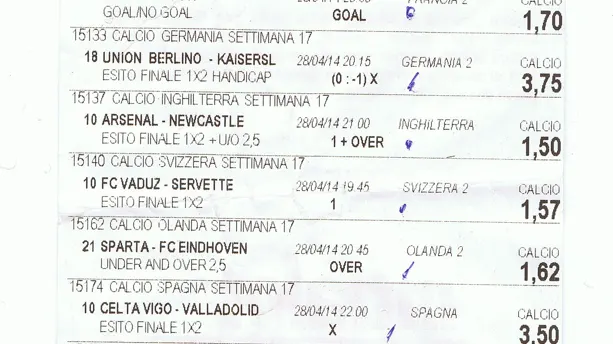
My guy, everybody in Nigeria knows the feeling. Nine games enter, the tenth one cuts, and your ₦1,000 that was about to become ₦30,000 becomes a screenshot you send to the group chat. Accumulators are the most popular bet in the country for a reason: small stake, big dream. But if you want to actually win more of them, or at least lose less while you chase that big one, you need to understand what is happening under the hood. No "sure acca" here, no fixed games. Just the honest maths and a plan that respects your money.
18+ only. Since the Supreme Court judgment of 22 November 2024 (SC/1/2008), gambling in Nigeria is regulated state by state, for example by the LSLGA in Lagos, with the NLRC covering the FCT. Cloudbet, the crypto sportsbook we link to, is licensed in Curaçao and is not licensed by any Nigerian state regulator. Every odds figure on this page is a made-up example, and every percentage and simulation result was computed with a script from those examples.

The honest answer first
There is no secret system that makes accumulators a winning bet for everybody. An acca multiplies the odds of each leg together, and it also multiplies the bookmaker's margin together. If you're picking legs at roughly the bookmaker's own prices, the more legs you add, the more of your stake you are expected to lose over time.
So "how to win accumulator bets" really means three things:
- Win more often by using fewer, better legs.
- Win bigger when you do win by getting better odds on each leg and using boosts only when they actually help.
- Lose less in between by sizing stakes properly, knowing when to cash out or hedge, and keeping records so you know whether your picks have any edge at all.
Do those three things and accas become a fun, controlled part of your betting instead of a weekly donation. Let's take them one at a time.
How fast the probability drops
Every leg you add has to win. If each leg has the same chance, the chance of the whole acca winning is that chance multiplied by itself once per leg. Our script worked out the numbers below. The left column is the real chance of each single leg winning; the other columns show the chance of the whole slip landing.
| Chance per leg | 2 legs | 3 legs | 4 legs | 5 legs | 6 legs | 8 legs | 10 legs | 12 legs |
|---|---|---|---|---|---|---|---|---|
| 50% | 25.0% | 12.5% | 6.2% | 3.1% | 1.6% | 0.4% | 0.1% | under 0.1% |
| 60% | 36.0% | 21.6% | 13.0% | 7.8% | 4.7% | 1.7% | 0.6% | 0.2% |
| 70% | 49.0% | 34.3% | 24.0% | 16.8% | 11.8% | 5.8% | 2.8% | 1.4% |
| 80% | 64.0% | 51.2% | 41.0% | 32.8% | 26.2% | 16.8% | 10.7% | 6.9% |
| 90% | 81.0% | 72.9% | 65.6% | 59.0% | 53.1% | 43.0% | 34.9% | 28.2% |
Look at the 70% row, because that's roughly what a typical "strong favourite" at short odds looks like. Five of them together land about one weekend in six. Ten of them land less than three times in a hundred. And remember, very few football matches are genuinely 90% shots. A team at odds of 1.20 is priced at around 80% before the margin is taken out, not 95%.
If you only remember one thing from this page, remember this: the number of legs matters more than how confident you feel about each one. Feeling sure doesn't stop the multiplication.
Why "one game always cuts"
Ask any punter and they'll swear the acca always dies on one leg. They're not imagining it. With many legs, losing by exactly one game is much more likely than winning. Our script compared the two:
| Slip | All legs win | Exactly one leg loses | How many times more likely to lose by one |
|---|---|---|---|
| 5 legs at 70% each | 16.8% | 36.0% | 2.14× |
| 6 legs at 80% each | 26.2% | 39.3% | 1.5× |
| 8 legs at 70% each | 5.8% | 19.8% | 3.43× |
| 10 legs at 75% each | 5.6% | 18.8% | 3.33× |
| 12 legs at 80% each | 6.9% | 20.6% | 3.0× |
So that painful "one cut" isn't bad luck or a curse on your account. It's the most normal outcome for a long slip. Once you see it as maths, it stops pushing you to "recover" with an even bigger slip the next day, which is how a ₦1,000 habit quietly becomes a ₦10,000 habit.
The hidden tax: the margin multiplies too
Bookmakers build a margin into every price. On a simple two-way market, a book of about 105% means you get back roughly 95.2% of what a fair price would pay. On a single bet that's a small bite. In an acca the bite repeats on every leg. Here is how much of a fair payout you keep, on average, as legs stack up:
| Market margin | 1 leg | 2 legs | 3 legs | 4 legs | 5 legs | 6 legs | 8 legs | 10 legs |
|---|---|---|---|---|---|---|---|---|
| Book about 105% | 95.2% | 90.7% | 86.4% | 82.3% | 78.4% | 74.6% | 67.7% | 61.4% |
| Book about 106% | 94.3% | 89.0% | 84.0% | 79.2% | 74.7% | 70.5% | 62.7% | 55.8% |
| Book about 108% | 92.6% | 85.7% | 79.4% | 73.5% | 68.1% | 63.0% | 54.0% | 46.3% |
Read that bottom right cell slowly. On a ten-leg slip at a margin like 108%, which is common on less popular leagues and three-way markets, the average punter gets back less than half of what a fair price would pay. That's why bookmakers love accas and promote them everywhere: the longer the slip, the bigger their cut.
You can check the margin on any market yourself with our odds calculator. If you're still getting comfortable with how decimal odds turn into percentages, our decimal odds guide walks through it.
The flip side: an edge multiplies as well
Here's the part most tipsters never explain. The same multiplication that hurts the average punter helps a punter who genuinely finds value. If each of your legs is priced about 3% better than its true chance, the edges stack up:
| Legs | 1 | 2 | 3 | 5 | 8 | 10 |
|---|---|---|---|---|---|---|
| Edge per leg +3% | +3.0% | +6.1% | +9.3% | +15.9% | +26.7% | +34.4% |
| Edge per leg −2% | −2.0% | −4.0% | −5.9% | −9.6% | −14.9% | −18.3% |
So accas are an amplifier. If your picks are good, they make a good thing better. If your picks are average, they make an average thing worse. The honest question isn't "how many legs can I add?" but "do my picks actually beat the price?" Most people never check. The record-keeping section further down shows you how.
Rule 1: use fewer legs
The fastest way to win more accumulators is boring: build smaller ones. Two, three or four legs instead of eight to twelve. You give up the dream of turning ₦500 into ₦500,000, but you get a slip that actually lands often enough to keep you sane.
A rough guide that works for many punters:
- Doubles and trebles for your normal weekend betting. They land often enough to keep your bankroll moving.
- Four or five legs only when you have that many picks you'd genuinely be happy to back as singles.
- Long "lottery" slips as a tiny fun stake, money you've already written off, never your main bet.
If a leg is only there to "make the odds look nice", take it out. That leg is adding margin and adding risk without adding any reason.
Rule 2: every leg must earn its place
Before a selection goes on your slip, ask one question: would I back this as a single at this price? If the honest answer is no, it has no business in an acca. An acca is not a way to turn weak picks into a strong bet; it's a way to combine strong picks into a bigger payout.
Ways to make each leg stronger:
- Know the teams you pick. A league you follow every week beats a random Finnish second division game you added at 1:45 AM.
- Check team news. Rotation, injuries, a cup game in midweek, a team already safe or already relegated. These change real chances more than the table suggests.
- Compare your number with the price. If you think a team wins 60% of the time, the fair price is about 1.67. Taking 1.50 on that team is a bad bet even if they win.
- Avoid the "too short" trap. Very short favourites at 1.10 to 1.25 feel safe, but they carry margin and add almost nothing to your payout. Many experienced punters leave them out entirely.
- Consider safer market types. Draw no bet or an Asian handicap can turn a risky three-way leg into a steadier one, at a lower price. Goals markets like under 2.5 suit some matches better than picking a winner.
Some punters build their slip around one strong selection they call a banker. If you use that idea, our guide on what a banker in betting is explains how to choose one honestly, and why stacking several "bankers" is still risky.
Rule 3: shop the odds on every leg
Small differences in price turn into big differences on an acca, because they multiply. Our script compared legs at 1.80 with the same legs at 1.85:
| Legs | Total odds at 1.80 each | Total odds at 1.85 each | Extra payout |
|---|---|---|---|
| 2 | 3.24 | 3.42 | +5.6% |
| 3 | 5.83 | 6.33 | +8.6% |
| 4 | 10.50 | 11.71 | +11.6% |
| 5 | 18.90 | 21.67 | +14.7% |
| 8 | 110.20 | 137.21 | +24.5% |
A five-cent difference per leg is nothing on one bet. Across five legs it's almost 15% more money when you win. If you have accounts at more than one bookmaker, check prices before you place, and remember that the same team can be priced differently across books on the same afternoon.
Rule 4: avoid hidden connections between legs
Accas work best when the legs really are separate events. Problems start when they're connected in ways the price doesn't show. Most bookmakers stop you combining obviously linked selections from the same match, or push you to a bet builder priced differently. But softer links still exist:
- Same weather, same pitch: several matches in one city on a stormy afternoon may all play low-scoring.
- Same motivation story: the last day of a season, when some teams have nothing to play for.
- Same tipster's logic: five legs picked because "home teams always win this month" all share one assumption. If the assumption is wrong, all five can go together.
Link is not always bad. Sometimes you want two legs that share a strong reason. But know when your legs are really one opinion copied five times, because then your slip is riskier than the odds suggest.
Acca boosts and bonuses: when do they actually help?
Many bookmakers offer an acca boost: extra percentage on your winnings once you have enough legs. It sounds like free money. Let's test it. Our script took a five-leg slip with each leg at 1.50 and a market margin of about 105%, then added different boosts on the profit:
| Boost on profit | Total odds before | Total odds after | Average return vs a fair price |
|---|---|---|---|
| None | 7.594 | 7.594 | 78.4% |
| 5% | 7.594 | 7.923 | 81.8% |
| 10% | 7.594 | 8.253 | 85.2% |
| 20% | 7.594 | 8.912 | 92.0% |
| 30% | 7.594 | 9.572 | 98.8% |
A boost helps, but a normal 5% to 10% boost doesn't come close to cancelling the margin on five legs. Even a big 30% boost only gets the average punter back to about break-even on this example. So treat a boost as a small discount on a bet you were already going to make, never as a reason to add legs you didn't want just to "qualify".
The same goes for acca insurance or "one cut" refunds. They usually return your stake as a bonus or free bet with conditions, not cash. Read the terms. A refund paid as a free bet you must roll over is worth less than the same amount in cash. Our betting coupon guide covers how cut-one features usually settle on Nigerian slips.
Simulated seasons: long slips vs short slips
To show how this plays out over a real betting year, our script ran 20,000 simulated seasons of 52 weekends. Each weekend the punter puts ₦1,000 in total on one strategy. Every leg is priced at the bookmaker's odds with a margin of about 105%, so the punter has no special edge, which is the honest starting point for most people.
| Weekly strategy (₦1,000 total) | Average result after 52 weeks | Middle result | Seasons finishing ahead | Bad season (1 in 10) | Good season (1 in 10) | Typical longest run of losing weekends |
|---|---|---|---|---|---|---|
| One 10-leg acca, legs at 1.40 | −₦20,123 | −₦23,075 | 30.4% | −₦52,000 | +₦5,851 | 41 weeks |
| One 5-leg acca, legs at 1.60 | −₦11,284 | −₦10,057 | 34.7% | −₦31,028 | +₦10,915 | 23 weeks |
| One 3-leg acca, legs at 1.70 | −₦6,920 | −₦7,783 | 30.7% | −₦22,522 | +₦11,869 | 13 weeks |
| Two doubles of ₦500, legs at 1.80 | −₦4,860 | −₦5,020 | 22.6% | −₦14,740 | +₦4,700 | 5 weeks |
| Four singles of ₦250 at 1.90 | −₦2,464 | −₦2,600 | 23.9% | −₦6,875 | +₦1,675 | 1 week |
A few things jump out. The ten-leg slip loses about four times as much on average as the singles, from the same ₦52,000 staked across the year. In a typical season it goes 41 weekends in a row without a single win at some point. That's most of a year of watching games cut. The shorter strategies still lose, because the punter in this model has no edge, but they lose much more slowly, and the losing runs are short enough to handle without panic.
Notice too that a decent share of seasons finish ahead on every strategy. That is exactly why accas feel beatable: in any given year about one punter in three playing ten-leg slips is up, and they're the ones posting screenshots. The other two are quiet.
18+. Crypto deposits. Cloudbet is licensed in Curaçao, not in Nigeria. Ad: we may earn a commission. Bet only what you can afford to lose.
System bets: an acca that forgives a loss
If you like combining picks but hate losing everything to one cut, a system bet splits your stake across smaller combinations. Our script compared four picks, each at 1.80 with a margin of about 105% (so each has roughly a 52.9% real chance in this example):
| How you bet the 4 picks | Stake | Return if 2 win | Return if 3 win | Return if all 4 win | Average return vs stake |
|---|---|---|---|---|---|
| One 4-fold | ₦1,200 | ₦0 | ₦0 | ₦12,597 | 82.3% |
| Six doubles of ₦200 | ₦1,200 | ₦648 | ₦1,944 | ₦3,888 | 90.7% |
| All doubles, trebles and the 4-fold (11 bets of ₦100) | ₦1,100 | ₦324 | ₦1,555 | ₦5,327 | 88.4% |
| Four singles of ₦300 | ₦1,200 | ₦540 (plus ₦540 if only 1 wins) | ₦1,620 | ₦2,160 | 95.2% |
In this example all four picks win only about 7.8% of the time, while exactly two win about 37.2% and exactly three about 27.9%. The 4-fold pays big but rarely. Doubles pay something in most "decent" weekends. Notice that the average return improves as the bets get smaller, because fewer legs means less stacked margin. A system bet is not magic; it's just a way to trade top-end payout for steadier results. Our accumulator calculator helps you see the returns before you place.
Cash out, hedge or ride it?
Every punter has been there: four legs won, the last game kicks off at 8 PM, and the app is flashing a cash-out offer. What should you do? Let's use a made-up example and let the script do the maths.
You staked ₦1,000. Four legs have won at total odds of 10.0. The last leg is Team A to win at 1.80, so the slip pays ₦18,000 if A wins. The market for that last match is A 1.80, draw 3.60, B 4.80. That book adds up to about 104.17%, so after taking out the margin, A's fair chance is about 53.3%, the draw about 26.7% and B about 20.0%.
- Fair value of your slip right now: ₦18,000 × 53.3% ≈ ₦9,600.
- Example cash-out offer: ₦8,500. That's about 88.5% of fair value. Cash-out offers usually include their own margin, so they're often below fair.
- Full hedge: back the draw with ₦5,000 at 3.60 and B with ₦3,750 at 4.80. Whatever happens, you collect ₦18,000 and spend ₦8,750 on the hedge, locking in a return of ₦9,250.
- Hedge with double chance: if "X2" (draw or B) is available at, say, 2.05, staking about ₦8,780 locks in about ₦9,220.
- Partial hedge on the draw only: stake ₦5,000 on the draw. If A wins or it's a draw, you end with ₦13,000 after the hedge cost. If B wins, you're down the ₦5,000 hedge and the original stake.
In this example a full hedge locks in about ₦750 more than the cash-out offer. That gap is the cash-out margin. It isn't always this big, and hedging needs money on hand plus prices at the right moment, but it shows the cash-out button is a convenience, not a gift. The live betting guide covers how in-play prices move.
When does riding it make sense? If ₦18,000 or nothing doesn't change your month, letting it run keeps the full value. When does locking in make sense? If losing it would genuinely hurt, a guaranteed ₦9,000-plus is a sensible result. Neither choice is "wrong". The mistake is panic-cashing for a terrible price because your heart is beating.
Stake sizing for acca players
Accas swing hard, so staking matters even more than with singles. A few rules that keep you in the game:
- Use a betting bankroll. A separate pot of money you can afford to lose completely, apart from rent, school fees and food.
- Stake less per slip as legs go up. One simple rule: if a single is 1 unit, a double is half a unit, a treble a third, and long slips a tenth or less.
- Fixed weekly budget. Decide on Friday what the weekend costs, then stop. No "recovery" slip on Sunday night.
- Never increase stakes after a loss. Doubling up after a cut is the fastest way to empty an account.
Our full guide to staking plans for sports betting goes deeper into flat, percentage and Kelly-style staking.
Keep records, or you'll never know
The single most useful habit for winning more accas is also the least exciting: write every bet down. Not just slips. Every leg. For each one, note the date, league, market, odds you took, the closing odds just before kick-off if you can, and the result.
After 100 or so legs, you can answer the questions that really matter:
- Do your legs win more often than their odds suggest? If your 1.80 picks win 56% of the time over a big sample, you may have an edge. If they win 50%, you don't.
- Which leagues are you good at? Many punters find they're sharp on one league and terrible on others. Cut the bad ones.
- Do you beat the closing price? If the odds usually shorten after you bet, the market agrees with you. That's one of the best signs of real skill.
- Which markets work for you? Maybe your goals picks are solid but your winner picks aren't.
Without records, your memory keeps the big wins and forgets the forty small losses. With records, you know the truth, and the truth is what makes you better.
A sensible weekend acca routine
- Thursday or Friday: set your weekend budget. Decide how much goes on singles, doubles and one small fun slip.
- Friday evening: shortlist matches only from leagues you follow. Check team news and fixtures around them.
- Write your own price for each candidate before looking at the odds, so the market doesn't anchor you.
- Compare with the odds at more than one book. Keep only legs where the price is at or above your number.
- Build small slips: two or three doubles or a treble from your best picks. If you want a long slip, it gets your "fun" money only.
- Use boosts only on slips you'd build anyway.
- Before the last leg, decide in advance what you'd do: ride, hedge or cash out, and at what price. Write it down so you don't decide in panic.
- Sunday night: record every leg and close the book on the weekend. No chasing.
Worked example: two punters in Ibadan
Here's a made-up example to show how small changes add up. Two friends in Ibadan each bet ₦1,000 every weekend for a year.
Punter one plays one ten-leg acca every Saturday, mostly short favourites from leagues they don't really follow, at about 1.40 a leg. Using the simulation above, the average result is a loss of around ₦20,000 for the year, and in a typical season they go about 41 weekends straight without a win at some point. They'll probably land one or two big wins, but those wins are rarely enough.
Punter two splits the same ₦1,000 into two ₦500 doubles at about 1.80 a leg, from leagues they follow, and shops each price. Even with no edge, the average loss in our simulation is around ₦4,900, and the longest losing run in a typical season is about five weekends. If their records show their picks have a small genuine edge, and they keep shopping prices, that loss can shrink further or turn into a profit.
Same money, same weekends. One ends the year frustrated and broke, the other ends it still in the game, with records that tell them what to do next.
Common acca mistakes
- Adding legs to reach a "nice" total. Each extra leg costs you margin and chance.
- Using too many very short favourites. They add risk and almost no payout.
- Betting on leagues you don't follow. The odds compilers know those games better than you do.
- Buying "sure acca" codes or fixed-match tips. If they were sure, nobody would sell them for ₦2,000.
- Chasing after a cut. The next slip doesn't owe you anything.
- Cashing out in panic for far less than fair value.
- Ignoring maximum payout rules. Big slips can hit a bookmaker's payout cap. Our guide to maximum payouts in Nigeria explains what to check.
- Not tracking results. Without records, you can't tell skill from luck.
Accas on a crypto sportsbook
If you bet on an international crypto sportsbook like Cloudbet, accas work the same way: odds multiply, margins multiply, and the cash-out logic above still applies. A few extra things to keep in mind:
- Your balance may be in crypto or a stablecoin. A balance in a volatile coin can move in value while your slip is running. Many punters use a stablecoin such as USDT to keep things simple.
- Check maximum payouts and acca rules in the sportsbook's terms, especially for long slips and live legs.
- Deposits and withdrawals have network fees. Cloudbet's help centre says withdrawals are typically processed within 24 hours, with the network fee shown before you confirm, when we checked. See our Cloudbet withdrawal time guide and our guide to depositing Bitcoin at Cloudbet.
- Licensing: Cloudbet is licensed in Curaçao and is not licensed by any Nigerian state regulator, so disputes go through its own process and its foreign licensing body, not a Nigerian one.
Tax and the law in Nigeria
Gambling in Nigeria is now regulated by each state after the November 2024 Supreme Court judgment. Locally licensed bookmakers answer to their state regulator; offshore sites don't. Read our guide to whether online betting is legal in Nigeria before you open any account. Tax rules on winnings can change and depend on your situation, so check our betting tax guide and speak to a tax professional if you win big.
Quick acca checklist
- Would I back every leg as a single at this price?
- Is this slip four legs or fewer, unless it's tiny fun money?
- Did I compare odds at more than one bookmaker?
- Are my legs really separate, or one opinion copied several times?
- Is the stake right for the number of legs?
- Do I know in advance what I'll do before the last leg?
- Have I written this bet down?
- Is this money I can afford to lose completely?
Acca glossary
- Acca / accumulator / multiple: one bet combining several selections; all must win.
- Leg / selection: one pick inside the acca.
- Fold: how many legs, as in "4-fold".
- Double / treble: two-leg and three-leg accas.
- Margin / overround: the bookmaker's built-in edge; the amount the implied percentages add up to above 100%.
- Boost: extra winnings added to qualifying accas.
- Cash out: the bookmaker's offer to settle your bet early.
- Hedge: a separate bet on the other outcomes to lock in a result.
- System bet: a set of smaller combinations from the same picks, so one loss doesn't kill everything.
- Closing odds: the last price before kick-off; beating it often is a good sign.
My take
You can't make accumulators a sure thing, and anyone who says otherwise is selling something. What you can do is stop playing them the way bookmakers want you to: long slips, short favourites, random leagues, boosted to look exciting. Use fewer legs, insist that every leg earns its place, shop the price, decide your cash-out plan before the last game, and keep honest records. That's how you win more accas, and how you make sure the ones that cut don't cut into your real life.
If betting stops being fun, take a break. Our responsible gambling page lists tools that help, and Gamble Alert is available 24/7 on +234 916 295 7989, or toll-free on +234 705 889 0073 and +234 705 889 0074.
Questions punters ask
What is the best number of legs for an accumulator?
For most punters, two to four. In our examples a 5-leg slip of 70% legs lands about 16.8% of the time, and a 10-leg slip only about 2.8%. Fewer legs also means less stacked bookmaker margin.
Why does my acca always lose by one game?
Because with many legs, losing by exactly one is more likely than winning. For 8 legs at 70% each, exactly one loss happens about 19.8% of the time, against 5.8% for all eight winning.
Are acca boosts worth it?
They help a little but rarely cancel the margin. On our 5-leg example, a 10% boost raised the average return from 78.4% to 85.2% of a fair price. Use boosts only on slips you'd place anyway.
Should I cash out my accumulator?
Compare the offer with the fair value. In our example the slip was worth about ₦9,600, the cash-out offered ₦8,500, and a full hedge locked in ₦9,250. Decide your plan before the last leg starts.
Is a system bet better than an accumulator?
It's steadier, not magic. In our 4-pick example, six doubles returned about 90.7% of the stake on average against 82.3% for one 4-fold, and paid something whenever two or more picks won.
Can I really make money from accumulators?
Only if your picks consistently beat the odds. If they do, the edge compounds; if they don't, the margin compounds. Keep records of every leg to find out which applies to you.
Is Cloudbet licensed in Nigeria?
No. Cloudbet is licensed in Curaçao and is not licensed by any Nigerian state regulator.
Where can I get help with gambling in Nigeria?
Gamble Alert, 24/7: +234 916 295 7989, or toll-free +234 705 889 0073 and +234 705 889 0074.
18+. Crypto deposits. Cloudbet is licensed in Curaçao, not in Nigeria. Ad: we may earn a commission. Bet only what you can afford to lose.
If betting has stopped being fun, talk to someone. Gamble Alert, a Nigerian non-profit, runs a free, confidential 24/7 helpline: +234 916 295 7989, toll-free +234 705 889 0073 / 0074. Source: gamblealert.org.