How to Bet on the Super Bowl from Nigeria: Kick-off in WAT, Spreads, Totals, Props and Late-Night Discipline
Welcome bonus for new players + fast crypto payouts. Just helping a brother out.
18+. Crypto deposits. Cloudbet is licensed in Curaçao, not in Nigeria. Ad: we may earn a commission. Bet only what you can afford to lose.
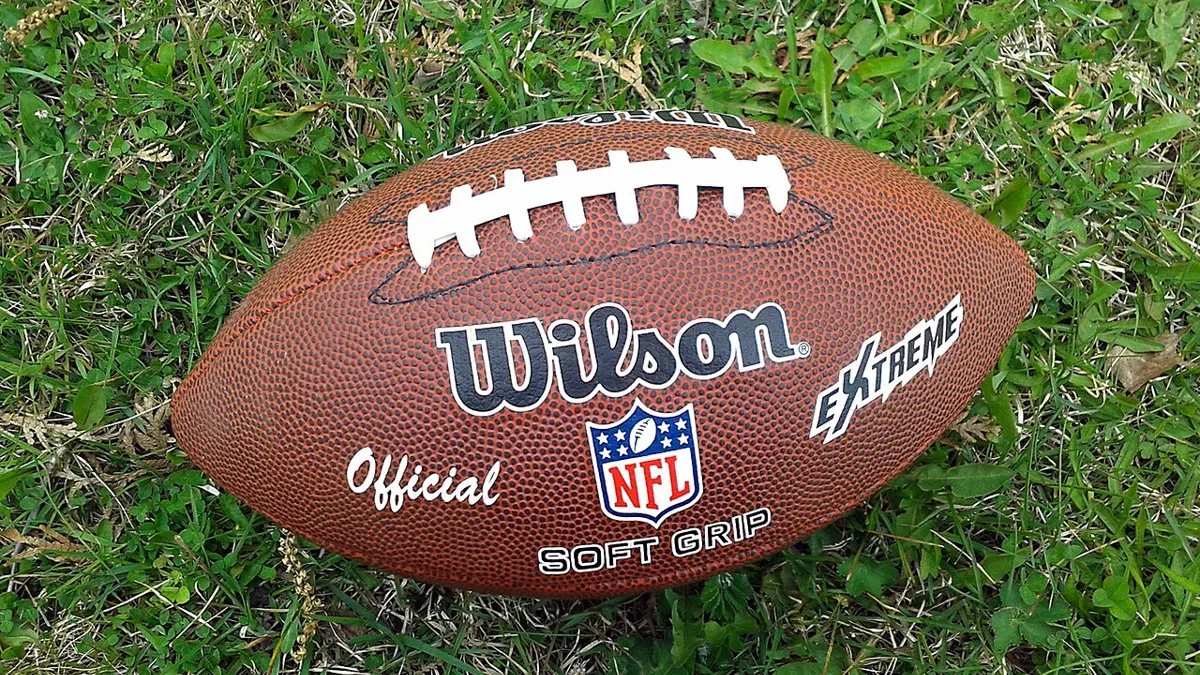
My guy, every February the Super Bowl takes over social media, and plenty of Nigerians who never watch American football suddenly want a stake on it. No shame in that. But this game is nothing like a Saturday EPL match: the scoring is different, the odds are often quoted in a strange American format, the markets go into hundreds of props, and the whole thing runs deep into the night in Nigeria. This guide walks you through it step by step so you know what you're betting on before you put a kobo down.
18+ only. Since the Supreme Court judgment of 22 November 2024 (SC/1/2008), gambling in Nigeria is regulated state by state, for example by the LSLGA in Lagos, with the NLRC covering the FCT. Cloudbet, the crypto sportsbook we link to, is licensed in Curaçao and is not licensed by any Nigerian state regulator. Every odds figure on this page is a made-up example, every percentage is script-computed from those examples, and naira amounts use an example rate of ₦1,500 per US$1. No tip here is a guarantee of anything.
The Super Bowl in one paragraph
The Super Bowl is the final of the NFL, the top American football league in the United States. Two conference champions meet in one game, usually on a Sunday in February, at a stadium picked years in advance. There's no second leg and no replay: one match decides the title. That's part of why it attracts such huge betting interest worldwide. Bookmakers know that, and they build more markets for this one game than for almost any other sporting event in the year.
What time does it start in Nigeria?
Kick-off is usually in the early evening on the US East Coast, around 6:30 PM Eastern time in recent years. In February the East Coast runs on standard time, five hours behind UTC, while Nigeria sits on West Africa Time, one hour ahead of UTC all year with no daylight saving. That puts the start at roughly 12:30 AM on Monday morning in Nigeria. The game, with long breaks for adverts, reviews and the halftime show, normally runs well past three hours, so you could be watching until around 4 AM.
That timing matters more than people think. If you have work or school on Monday, decide in advance whether you'll stay up, or whether you'll place your bets before you sleep and check the results in the morning. Late-night live betting while tired is how a planned ₦5,000 night turns into a ₦50,000 regret. Always confirm the exact kick-off time for that year's game in the official schedule, because broadcast times can shift.
American football scoring, explained for football fans
You don't need to know every rule, but you do need the basics, because the betting markets are built on points:
- Touchdown: 6 points, when a team carries or catches the ball into the end zone.
- Extra point: 1 point, a short kick after a touchdown. Teams can instead try a two-point conversion from close range.
- Field goal: 3 points, a kick through the posts.
- Safety: 2 points, when the defence tackles the ball carrier in his own end zone.
The game has four quarters of 15 minutes of playing time, but the clock stops a lot, which is why the broadcast lasts so long. Because most scores come in lumps of 3 and 7 (a touchdown plus the extra point), the final winning margin lands on 3 or 7 points more often than on most other numbers. Remember that, because it explains why some point spreads are priced the way they are.
In the playoffs, a tie after regulation goes to overtime, and the NFL has changed its playoff overtime rules in recent years. Don't assume a draw like in soccer. Most Super Bowl markets also include overtime in the result, but some markets, such as certain quarter or half bets, settle on regulation only. Read the rule line under each market before you bet.
Reading American odds and turning them into decimal
Most Nigerian betting sites show decimal odds like 1.90 or 2.50. US coverage, social media posts and some sportsbooks use American odds like -110 or +150. Here's how to convert them:
- Minus odds (favourite): decimal = 1 + 100 ÷ the number. So -110 is 1 + 100/110 = about 1.909, and -200 is 1.50.
- Plus odds (underdog): decimal = 1 + the number ÷ 100. So +150 is 2.50, and +250 is 3.50.
| American | Decimal | Break-even win rate |
|---|---|---|
| -200 | 1.50 | 66.67% |
| -150 | 1.667 | 60.00% |
| -120 | 1.833 | 54.55% |
| -110 | 1.909 | 52.38% |
| +100 | 2.00 | 50.00% |
| +120 | 2.20 | 45.45% |
| +150 | 2.50 | 40.00% |
| +250 | 3.50 | 28.57% |
The break-even win rate is simply 1 divided by the decimal odds. It tells you how often a bet must win just to stop losing money. If you want a refresher on decimal odds in general, see our decimal odds guide, or plug numbers into the odds calculator.
The moneyline: who wins the game
The simplest bet is the moneyline: you pick the winner, overtime included. There's no draw option in most books' Super Bowl moneyline, so it works like a two-way market.
Say a book prices the favourite at 1.65 and the underdog at 2.30 (made-up numbers). Add up the implied chances: 1/1.65 is 60.61% and 1/2.30 is 43.48%, which totals 104.08%. That extra 4.08% above 100% is the bookmaker's margin. Strip it out and the book's "fair" view is about 58.2% for the favourite and 41.8% for the underdog.
So the question isn't "who will win?" It's "does the favourite win more often than 60.6% of the time, or the underdog more than 43.5%?" If you can't answer that with some real reasoning, the moneyline is just a coin flip with a fee.
The point spread: the market everybody talks about
Because the two Super Bowl teams are often close in quality, the main market in the US is the point spread. The book gives the favourite a handicap, like -3.5, and the underdog the same number in reverse, +3.5. If you back the favourite at -3.5, they must win by 4 or more points. If you back the underdog at +3.5, they can lose by up to 3 points, or win, and your bet still lands.
Think of it like Asian handicap in soccer, just in points instead of goals. Both sides are usually priced close to evens, often around -110 each, which is 1.91 in decimal. At 1.91 on both sides the book adds up to 104.71%, and you need to win 52.36% of these bets just to break even.
Here's where the "3 and 7" fact matters. A spread of -3 and a spread of -3.5 look almost the same, but they're not. At -3, a 3-point win is a push (stake returned). At -3.5, it's a loss. Because 3-point margins come up so often in this sport, moving across 3 or 7 costs more, or pays more, than moving across other numbers. If one book offers -2.5 and another -3.5 at similar prices, that's a real difference, not a rounding detail.
Totals: over or under the points line
The total (over/under) is a bet on the combined points scored by both teams, overtime usually included. The book might set a line like 47.5, and you choose over or under. As with spreads, totals are usually priced near 1.91 on both sides, so the same 52.36% break-even applies.
What moves a total? The attacking and defensive quality of both teams, weather if the stadium is outdoors (wind hurts passing and kicking), and how each team likes to play: some coaches run the clock with short plays, others pass a lot and score quickly. You'll also see team totals (points for one side only) and totals for halves and quarters.
A practical warning: the first quarter of a Super Bowl is often cagey, because both teams start carefully. Don't assume an early under is easy money, though. Books know this pattern too, and the quarter lines already price it in.
Props: the hundreds of side markets
The Super Bowl is famous for proposition bets, or props: bets on things that happen inside the game rather than the final result. They come in three broad groups:
- Player props: passing yards, rushing yards, receptions, whether a named player scores a touchdown, and so on.
- Game props: first team to score, will there be a safety, will the game go to overtime, total field goals, longest touchdown, winning margin bands.
- Novelty props: things like the coin toss result and other fun markets around the broadcast. Which novelty markets a book offers, and whether they're offered at all, varies a lot.
Props are where many casual punters lose the most, for two reasons. First, the margin on side markets is often higher than on the spread or total. Second, people bet them in bulk "for fun" without doing any maths.
Look at the coin toss as the cleanest example. It's a true 50/50. Priced at 1.91 on both sides, every ₦10,000 you stake loses ₦450 on average, an expected loss of 4.5%. At 1.87 the loss is 6.5%, and at 1.80 it's 10%. There is no skill edge on a coin flip, so the only thing you control is the price you accept.
What happens when you bet ten props for fun
Lots of people place a stack of small props on Super Bowl night. We simulated that: 10 separate props, ₦2,000 each (₦20,000 in total), every one a true 50/50 priced at 1.91, run 20,000 times:
| Result after 10 props | Value |
|---|---|
| Average result | about -₦877 |
| Median result | -₦900 |
| Nights that finished ahead | 37.6% |
| Bad night (worst 10%) | -₦8,540 or worse |
| Good night (best 10%) | +₦6,740 or better |
Read that carefully. Even with fair-looking coin-flip props, you need 6 wins out of 10 to finish ahead, because 5 wins only gets you back ₦19,100 of your ₦20,000. Most nights end slightly down, a few end nicely up, and the averages slowly favour the book. That's fine if you treat it as the price of entertainment. Just don't call it a strategy.
Same-game parlays: why they're so tempting
A same-game parlay (or same-game multi) combines several picks from the same match into one slip, for example the favourite to win, the over, and a player to score. Think of it as an accumulator inside one game.
If the legs were independent, the odds would multiply. Three legs at 1.91 each would pay about 6.97. With each leg a true 50/50, the slip wins 12.5% of the time, and the expected loss jumps to about 12.9% of your stake, almost three times the 4.5% loss of a single. Four legs at 1.91 would pay about 13.31 with an expected loss near 16.8%. In a 20,000-run simulation of the four-leg version, the slip won only 6.4% of the time.
There's a second problem. Same-game legs are often connected. If the favourite wins big, the over and a touchdown from their star player become more likely too. Books know this, so they don't just multiply the odds; they adjust the price for the link between legs, usually in their own favour. That's why the parlay price you see is often lower than multiplying the singles. You can test any combination in our accumulator calculator to see how fast the payout grows and how fast the win chance shrinks.
Futures and specials: MVP and outright winner
Before the game, and even months before it, you can bet on the outright Super Bowl winner and the Super Bowl MVP, the player voted best of the game. Outright markets for the whole season carry big margins, because the book has to price every team. Once the two finalists are known, the outright becomes just the moneyline.
The MVP market is often dominated by quarterbacks, because they touch the ball on almost every attacking play and get the credit when their team wins. That's why quarterback prices are short and most other positions are long. A long price doesn't mean value; it just means unlikely. If you play this market, keep the stakes small and remember the margin across a long list of players is usually large.
18+. Crypto deposits. Cloudbet is licensed in Curaçao, not in Nigeria. Ad: we may earn a commission. Bet only what you can afford to lose.
How to judge a Super Bowl price without being an NFL expert
Honest truth: if you don't follow American football, you won't out-think the US betting market on the main lines. Millions of dollars of sharp money hit the spread and total in the two weeks before the game. What you can do is avoid paying extra:
- Compare prices. A spread at 1.95 instead of 1.87 is a big difference over time. On a two-way market, that change alone moves the margin from near 5% to under 3%.
- Prefer main markets over novelty props. The spread and total are where the market is tightest. Novelty props are where margins hide.
- Watch the key numbers. Don't take -3.5 casually when -3 or -2.5 is available somewhere at a similar price.
- Bet singles, not big parlays. Fewer legs means less margin stacked on your slip.
- Check rules. Overtime included or not, what happens if a player doesn't play, and how ties on a whole-number line are settled.
If you'd rather follow your own reasoning, focus on simple things you can check: injuries announced in the final week, the weather forecast for an outdoor stadium, and each team's style. Write down why you think a line is wrong before you bet. If you can't explain it in two sentences, skip it.
Live betting during the game
Live markets update after almost every play, and the breaks in American football give books time to reprice. Live betting can be fun, but in Nigeria it comes with two big problems: the hour and the delay.
The hour, because you'll be betting between roughly 12:30 AM and 4 AM, often tired and after a few drinks at a viewing party. The delay, because your stream may run seconds or more behind the real action, while the book's data feed is close to live. Books also hold bets for a short moment before accepting them, so you can't beat them on speed.
If you want to bet live, set two rules before kick-off: a maximum number of live bets (for example three) and a maximum live stake for the night. See our live betting guide for more on how in-play pricing works.
The halftime show and the long break
The Super Bowl halftime break is much longer than a normal one, because of the big halftime show. For punters, that's a danger zone: you're bored, your team is losing, and the book is happily offering second-half lines. Decide before kick-off whether you'll bet the second half at all. If you lost in the first half, don't use halftime to chase.
A budget plan for Super Bowl night
Treat the game like a night out with a fixed cost. Here's a simple example plan with a ₦20,000 budget (made-up figures):
| Bet type | Share of budget | Amount | Why |
|---|---|---|---|
| Main market (spread or total), placed before sleep | 50% | ₦10,000 | Tightest margin, decision made while fresh |
| Two or three small props | 25% | ₦5,000 | Fun money, priced and accepted as such |
| Live bets (max 3) | 25% | ₦5,000 | Only if you're actually awake and sober |
The key rule: if the live part of the budget is gone, you're done. No topping up at 2 AM. If you need a structure for the rest of the year too, read our staking plan guide.
Funding a Super Bowl bet from Nigeria
Local Nigerian books may or may not carry deep NFL markets; many focus on soccer and offer only a few Super Bowl lines. International crypto sportsbooks usually carry the full spread, total and prop menu. If you go the crypto route:
- Fund a day or two early, not at midnight on game night. Network delays and P2P trades can take longer than you expect.
- Use a stablecoin like USDT if you want your budget to stay steady in dollar terms. With bitcoin, the coin's price can move while your balance sits there.
- Check the network before you send. Sending on the wrong network can lose the funds.
- Keep a note of what you deposited in naira terms, so you know what the night really cost.
Our guide on depositing bitcoin at Cloudbet goes through the steps. On Cloudbet, the minimum deposit and the network fee for withdrawals are shown in the cashier, and its help centre says withdrawals are typically processed within 24 hours, according to its help pages when we checked. Its terms also say extra verification is required once cumulative deposits reach about US$2,200. Confirm the current figures yourself before you deposit.
A worked example from start to finish
Let's follow a made-up punter in Ibadan, call him Tunde, who wants a small stake on the game.
- Budget: Tunde decides ₦15,000 total, about US$10 at the example rate. That's money he can lose without stress.
- Funding: on Friday he buys USDT and sends it to his sportsbook account on the correct network, then checks it's credited.
- Main bet: on Sunday evening he compares spread prices and takes the underdog +3.5 at 1.95 with ₦7,500, because he believes the underdog's defence keeps games close. He writes that reason down.
- Props: he adds two small props at ₦2,500 each: the total field goals over, and a player he follows to score a touchdown.
- Live: he keeps ₦2,500 back for one live bet only if something clear happens, like a key injury.
- Sleep plan: he watches the first half, doesn't see a clear live chance, and goes to bed at halftime without betting the remaining ₦2,500.
Whatever the result, Tunde's night cost him at most what he planned, and nothing he did depended on being awake at 3 AM. That's what a good Super Bowl night looks like.
Common mistakes Nigerians make on Super Bowl night
- Treating it like a soccer final. There's usually no draw, scoring comes in lumps, and the key numbers are 3 and 7.
- Misreading American odds. Reading +150 as 1.50 instead of 2.50, or -150 as 2.50 instead of 1.667.
- Stacking same-game legs. Every extra leg multiplies the margin and the miss chance.
- Chasing in the halftime break. The long break invites panic bets.
- Funding at midnight. Rushing a crypto transfer is when people choose the wrong network.
- Betting tired or drunk. The kick-off time in WAT is the biggest hidden risk of all.
- Believing "lock" tips on social media. Nobody sells guaranteed wins; if they could, they wouldn't need your money.
Quick glossary
- Moneyline: pick the winner, usually overtime included.
- Spread: handicap in points, e.g. -3.5 or +3.5.
- Total: over/under combined points.
- Push: a tie on a whole-number line; stake returned.
- Prop: a bet on something inside the game.
- Same-game parlay: an accumulator of picks from one game.
- Juice or vig: US slang for the bookmaker's margin.
- Key numbers: common winning margins, mainly 3 and 7.
- MVP: most valuable player award for the game.
Legal, tax and safety notes for Nigeria
Since the Supreme Court judgment of November 2024, each state regulates gambling within its borders, with the LSLGA in Lagos as the best-known example and the NLRC covering the FCT. Offshore crypto sportsbooks like Cloudbet are licensed abroad, in Cloudbet's case in Curaçao, and are not licensed by any Nigerian state regulator. That means a Nigerian regulator can't help you if there's a dispute. Read our guide to whether online betting is legal in Nigeria before you sign up anywhere, and check our betting tax guide for how winnings may be treated.
Keep your account details private, use a strong password and two-factor login, and never share a screenshot that shows your full wallet address or balance in a public group.
Before-kick-off checklist
- I know the kick-off time in WAT for this year's game.
- I've set one budget for the whole night and written it down.
- My account is funded and the deposit is credited.
- I've converted every American price I'm looking at into decimal.
- I've compared at least two prices on my main bet.
- I know whether my markets include overtime.
- I've set a maximum number of live bets.
- I know when I'm going to sleep.
My take
The Super Bowl is one of the most fun sporting nights of the year, even from Nigeria. Bet it like a fan, not like a desperate man: one main bet you can explain, a couple of small props for fun, a hard budget, and a bedtime. If you find yourself staking more to win back what you lost at 2 AM, stop and talk to someone. Our responsible gambling page lists tools that help, and Gamble Alert is available 24/7 on +234 916 295 7989, or toll-free on +234 705 889 0073 and +234 705 889 0074.
Questions punters ask
What time does the Super Bowl start in Nigeria?
Usually around 12:30 AM on Monday morning WAT, since kick-off is typically around 6:30 PM US Eastern time. Check the official schedule for the exact time each year.
How do I convert American odds to decimal?
For minus odds, decimal = 1 + 100 ÷ the number (-110 is about 1.91). For plus odds, decimal = 1 + the number ÷ 100 (+150 is 2.50).
What does -3.5 mean in Super Bowl betting?
The favourite must win by 4 or more points for a -3.5 bet to win. A +3.5 bet on the underdog wins if they lose by 3 or fewer, or win.
Are Super Bowl props a good bet?
They're fun, but margins are often higher than on the spread or total. A fair 50/50 prop at 1.91 loses about 4.5% of your stake on average.
Are same-game parlays worth it?
They pay big because they rarely win. In our example, a four-leg parlay of 50/50 picks at 1.91 won only about 6.4% of the time, with an expected loss near 16.8%.
Is Cloudbet licensed in Nigeria?
No. Cloudbet is licensed in Curaçao and is not licensed by any Nigerian state regulator.
Where can I get gambling help in Nigeria?
Gamble Alert, 24/7: +234 916 295 7989, or toll-free +234 705 889 0073 and +234 705 889 0074.
18+. Crypto deposits. Cloudbet is licensed in Curaçao, not in Nigeria. Ad: we may earn a commission. Bet only what you can afford to lose.
If betting has stopped being fun, talk to someone. Gamble Alert, a Nigerian non-profit, runs a free, confidential 24/7 helpline: +234 916 295 7989, toll-free +234 705 889 0073 / 0074. Source: gamblealert.org.