How to Bet on Darts from Nigeria: Formats, Throw Advantage, 180s, Checkouts, Handicaps and Value Maths
Welcome bonus for new players + fast crypto payouts. Just helping a brother out.
18+. Crypto deposits. Cloudbet is licensed in Curaçao, not in Nigeria. Ad: we may earn a commission. Bet only what you can afford to lose.
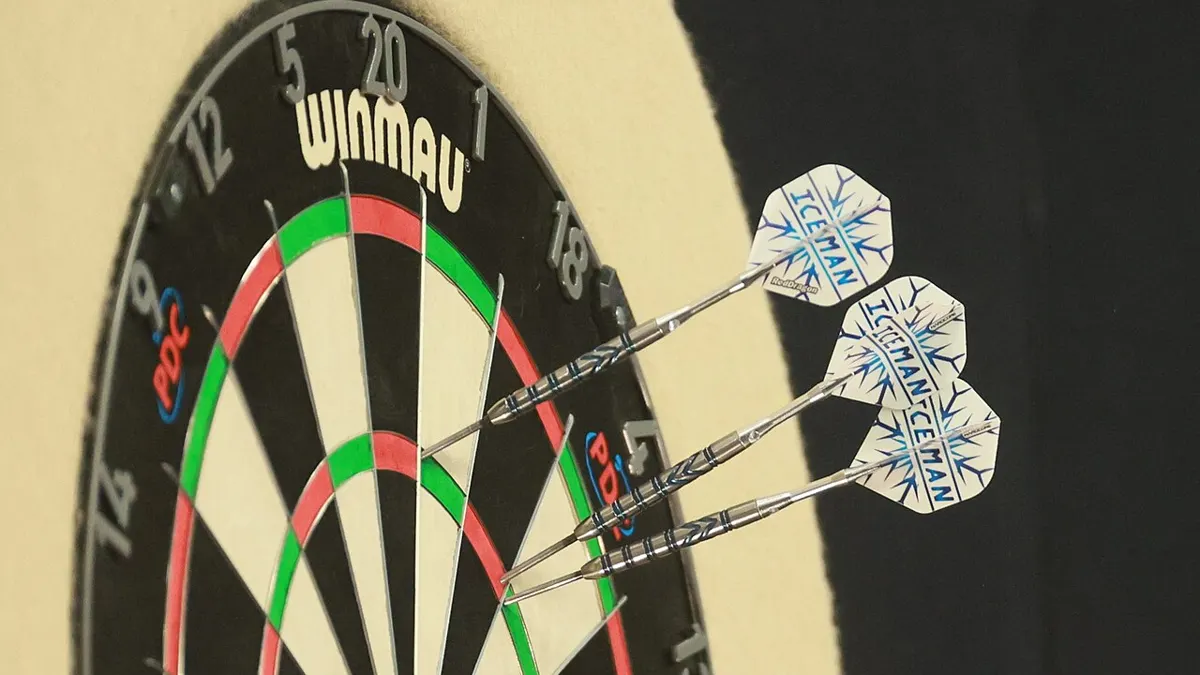
Darts is not a sport you see on many viewing-centre screens in Nigeria, but it is one of the busiest betting sports in the world. There are events almost every week, matches are short, and the markets go far beyond who wins: total 180s, highest checkout, correct score in legs, handicaps and more. Because fewer Naija punters understand it, it can also be a place where a careful bettor gets an honest edge. This guide shows how to bet on darts from scratch: how the scoring and formats work, why throwing first is so important, how to price the main markets, and the mistakes that empty wallets. No sure tips, my brother, just the method.
18+ only. Since the Supreme Court judgment of 22 November 2024, gambling in Nigeria is regulated at state level (LSLGA in Lagos, for example), while the NLRC still covers the FCT. Cloudbet, the crypto sportsbook we link to, is licensed in Curaçao and is not licensed by any Nigerian state regulator. All players in our examples are labelled A and B, and every price and stake is illustrative.
Darts basics in five minutes
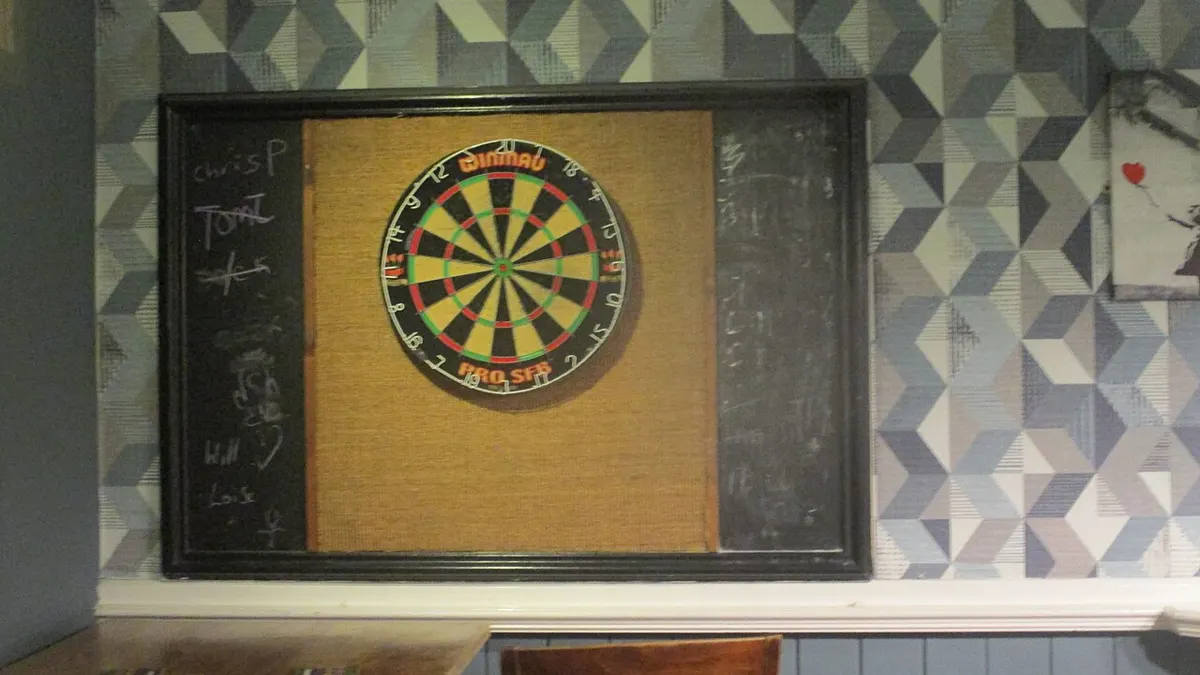
A standard dartboard has twenty numbered segments. The thin outer ring scores double the number, the thin inner ring scores treble, the green outer bull is worth 25 and the red bullseye is worth 50. A player throws three darts per turn, called a visit. The highest possible visit is 180: three darts in the treble 20.
Professional matches are usually played as "501". Each player starts on 501 and subtracts what he scores. To win the leg he must hit exactly zero, and the final dart must land in a double or the bullseye. If he goes below zero, or leaves himself on 1, the visit is "bust" and his score goes back to what it was before that visit. The highest finish possible in one visit is 170 (treble 20, treble 20, bullseye). A perfect leg, 501 in nine darts, is called a nine-darter and is rare even at the top level.
Three numbers describe a player's level and you will see them on every stats site:
- Three-dart average. Average points per visit. The higher it is, the faster a player gets down to a finish.
- Checkout percentage. How often he hits the double when he has a chance to finish.
- 180s per leg. How often he hits the maximum. Important for 180 markets.
Legs, sets and why format matters
A leg is one game of 501. Matches are played either in legs ("first to 6 legs", "first to 11 legs") or in sets, where each set is a short race of legs, often first to 3, and the match is first to a number of sets. The sets format is famous from the World Championship. Some events also have special rules: one major has traditionally required players to start each leg on a double as well as finish on one. Always check the format of the exact event before betting, because it changes the maths.
The key idea: longer matches favour the better player. One bad leg can decide a short match; over a long match the stronger player's quality usually shows. We'll put numbers on that below.
The throw: the most important idea in darts betting
Players take turns throwing first in each leg. Throwing first is a big advantage, because the player who starts gets to a finish one visit earlier. Winning a leg on your own throw is called a "hold"; winning one on your opponent's throw is a "break". At the top level, players hold their throw far more often than they break.
So the useful way to rate a player is not "how many legs does he win?" but "how often does he win a leg when he throws first, and how often when his opponent does?" Suppose:
| Rating | Player A | Player B |
|---|---|---|
| Wins leg when throwing first | 65% | 58% |
| Wins leg when opponent throws first | 42% (100% − 58%) | 35% (100% − 65%) |
| Average share of legs | 53.5% | 46.5% |
A 53.5% share of legs sounds close to a coin flip. It isn't, once you play enough legs, as the next table shows.
From legs to match odds
We calculated Player A's chance of winning matches of different lengths with A throwing first in the first leg and throws alternating, using the ratings above:
| Format | A's chance | Fair odds A | Fair odds B |
|---|---|---|---|
| First to 6 legs | 62.5% | 1.60 | 2.67 |
| First to 8 legs | 63.5% | 1.57 | 2.74 |
| First to 10 legs | 64.6% | 1.55 | 2.82 |
| First to 11 legs | 65.0% | 1.54 | 2.86 |
| First to 3 sets (sets first to 3 legs) | 64.0% | 1.56 | 2.78 |
| First to 4 sets | 65.7% | 1.52 | 2.92 |
| First to 7 sets | 69.9% | 1.43 | 3.32 |
The same two players produce very different prices depending on format. In a short first-to-6 match, the weaker player wins well over a third of the time. Over a long sets match he wins less than a third. That is why upsets are common in short floor events and early rounds, and rarer in long later rounds. When a book prices a short match as if it were a long one, the underdog can be value.
Check a price against your fair number. If A is offered at 1.55 in a first-to-6 match, the expected value of a ₦1,000 bet is 0.625 × 1,550 − 1,000 ≈ −₦31. At 1.70 it becomes 0.625 × 1,700 − 1,000 ≈ +₦63. Our odds calculator converts any price to a percentage instantly.
Where do the leg ratings come from?
You can build rough hold and break ratings from public stats:
- Start with each player's three-dart average over a decent sample, ideally the last few months of matches, weighted towards stronger opposition.
- Look at checkout percentage. A heavy scorer who misses doubles wins fewer legs than his average suggests.
- Check hold and break percentages directly if a stats site lists them. They capture both scoring and finishing.
- Adjust for the stage. Some players raise their level on television; others play better in quiet floor events.
- Adjust for form and fitness, but don't overreact to one match.
Even a rough rating is better than "he is famous". Big names in darts often stay short in the market long after their level has dropped.
Match winner bets
The simplest market is who wins the match. In most formats there is no draw. Some league-style formats with an even number of legs have allowed draws in the past, in which case the market becomes three-way, so read the market name. Things to check before backing anyone:
- Format length, using the table above.
- Who throws first in the first leg (often decided by a bull-up). In short matches, starting first is worth a little extra.
- Recent averages against similar opponents.
- Schedule. In multi-day floor events, players can play several matches in one day. Fatigue and travel matter.
- Stage experience for big televised events with large, noisy crowds.
Correct score in legs
Correct score bets pay on the exact final score. Using our ratings in a first-to-6 match with A throwing first, the most likely scores are:
| Score (A–B) | Chance | Fair odds |
|---|---|---|
| 6–3 | 16.4% | 6.10 |
| 6–5 | 16.1% | 6.21 |
| 4–6 | 12.7% | 7.87 |
| 6–4 | 11.3% | 8.85 |
| 6–2 | 9.1% | 11.0 |
| 5–6 | 8.7% | 11.5 |
Notice something strange: A, the better player, is more likely to win 6–3 than 6–4, and B is more likely to win 6–4 than 5–6. That is the throw at work. A starts the odd-numbered legs, so the ninth leg is his throw; B starts the even-numbered legs, so the tenth leg is his. Scores that end on the winner's own throw are more common. Many casual punters, and sometimes bookmakers' quick prices, miss this pattern. Correct score margins are usually wide, so only bet when the gap between offer and fair price is clear.
Handicaps and total legs
Handicap markets give one player a start in legs or sets. In our first-to-6 example:
- A −1.5 legs (A must win by at least 2) wins about 46.4% of the time, fair odds about 2.16.
- A −2.5 legs (win by at least 3) wins about 35.1% of the time, fair odds about 2.85.
- B +1.5 legs is the mirror of A −1.5, about 53.6%, fair about 1.87.
The expected number of legs in this match is about 9.3. Total legs markets (over or under 9.5, for example) depend heavily on how evenly matched the players are and on how often they hold throw. Two strong holders produce long matches; a mismatch produces short ones.
A practical tip: when a strong favourite is short in the match market, the handicap often gives a fairer price for the same opinion. If you also follow football handicaps, our handicap guide explains the settlement logic, which works the same way.
180s markets
Darts has its own special markets, and the most popular is the number of 180s. You can bet on total 180s in a match, which player hits more, or whether a player hits at least one. To price total 180s you need two things: how many legs you expect, and how many 180s per leg the two players produce together.
Say our two players together hit about 0.45 maximums per leg and we expect about 9.3 legs. That gives about 4.2 expected 180s. Treating 180s as random events around that average:
| Line | Chance of over | Fair odds over | Fair odds under |
|---|---|---|---|
| Over 3.5 | 60.1% | 1.66 | 2.51 |
| Over 4.5 | 40.7% | 2.46 | 1.69 |
| Over 5.5 | 24.4% | 4.10 | 1.32 |
If over 4.5 is offered at 2.75, a ₦1,000 bet is worth about 0.407 × 2,750 − 1,000 ≈ +₦119. If it is offered at 2.30, it is worth about −₦64. Two cautions. First, the number of legs is uncertain, and a short, one-sided match kills an over bet. Second, 180 rates vary by player style. Some players aim for treble 20 relentlessly, while others switch to treble 19 when blocked. Check each player's 180s per leg, not just his average.
Checkout markets
Checkout markets include the highest checkout in the match (often an over/under line around 100), whether anyone finishes on 170, and sometimes the colour of the double used to win the match. What drives them:
- Number of legs. More legs, more chances for a big finish.
- Player style. Some players go for big finishes often; others set up safer, smaller ones.
- Scoring levels. High scorers reach finishing range sooner, often on bigger numbers.
A 170 checkout or a nine-darter in a single match is unlikely, so these markets are priced as long shots. They are entertainment bets. If you play them, use tiny stakes and accept that most of them lose.
Outrights and tournament betting
You can also bet on who wins a whole tournament. Darts outrights are tricky because draws (brackets) matter a lot: a strong player in a tough section may face the favourite early. Before you back anyone, look at the draw, the format of each round (short early rounds produce more upsets) and the schedule. Each-way terms are often available; check how many places are paid. As with any long bet, keep the stake small. Our guide on outright betting on a league winner explains margins and each-way maths that apply here too.
18+. Crypto deposits. Cloudbet is licensed in Curaçao, not in Nigeria. Ad: we may earn a commission. Bet only what you can afford to lose.
Live darts betting
Darts is fast. A leg can finish in under two minutes, and prices change after every visit. Live betting can work if you understand holds and breaks: after an early break, the match price swings, but in a long format the trailing player still has plenty of chances to break back. The trap is speed. Your stream is almost certainly behind the bookmaker's data, and markets suspend when a player is on a finish. Don't try to beat the feed. Bet live only when you have a view, for example "the price on the trailing player is too long given how many legs remain". Our live betting guide covers acceptance delays and cash out.
When darts is on in Nigerian time
Most big events are in the UK and Europe. The UK uses GMT in winter, one hour behind Lagos, and British Summer Time from late March to late October, which matches Lagos. So a 19:00 UK evening session is 20:00 WAT in winter and 19:00 WAT in summer. Events in continental Europe run on Central European Time, the same as Lagos in winter and one hour ahead in summer. The World Championship has traditionally been held in London across Christmas and the New Year, with afternoon and evening sessions most days, which fits nicely into Nigerian evenings. Weekly league events have traditionally been on Thursday nights. Check official schedules each season.
A quick tour of the darts calendar
- The World Championship. The biggest event, using a sets format with longer matches in later rounds.
- Weekly league events. Short matches on consecutive weeks, big names, plenty of markets.
- Televised majors. A handful of events through the year, each with its own format.
- Floor events. Large fields, short matches, many games in a day, often less coverage. Prices can be softer but information is thin too.
- European and international events. Weekend events in different countries with growing fields.
The shorter the format and the less coverage an event gets, the more upsets happen and the more your own homework matters. Legendary champions have shown how dominance looks over long formats (Phil Taylor won sixteen world titles), but in short floor matches even the best lose regularly.
Worked example: one evening session
Suppose your bankroll is ₦30,000 and your unit is 1%, so ₦300 per bet. An evening session has four first-to-6-legs matches. You rate them and compare with the board:
| Match | Your view | Offer vs fair | Decision |
|---|---|---|---|
| Favourite vs qualifier | Favourite 62.5% | 1.55 vs 1.60 | No bet |
| Two heavy scorers | Over 4.5 180s at 40.7% | 2.75 vs 2.46 | Bet ₦300 |
| Even match, B throws first | B about 52% | 2.10 vs 1.92 | Bet ₦300 |
| Big name in poor form | Fair 1.80 | 1.45 offered | No bet (consider opponent) |
If both bets win, you collect ₦825 + ₦630 = ₦1,455, a profit of ₦855. If both lose, you're down ₦600, which is 2% of your bankroll. Over time, consistently getting prices above your fair line is what counts. In the last match, the big name's price is far too short for his current form, so the value, if any, is on his opponent. Check that price too before you bet.
Staking and bankroll
Darts offers dozens of matches a day during floor events. That volume is dangerous. Set a unit of 1% to 2% of a bankroll you can afford to lose, decide in advance how many bets you'll place per session, and never double up to chase a loss. Short matches mean big variance: even a good bettor will have losing runs of five or more. Our staking plan guide explains flat stakes and why chasing is a trap.
If you bet with a crypto sportsbook like Cloudbet, size your stakes in naira terms rather than in coins, and consider a stablecoin such as USDT so that your bankroll does not swing with the coin price. Use the exact network shown in the cashier and test with a small deposit first.
Common darts betting mistakes
- Betting on names. Former champions often stay short after their level drops.
- Ignoring format. Treating a first-to-6 match like a first-to-7-sets match overrates favourites.
- Forgetting the throw in correct score and handicap bets.
- Backing overs on 180s without checking how many legs you really expect.
- Chasing nine-darter and 170 bets as if they were investments.
- Betting every match in a floor event just because it's on.
- Trusting paid "fixed match" sellers on social media. They are scams.
A checklist before every darts bet
- What is the format and who throws first?
- What are each player's hold and break rates, average, checkout percentage and 180s per leg?
- What is my fair price for the match, the handicap and the 180s line?
- Does any offer beat my fair price by a clear margin?
- Have I checked fatigue, schedule and stage experience?
- Is my stake one normal unit?
- Have I logged the price, my estimate and the result?
If you also bet on other individual sports, our guides to golf betting and horse racing use similar thinking about fields, formats and outrights.
Reading a darts stats page without getting lost
Stats sites throw a lot of numbers at you. Focus on a few and ask the right question of each:
| Stat | What it tells you | Watch out for |
|---|---|---|
| Three-dart average | Overall scoring power | Averages against weak opponents look better than they are |
| First-nine average | Scoring in the opening three visits of each leg | Great for holds, but says little about finishing |
| Checkout % | Finishing reliability | Small samples swing wildly; use months, not one event |
| Hold % / break % | Leg wins on and against the throw | Depends on the strength of opponents faced |
| 180s per leg | Maximum rate for 180 markets | Style changes when treble 20 is blocked |
| Legs won in last X matches | Recent form | Easy to overreact; weigh it against the long-term level |
A good habit is to keep your own small spreadsheet of the 20 or 30 players you bet on most, updated once a week. You will soon see when the market's view of a player lags behind his real level.
Darts betting glossary
- Leg: one game of 501.
- Set: a mini-match of legs, often first to 3, used in some formats.
- Hold: winning a leg you threw first in.
- Break: winning a leg your opponent threw first in.
- Bull-up: each player throws at the bull to decide who throws first.
- Checkout: the finishing visit that takes a player to zero on a double.
- Bust: scoring too much, so the visit doesn't count.
- Ton / ton-plus: a visit of 100, or more than 100.
- Nine-darter: a perfect leg of 501 in nine darts.
- Floor event: a non-televised tour event with a big field and short matches.
Know your limits
Darts runs late into the night and offers a new match every few minutes during busy events. If you notice you are betting with money for rent, food or school fees, borrowing to bet, or staying up to chase losses, stop and talk to someone. Gamble Alert offers free, confidential support in Nigeria 24/7 on +234 916 295 7989, or toll-free on +234 705 889 0073 and +234 705 889 0074. Read our responsible gambling page, and check whether online betting is legal in Nigeria in your state.
Bottom line
To bet on darts well, understand the throw, respect the format, rate players by holds and breaks rather than reputation, and price 180s and checkouts from expected legs. Bet only where the offer beats your fair price, at small flat stakes, and treat long-shot specials as entertainment. 18+ only. Cloudbet is licensed in Curaçao and is not licensed by any Nigerian state regulator. Only stake what you can afford to lose.
Questions punters ask
How do you bet on darts?
Pick a market such as match winner, handicap, correct score or total 180s, check the format and who throws first, estimate your own fair price from player stats, and bet only when the offer beats it.
Why does throwing first matter in darts?
The player who throws first in a leg reaches a finish one visit earlier, so players win far more legs on their own throw. This affects match, handicap and correct score prices.
Do longer darts matches favour the better player?
Yes. In our example, a player winning 53.5% of legs wins about 62.5% of first-to-6 matches but about 70% of first-to-7-sets matches.
How are 180s bets priced?
Multiply the expected number of legs by the players' combined 180s per leg to get an average, then work out the chance of going over the line.
What time is darts on in Nigeria?
UK evening sessions at 19:00 are 20:00 WAT in winter and 19:00 WAT during British Summer Time. Check each event's schedule.
Is Cloudbet licensed in Nigeria?
No. Cloudbet is licensed in Curaçao and is not licensed by any Nigerian state regulator.
Where can I get help with gambling in Nigeria?
Gamble Alert, 24/7: +234 916 295 7989; toll-free +234 705 889 0073 or +234 705 889 0074.
18+. Crypto deposits. Cloudbet is licensed in Curaçao, not in Nigeria. Ad: we may earn a commission. Bet only what you can afford to lose.
If betting has stopped being fun, talk to someone. Gamble Alert, a Nigerian non-profit, runs a free, confidential 24/7 helpline: +234 916 295 7989, toll-free +234 705 889 0073 / 0074. Source: gamblealert.org.