Crypto Betting Meaning: What It Is, What It Isn’t, and a Plain A–Z Glossary for Naija Beginners
Welcome bonus for new players + fast crypto payouts. Just helping a brother out.
18+. Crypto deposits. Cloudbet is licensed in Curaçao, not in Nigeria. Ad: we may earn a commission. Bet only what you can afford to lose.
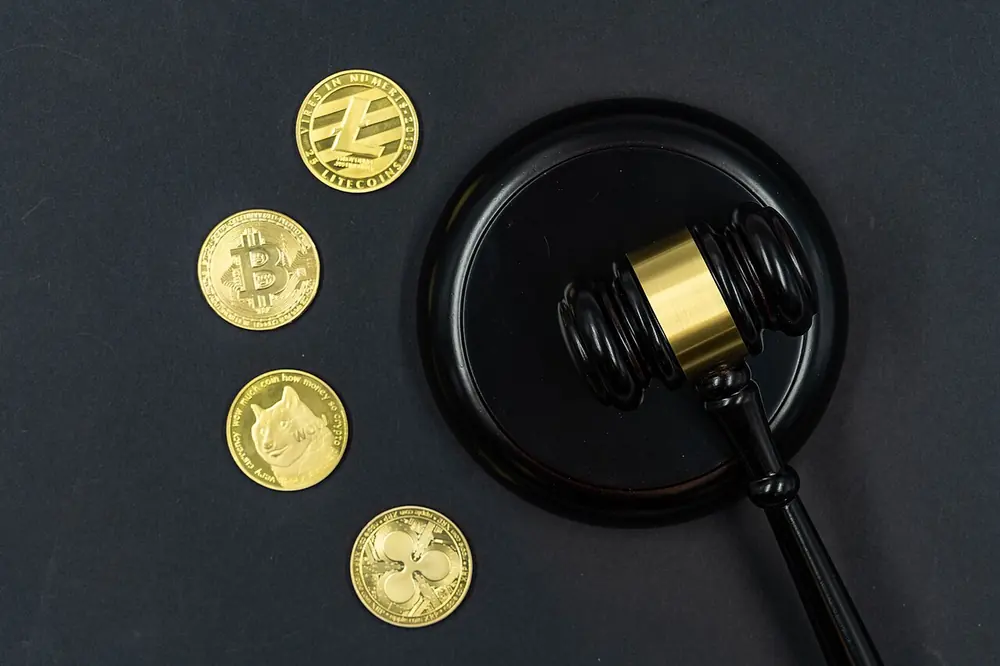
Let me break it down for you, my guy. Crypto betting simply means placing a bet where the money going in and coming out is cryptocurrency — Bitcoin, USDT, Ethereum and the rest — instead of naira in a bank account. The match, the odds and the bet slip work the same way. What changes is the wallet, the speed, the fees and the risks around the money. This page gives you the meaning in one sentence, then unpacks every piece of it, then closes with an A–Z glossary so no word on a crypto sportsbook catches you off guard.
18+ only. Since the Supreme Court judgment of 22 November 2024, betting in Nigeria is regulated by the states, with the NLRC still covering the FCT. Cloudbet, the crypto sportsbook we link to, holds a Curaçao licence and is not licensed by any Nigerian state regulator. Every amount, fee and rate below is illustrative.
The one-sentence meaning
Crypto betting is gambling where you deposit, stake and get paid in cryptocurrency, usually at an offshore site that keeps your balance in coins.
That sentence has four parts worth slowing down on:
- “Gambling” — it is still betting. The odds still include a margin, and most punters still lose over time. Crypto does not change the maths of the bet.
- “Deposit, stake and get paid” — the whole cycle is in coins. Some sites show your balance converted into dollars for convenience, but underneath it is crypto.
- “Cryptocurrency” — either a coin whose price moves (BTC, ETH) or a stablecoin pegged to the US dollar (USDT, USDC).
- “Offshore site” — Nigerian state-licensed shops work in naira. Crypto sportsbooks that accept Nigerians are licensed abroad. Cloudbet’s licence is from Curaçao.
Breaking the phrase into its two halves
What “crypto” brings
Cryptocurrency is digital money recorded on a public ledger called a blockchain. You hold it in a wallet — either an app where you control the private keys yourself, or an account at an exchange that holds the keys for you. Sending coins means broadcasting a transaction that the network confirms. There is no bank in the middle to reverse it.
What “betting” brings
Betting is staking money on an uncertain outcome at a price called odds. Decimal odds of 2.50 mean a winning 10 USDT stake returns 25 USDT. The bookmaker builds a margin into those odds, which is how it makes money over thousands of bets. If odds are new to you, read crypto betting odds explained first.
Put them together
Crypto betting is the second half running on the first half’s rails. The bet slip is the familiar part; the rails are the new part, and the rails are where most beginner mistakes happen.
What crypto betting is NOT
Google mixes several different ideas under this phrase. Here is how to keep them apart:
| Phrase | What it actually means | Same as crypto betting? |
|---|---|---|
| Betting with crypto | Using coins as your money to bet on football, esports, casino games | Yes — this is the main meaning |
| Betting on crypto | Predicting whether BTC or ETH will go up or down | Related but different — see betting on crypto price |
| Crypto trading | Buying and selling coins hoping the price moves your way | No — though volatile trading can feel like gambling |
| Crypto spread betting | A financial product on price movements, regulated in some countries | No — it is a derivative, not a sports bet |
| Prediction markets | Buying Yes/No shares on events, often settled in stablecoins | A cousin — see crypto betting marketplace |
| “Crypto investment” groups promising daily returns | Usually Ponzi schemes | No — and avoid them |
The mix-up matters because people who think they are “investing” keep topping up after losses. Betting is entertainment with an expected cost. Call it what it is.
How crypto betting works for someone in Nigeria, step by step
- Get coins. Most Nigerians buy USDT with naira through a peer-to-peer (P2P) marketplace on an exchange, paying a seller by bank transfer.
- Move coins to the betting site. On the sportsbook’s deposit page you choose a coin and a network, copy the deposit address, and send from your wallet. On Cloudbet the minimum deposit is around US$1 or less and is shown on that screen; anything below the minimum is not credited.
- Bet. Your balance shows in that coin. Stakes come out of it and winnings go back into it.
- Withdraw. You request a withdrawal to your own wallet address. On Cloudbet the network fee is shown before you confirm and withdrawals are typically processed within about 24 hours; minimums vary by coin.
- Turn coins back into naira. Sell the USDT through P2P and receive naira in your bank account.
Our step-by-step guide how to bet on crypto covers the screens, and crypto withdrawals on betting sites handles the cash-out side.
Why Nigerian punters look into it
- Dollar value. A USDT balance holds its dollar value even when the naira moves. Some punters like keeping a betting pot in dollars; see bet in dollars from Nigeria.
- Market range. International crypto sportsbooks often list more leagues, esports and niche markets than local shops.
- Payment friction. Some punters have had card payments to foreign sites declined; coins avoid that particular problem.
- Speed of withdrawals. Once a withdrawal is processed, the coins move on the network in minutes for most coins.
The honest downsides
- Irreversible mistakes. Wrong network or missing memo can mean coins are lost or stuck for a long time.
- Price risk. If you bet in BTC, your balance rises and falls with the Bitcoin price on top of your betting results.
- Extra fees. P2P spread on the way in, network fees, P2P spread on the way out.
- No local regulator. Offshore books are outside the Nigerian state system, so complaints go to the operator or its foreign licensing body.
- Scam magnets. Fake sites and “recovery agents” target crypto users because transfers cannot be reversed.
We weigh these point by point in crypto betting vs traditional betting.
Naira betting vs crypto betting in one glance
| Naira betting at a local shop | Crypto betting offshore | |
|---|---|---|
| Money in | Bank transfer, card, USSD, agent | Coins sent from a wallet |
| Balance held in | Naira | The coin you deposited |
| Licence | Nigerian state regulator (or NLRC in the FCT) | Foreign — Curaçao in Cloudbet’s case |
| Can a payment be reversed? | Sometimes, through the bank | No — blockchain transfers are final |
| Main extra risk | Payout caps and bonus terms | Network mistakes, coin price swings, P2P fees |
Neither one changes the core fact that betting has a built-in cost. The table just shows where the differences really sit.
Stablecoin vs volatile coin: the meaning changes with the coin
“Betting with crypto” means something quite different depending on which coin you use. Take an illustrative 50-unit stake that wins at odds 2.00:
| Coin | Stake value at bet time | Payout | If coin price drops 8% before you cash out |
|---|---|---|---|
| USDT | US$50 | 100 USDT | Still ~US$100 — the peg holds |
| BTC (equivalent amount) | US$50 | Double the BTC | ~US$92 — you won the bet but lost on the coin |
That is why most guides for beginners suggest a stablecoin. Your result then reflects your betting, not the crypto market.
18+. Crypto deposits. Cloudbet is licensed in Curaçao, not in Nigeria. Ad: we may earn a commission. Bet only what you can afford to lose.
Is crypto betting legal in Nigeria?
There is no simple yes or no. Betting is regulated by each state since the 22 November 2024 judgment, with the NLRC covering the FCT. State licences are issued to operators that work in naira inside Nigeria. Offshore crypto sportsbooks are not part of that system. On the crypto side, the Central Bank relaxed its earlier restriction on banks dealing with crypto firms in December 2023, and the securities regulator has been bringing exchanges under its rules — but none of that licenses a betting site. Read is online betting legal in Nigeria for detail.
The crypto betting A–Z glossary
Every term you are likely to see, in plain language:
- Address
- A long string of letters and numbers that identifies where coins should be sent. Each coin and network has its own format.
- Altcoin
- Any coin other than Bitcoin.
- Blockchain
- The public ledger that records every transaction for a coin.
- Block explorer
- A website where you paste a transaction ID to see if it has confirmed.
- Cash-out
- Settling a bet early at a price the sportsbook offers, before the event ends.
- Cold wallet
- A wallet kept offline, such as a hardware device. Safer for long-term holding, slower for betting.
- Confirmations
- The number of blocks added after your transaction. Sites credit a deposit after a set number.
- Custodial wallet
- A wallet where a company (often an exchange) holds the keys for you.
- Deposit minimum
- The smallest amount a site will credit. Sending less can mean the coins are not credited.
- Gas
- The fee paid to process a transaction on Ethereum-style networks. It goes up when the network is busy.
- Hot wallet
- A wallet connected to the internet, such as a phone app. Convenient, but keep only what you need in it.
- House edge
- The casino’s built-in advantage on a game, as a percentage of stakes over the long run.
- KYC
- “Know your customer” — identity checks. On Cloudbet they are linked to cumulative deposits of about US$2,200. See does Cloudbet have KYC.
- Margin (overround)
- The bookmaker’s cut built into a set of odds. Add up 1 ÷ odds for every outcome; anything above 100% is margin.
- mBTC
- One thousandth of a bitcoin. Some sportsbooks show BTC stakes in mBTC to avoid long decimals.
- Memo / tag
- An extra code some coins need so the site knows the deposit is yours. Forgetting it is a classic way to lose a deposit.
- Network
- The blockchain a coin travels on. USDT, for example, exists on several networks; sending on the wrong one is a common error.
- Nonce
- In provably fair games, a counter that changes with each bet so every result is different.
- Odds
- The price of a bet. Decimal odds include your stake in the return.
- P2P
- Peer-to-peer trading, where you buy or sell coins directly from another person through an exchange’s escrow.
- Private key / seed phrase
- The secret words that control a self-custody wallet. Anyone with them owns your coins. Never share them.
- Provably fair
- A system that lets you check a casino game’s result was not changed after you bet, using published seeds and hashes.
- Rakeback
- A rebate on the house edge of your casino play. Cloudbet’s Welcome Package pays 10% of house edge on casino bets; sports bets earn none.
- Settlement
- When the sportsbook marks a bet as won, lost or void and moves the money.
- Stablecoin
- A coin designed to hold a fixed value, usually US$1. USDT and USDC are the common ones.
- Swap
- Exchanging one coin for another, often inside a wallet or exchange, with a fee or spread.
- TXID
- Transaction ID — the receipt for a blockchain transfer. Keep it for any deposit query.
- Void
- A bet cancelled and refunded, for example when a match is abandoned under the site’s rules.
- Wallet
- The app or device that holds your coins and signs your transactions.
- Welcome Package
- Cloudbet’s 30-day reward programme for new users: up to US$2,500 through casino rakeback, daily casino cash drops and weekly sports cash drops, paid as wager-free cash.
- Withdrawal fee
- The network cost of sending coins out. Cloudbet shows it before you confirm.
For more questions answered one by one, our crypto betting FAQ goes deeper on coins, deposits and safety.
A quick self-test: do you understand it well enough to start?
Answer these honestly before your first deposit:
- Can you explain why USDT keeps its value but BTC does not?
- Do you know which network you will send on, and does the site accept that network?
- Does your chosen coin need a memo or tag?
- Do you know the deposit minimum, and that anything below it may not be credited?
- Have you decided a monthly betting budget you can lose without affecting bills?
- Do you know where to get help if betting stops being fun?
If any answer is “no”, read the linked guide first. Starting slow costs nothing; a wrong-network deposit can cost everything you sent.
A tiny worked example, start to finish
Chidi buys 30 USDT through P2P at an illustrative ₦1,600 per USDT, paying ₦48,000 plus the seller’s spread. He sends it on a low-fee network to his sportsbook deposit address; after the network fee, about 29 USDT arrives. He places a 5 USDT single at 2.10 on a weekend match. It wins, paying 10.50 USDT. After a few more small bets his balance is 31 USDT. He withdraws, pays the network fee shown, receives a little under 31 USDT in his wallet, and sells through P2P back into naira. His real result includes every fee along the way, not just the betting slip. That is crypto betting in practice.
Crypto betting on the sportsbook side vs the casino side
Most crypto betting sites run two shops under one login. The meaning is the same in both — coins in, coins out — but the experience is not.
| Sportsbook | Casino | |
|---|---|---|
| What you bet on | Real events: football, basketball, esports, tennis | Games of chance: slots, roulette, blackjack, crash games |
| Where the edge comes from | Margin inside the odds | Fixed game rules and payout tables |
| Speed | A few bets an evening, settled when the match ends | Hundreds of rounds an hour |
| Rakeback in Cloudbet’s Welcome Package | None | 10% of house edge |
When someone says “I do crypto betting”, ask which side. A weekend football punter and a nightly slots player face very different costs. Our crypto betting casino guide puts numbers on the casino side.
What you actually see on a crypto sportsbook screen
The first login can look strange if you are used to naira apps. A few things to recognise:
- A currency switcher. Your balance is held per coin. If you deposited USDT and BTC, you have two separate balances, and a bet comes out of whichever one is active.
- Stakes in coin units. A BTC balance may show in BTC or mBTC. A stake of 1 mBTC is 0.001 BTC — check the dollar estimate beside it before you confirm.
- A deposit page with networks. Picking USDT opens a second choice: which network. The address changes with the network. Cloudbet, for example, accepts native USDT on Ethereum, BSC, Avalanche C-Chain, Solana, Polygon, Tron and TON, and does not support bridged or wrapped tokens.
- A withdrawal page with a fee line. The network fee appears before you confirm. Read it every time; it changes.
- A rewards or bonus area. Offers are described in terms and conditions. Read them before you assume anything is free.
Five myths hiding inside the phrase
- “Crypto betting is anonymous.” Blockchains are public and sites verify identity once deposits reach their thresholds. Your P2P purchase is also tied to your bank account.
- “Crypto sites have better odds.” Odds depend on the bookmaker’s margin, not the payment rail. Compare prices with our odds calculator.
- “Coins can’t be lost.” They can — through the wrong network, a missing memo, a phishing link or a leaked seed phrase.
- “Winning in BTC always means profit.” Not if the Bitcoin price fell more than you won.
- “Offshore means unregulated.” Most have a foreign licence. Cloudbet’s is Curaçao. It just isn’t a Nigerian one, so local rules and complaint routes do not apply.
Stay in control
Fast deposits and a balance that shows in dollars can make stakes feel smaller than they are. Set limits before you start and stick to them. If betting is causing stress, debt or secrecy, Gamble Alert is free and confidential, 24/7 on +234 916 295 7989, toll-free +234 705 889 0073 and +234 705 889 0074. Our responsible gambling page has more tools.
Bottom line
The meaning of crypto betting is simple: the bet is ordinary, the money is crypto. Everything that is new — wallets, networks, memos, fees, price swings, offshore licences — sits around the bet, not inside it. Learn those rails first, start with a stablecoin, keep stakes small, and remember that Cloudbet is licensed in Curaçao and not by any Nigerian state regulator.
Questions punters ask
What does crypto betting mean in simple words?
It means betting where you deposit, stake and get paid in cryptocurrency such as USDT or Bitcoin instead of naira in a bank account.
Is betting with crypto the same as betting on crypto?
No. Betting with crypto uses coins as your money for normal bets. Betting on crypto means predicting coin price movements.
Which coin should a beginner use?
Many beginners use a stablecoin such as USDT so their balance holds its dollar value and results reflect the bets, not the coin price.
Do I need ID for crypto betting?
It depends on the site. On Cloudbet, identity checks are linked to cumulative deposits of about US$2,200.
Is crypto betting legal in Nigeria?
Betting is regulated by the states since 22 November 2024, with the NLRC covering the FCT. Offshore crypto sportsbooks are not licensed by Nigerian state regulators. Cloudbet holds a Curaçao licence.
What is a memo or tag?
An extra code some coins require with a deposit so the site can credit your account. Forgetting it can mean a lost or stuck deposit.
Where can I get help with gambling?
Gamble Alert, 24/7 on +234 916 295 7989, or toll-free +234 705 889 0073 / 0074.
18+. Crypto deposits. Cloudbet is licensed in Curaçao, not in Nigeria. Ad: we may earn a commission. Bet only what you can afford to lose.
If betting has stopped being fun, talk to someone. Gamble Alert, a Nigerian non-profit, runs a free, confidential 24/7 helpline: +234 916 295 7989, toll-free +234 705 889 0073 / 0074. Source: gamblealert.org.