Mines Game at Crypto Casinos in Nigeria: How It Works, the Real Odds per Tile, and When to Cash Out
Welcome bonus for new players + fast crypto payouts. Just helping a brother out.
18+. Crypto deposits. Cloudbet is licensed in Curaçao, not in Nigeria. Ad: we may earn a commission. Bet only what you can afford to lose.
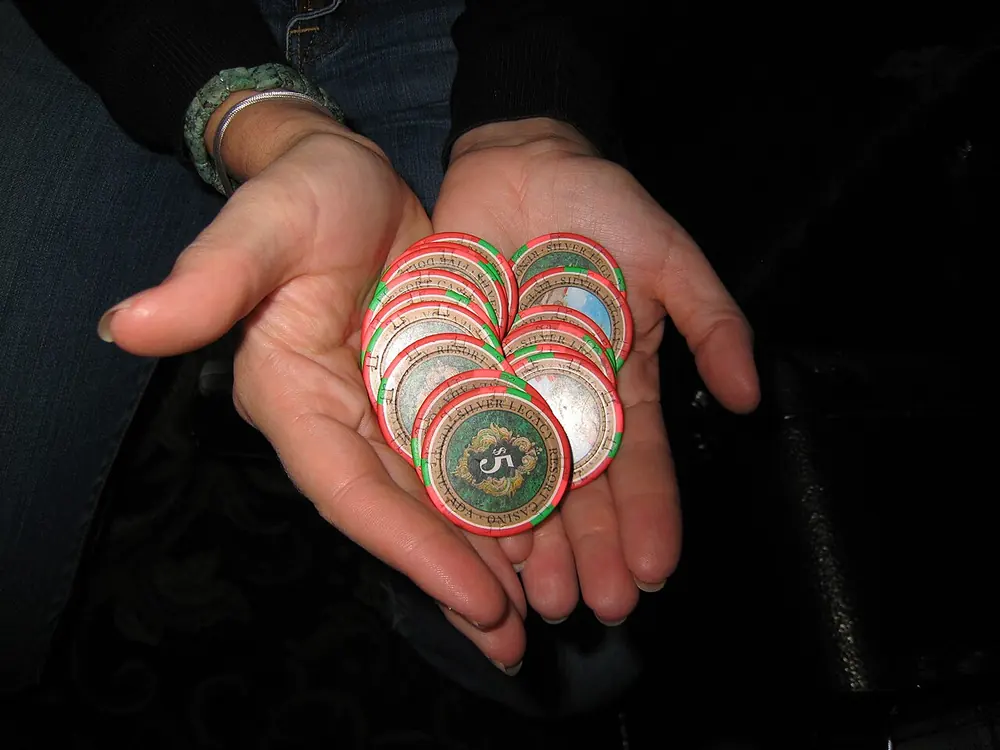
My brother, Mines is the crypto casino game everybody's cousin has a "strategy" for. A grid of 25 tiles, a few hidden bombs, and every safe tile you click pushes your multiplier higher until you either cash out or hit a mine and lose the round. It feels like skill because you're the one clicking. This guide shows what's really going on behind those tiles, using exact probabilities and simulations, so you can decide if Mines is for you and how to play it without getting burnt.
18+ only. Since the Supreme Court judgment of 22 November 2024 (SC/1/2008), gambling in Nigeria is regulated by each state, for example by the LSLGA in Lagos, while the NLRC still covers the FCT. Cloudbet, the crypto casino we link to, is licensed in Curaçao and is not licensed by any Nigerian state regulator. Mines rules and payouts differ between game providers, and we don't claim any particular Mines title is in Cloudbet's lobby, so check the game's info panel before you play. All probabilities below were computed with a script for a standard 5×5 grid, and the payout examples assume a 1% house edge, which is only an example.

How the Mines game works
Most Mines games follow the same basic shape:
- You choose your stake.
- You choose how many mines to hide on a 5×5 grid of 25 tiles, usually anywhere from 1 to 24.
- The game hides the mines randomly before you click anything.
- You open tiles one at a time. Each safe tile (often a gem or star) raises your multiplier.
- At any point you can cash out and take your stake times the current multiplier.
- If you open a mine, the round ends and you lose that stake.
That's it. No dealer, no reels, no paylines. The whole game is two decisions: how many mines, and when to stop. That simplicity is why Mines spread so quickly across crypto casinos, and why so many people believe they can find a pattern in it.
The real odds of surviving each click
Here's the core maths. With 25 tiles and m mines, your chance of opening k safe tiles in a row is the number of ways to pick k tiles from the safe ones, divided by the number of ways to pick k tiles from all 25. Our script computed the survival chance and the "fair minus 1% edge" multiplier for common settings:
| Mines | 1 tile | 2 tiles | 3 tiles | 5 tiles | 10 tiles |
|---|---|---|---|---|---|
| 1 | 96.00% · 1.03x | 92.00% · 1.08x | 88.00% · 1.12x | 80.00% · 1.24x | 60.00% · 1.65x |
| 3 | 88.00% · 1.12x | 77.00% · 1.29x | 66.96% · 1.48x | 49.57% · 2.00x | 19.78% · 5.00x |
| 5 | 80.00% · 1.24x | 63.33% · 1.56x | 49.57% · 2.00x | 29.18% · 3.39x | 5.65% · 17.52x |
| 10 | 60.00% · 1.65x | 35.00% · 2.83x | 19.78% · 5.00x | 5.65% · 17.52x | 0.09% · 1,077.61x |
| 24 | 4.00% · 24.75x | only one safe tile exists | |||
Read one row slowly. With 3 mines, opening 5 safe tiles in a row happens 49.57% of the time, a bit less than a coin flip, and pays about 2.00x. With 10 mines, the same 2.00x-ish zone is reached after just one or two clicks, but your survival drops fast after that.
Notice something interesting in the table: 3 mines with 10 tiles and 10 mines with 3 tiles have exactly the same survival chance (19.78%) and the same multiplier. Different-looking games, same maths. That's a hint that the "settings" are just different ways of choosing risk and reward, not different chances of beating the house.
Why each next click gets a little harder
A lot of players think every click is a fresh chance. It isn't quite. As you remove safe tiles, the mines make up a bigger share of what's left. With 3 mines, the chance that your next click is safe goes like this:
| Safe tiles already open | Chance next tile is safe |
|---|---|
| 0 | 88.0% |
| 1 | 87.5% |
| 2 | 87.0% |
| 3 | 86.4% |
| 4 | 85.7% |
| 5 | 85.0% |
| 6 | 84.2% |
| 7 | 83.3% |
Each step is only slightly riskier, which is why it's so tempting to "just do one more". But the risk keeps creeping up, and the multiplier is priced to match. The game always pays a little less than the fair amount for each extra risk, and that gap is the house edge.
The house edge: same price, whatever you click
Here's the part strategy sellers never mention. In a standard Mines game, the multiplier at every point is set so that chance × multiplier = the game's RTP. With a 1% edge, that product is 0.99 everywhere on the board. Whether you cash out after 1 tile or 10, with 1 mine or 20, you get back about 99 kobo per naira bet on average.
So there's no "best number of mines" for winning in the long run. What changes is how often you win and how much you win when you do. Low mines and early cash-outs mean many small wins and the occasional loss. High mines and greedy runs mean many losses and the occasional big hit. The average cost is the same.
Some Mines games use a higher edge, 2% or 3% or more, and some providers round multipliers in the house's favour. That's why you must check the RTP in the game's info panel. If a Mines game doesn't show its RTP anywhere, think twice.
Simulation: 100 rounds of Mines at ₦200
To show how this feels in practice, our script played 20,000 simulated sessions of 100 rounds each, at ₦200 per round (₦20,000 turnover), for four fixed cash-out plans. Every plan assumes a 1% edge. Results are profit or loss at the end of each session:
| Plan | Win chance per round | Average result | Middle result | Sessions in profit | Worst 5% of sessions | Best 5% of sessions |
|---|---|---|---|---|---|---|
| 3 mines, cash out after 3 tiles (1.48x) | 66.96% | −₦199 | about −₦187 | 46.1% | −₦2,553 | +₦2,179 |
| 3 mines, cash out after 5 tiles (2.00x) | 49.57% | −₦200 | about −₦26 | 42.9% | −₦3,622 | +₦3,169 |
| 5 mines, cash out after 5 tiles (3.39x) | 29.18% | −₦175 | about −₦323 | 47.0% | −₦5,073 | +₦5,105 |
| 3 mines, cash out after 10 tiles (5.00x) | 19.78% | −₦178 | about +₦18 | 52.2% | −₦6,989 | +₦6,023 |
All four plans average a loss of roughly ₦200, which is 1% of the ₦20,000 turnover, with small differences just from random noise in the simulation. The difference is in the spread. The greedy 5.00x plan has the widest swings: a bad session costs nearly ₦7,000, a good one wins about ₦6,000. The careful 1.48x plan keeps most sessions within a couple of thousand naira either way.
Don't read the 52.2% "sessions in profit" on the last plan as a winning strategy. Long-shot plans often show slightly more than half of sessions ahead because the losing sessions lose bigger. Over enough sessions, the 1% cost always shows up.
Predictor bots and "Mines hacks" are scams
Search Mines on social media and you'll see "Mines predictor", "signal bot", "100% accurate pattern" and "hack" offers, often sold through Telegram or WhatsApp groups. Here's why they can't work on an honest game:
- Mine positions are set when the round starts, from a random process the player can't see.
- In provably fair Mines games, the result comes from a hidden server seed, your client seed and a counter. The server seed is only revealed after you rotate it, so nobody can see future boards.
- Patterns you "see" (corners are safe, diagonals are safe, mines repeat) are the brain finding shapes in randomness.
What these sellers actually want is usually one of three things: your money for a fake subscription, your casino or wallet login, or a referral sign-up they get paid for. Never share a password, seed phrase, 2FA code or screen with anyone promising Mines predictions. If they could truly predict the board, they wouldn't need your ₦5,000.
18+. Crypto deposits. Cloudbet is licensed in Curaçao, not in Nigeria. Ad: we may earn a commission. Bet only what you can afford to lose.
How provably fair Mines can be checked
Many crypto Mines games are "provably fair". Before you play, the casino shows a hashed version of its server seed. You can set your own client seed. Each round uses those plus a nonce (a counter). After you rotate seeds, the casino reveals the old server seed, and you can recompute where every mine was in every round and confirm it matches what you saw.
This proves the board wasn't moved after you clicked. It does not change the house edge. Provably fair means the game is honest about its maths, and the maths still leans 1% (or whatever the game says) to the house. Our guide to provably fair casinos in Nigeria walks through checking a result step by step.
Popular Mines "strategies", tested honestly
- "Always 3 mines, cash out at 2x." That's 5 safe tiles with 3 mines, a 49.57% chance. Average return is still 99%. It's a reasonable way to keep swings moderate, not a way to win.
- "Use 1 mine and click 20 tiles." With 1 mine, opening 20 tiles has a 20% chance and pays about 4.95x. Same 99% return, just slower and more boring.
- "Martingale on Mines." Doubling after each loss has the same problem it has everywhere: a run of losses eventually needs a stake bigger than your balance or the table limit. You win small often and lose big rarely, and the big losses win.
- "Change seed after every loss." A new seed gives new random boards. It doesn't make them friendlier.
- "Start at the corners." Mine placement is random across all tiles. Corners are no safer than the middle.
Choosing a crypto casino for Mines from Nigeria
Offshore crypto casinos aren't licensed by Nigerian state regulators, so do your own homework before you deposit:
- Check the licence on the regulator's own website.
- Open the Mines game info and find its RTP or house edge. Write it down.
- Check if it's provably fair, and verify one round after rotating seeds.
- Check deposit and withdrawal networks. Send coins only on the exact network the deposit screen shows.
- Read KYC terms. Cloudbet's terms (18.1.5), for example, say verification applies once cumulative deposits reach US$2,200.
- Do a small test withdrawal before you build up a balance.
Cloudbet's help centre, when we checked, listed many coins including BTC, ETH, LTC and USDT on networks such as Tron, Ethereum and BNB Smart Chain. Its withdrawal article said withdrawals are typically processed within 24 hours, with minimums that vary by coin and a network fee shown before you confirm. Our Bitcoin deposit guide covers the deposit steps.
Rakeback on Mines: helpful, not a strategy
Because Mines is a fast casino game, rakeback can trim your cost a little. Cloudbet's welcome package terms (8.4), when we checked, described casino rakeback of 10% of the house edge for the first 30 days, plus cash drops, up to US$2,500, and the help centre called these rewards real cash.
On our example, 100 rounds at ₦200 is ₦20,000 turnover. At a 1% edge, the house edge amount is ₦200, and 10% rakeback returns about ₦20. Your expected cost falls from about ₦200 to about ₦180. Good to have, but never play more rounds "for rakeback". You'd still lose about ₦9 for every ₦1 returned.
A simple Mines routine that keeps you in charge
- Budget first. Decide what tonight's Mines costs before you log in, and treat it as spent.
- Stake at about 1% of that budget. ₦20,000 budget means ₦200 rounds.
- Fix your plan before the round. For example, "3 mines, cash out at 5 tiles". Then stick to it. The "one more click" voice is where budgets disappear.
- Set a round limit. 100 rounds at ₦200 has an expected cost of about ₦200 at a 1% edge. That's the price of the session.
- Set a win exit. Up 50%? Cash some out to your wallet.
- Turn off auto-play when tired or upset.
- Use deposit limits and cooling-off tools where the casino offers them.
Mines vs crypto dice vs slots
| Game | Typical edge (check each game) | Decisions you make | What drives the swing |
|---|---|---|---|
| Mines | often about 1%, varies by provider | mine count and cash-out point | how greedy your cash-out plan is |
| Roll-under dice | often about 1% | win chance | the chance you choose |
| Slots | often 3% to 5% | stake only | the game's volatility |
Mines and dice are mathematically close cousins; Mines just turns the decision into a series of clicks. If you like the clicking, fine, but know that the clicking is entertainment, not skill. Our crypto dice guide shows the same idea from a different angle.
My take
Mines is a clean, quick game with honest maths if the provider shows its RTP and the game is provably fair. The board can't be predicted, every setting costs the same on average, and the only real decisions are how much risk you want per round and how disciplined you are about cashing out. Pick a budget, pick a fixed plan, ignore predictor bots, and walk away when your limit hits. If you'd like to play at a licensed crypto casino, Cloudbet is the one we link to, licensed in Curaçao and not by a Nigerian state regulator, so be comfortable with that first. If gambling stops being fun, our responsible gambling page lists tools that help, and Gamble Alert is available 24/7 on +234 916 295 7989, or toll-free on +234 705 889 0073 and +234 705 889 0074.
Questions punters ask
How does the Mines game work?
You pick a stake and a number of mines hidden on a 25-tile grid, then open tiles. Each safe tile raises the multiplier. Cash out any time, or lose the stake if you open a mine.
What are the odds in Mines with 3 mines?
Your first tile is safe 88% of the time. Opening 5 safe tiles in a row happens 49.57% of the time, paying about 2.00x at a 1% edge.
What is the best number of mines?
No setting wins in the long run. At a 1% edge, every combination of mines and cash-out returns about 99% on average; only the swing changes.
Do Mines predictor bots work?
No. On an honest or provably fair game the board comes from a hidden seed nobody can see in advance. Predictor offers are scams aimed at your money or logins.
Is Mines provably fair?
Many crypto Mines games are. You can verify each board after the server seed is revealed. It proves honesty, not better odds.
Does Cloudbet have a Mines game?
We don't claim a specific Mines title is in Cloudbet's lobby. Check the casino lobby and the game's info panel for its RTP.
Is Cloudbet licensed in Nigeria?
No. Cloudbet is licensed in Curaçao and is not licensed by any Nigerian state regulator.
Where can I get gambling help in Nigeria?
Gamble Alert, 24/7: +234 916 295 7989, or toll-free +234 705 889 0073 and +234 705 889 0074.
18+. Crypto deposits. Cloudbet is licensed in Curaçao, not in Nigeria. Ad: we may earn a commission. Bet only what you can afford to lose.
If betting has stopped being fun, talk to someone. Gamble Alert, a Nigerian non-profit, runs a free, confidential 24/7 helpline: +234 916 295 7989, toll-free +234 705 889 0073 / 0074. Source: gamblealert.org.