Dice Games at Crypto Casinos in Nigeria: How Roll-Under Dice Works, the Real Odds, and Why Martingale Breaks
Welcome bonus for new players + fast crypto payouts. Just helping a brother out.
18+. Crypto deposits. Cloudbet is licensed in Curaçao, not in Nigeria. Ad: we may earn a commission. Bet only what you can afford to lose.
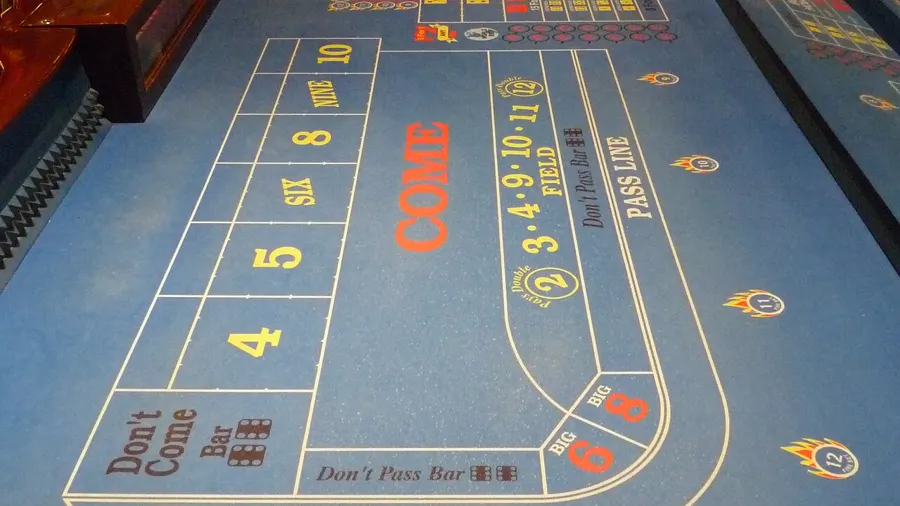
My brother, crypto dice is probably the simplest casino game on the internet. You pick a number, you pick "over" or "under", you press roll, and in less than a second you know if you won. That speed is exactly why people love it, and exactly why it can empty a wallet before you notice. This guide breaks down how crypto dice really works, what the multipliers mean, why the maths always leans a little to the house, and how to play it with your eyes open if you decide to play at all.
18+ only. Since the Supreme Court judgment of 22 November 2024 (SC/1/2008), gambling in Nigeria is regulated by each state, for example by the LSLGA in Lagos, while the NLRC still covers the FCT. Cloudbet, the crypto casino we link to, is licensed in Curaçao and is not licensed by any Nigerian state regulator. Game rules differ between casinos and we don't claim any particular dice title is in Cloudbet's lobby, so always check the game's own info panel. Every number in the examples below was worked out with a script from made-up stakes, using a 1% house edge as the example, and naira amounts are just example stakes, not exchange-rate claims.
What "crypto dice" actually means
When people in Nigeria say "dice game" at a crypto casino, they usually don't mean two physical dice like in Ludo or craps. They mean a digital game that draws a random number, normally between 0.00 and 99.99 (some games use 0 to 100 or 1 to 10,000). You choose a target and a direction:
- Roll under: you win if the result lands below your number.
- Roll over: you win if the result lands above your number.
The closer your target is to the edge, the less likely you are to win and the bigger the payout. Set "roll under 50" and you win about half the time for close to double your stake. Set "roll under 5" and you win about one time in twenty, but the payout is close to twenty times your stake.
Some casinos also offer classic dice games such as craps, sic bo, or dice duels against a dealer. Those have their own rules and house edges, and we touch on them further down. Most of this guide is about the roll-under/roll-over style, because that's the one crypto casinos push hardest and the one most people mean.
How the multiplier is calculated
Here's the clean formula most crypto dice games use. If your win chance is C percent and the house edge is E percent, the payout multiplier is:
Multiplier = (100 − E) ÷ C
With a 1% edge, that's 99 ÷ C. Our script worked out the common settings:
| Win chance | Payout multiplier (1% edge) | What ₦1,000 returns on a win |
|---|---|---|
| 90% | 1.10x | ₦1,100 |
| 75% | 1.32x | ₦1,320 |
| 66% | 1.50x | ₦1,500 |
| 49.5% | 2.00x | ₦2,000 |
| 33% | 3.00x | ₦3,000 |
| 25% | 3.96x | ₦3,960 |
| 10% | 9.90x | ₦9,900 |
| 5% | 19.80x | ₦19,800 |
| 2% | 49.50x | ₦49,500 |
| 1% | 99.00x | ₦99,000 |
Notice what happens at a "coin flip". A true coin flip would pay 2.00x at 50%. The game instead pays 2.00x at 49.5%, or about 1.98x at 50%. That small gap is the casino's whole business model. It doesn't matter which setting you choose: multiply the chance by the multiplier and you always get 0.99. You get back 99 kobo for every naira bet, on average, over the long run.
Some games use a different edge, for example 2% or 3%, and some show the RTP (return to player) in the info panel instead. A 99% RTP is the same thing as a 1% house edge. Before you play any dice game, open the rules and find that number. If you can't find it, that's a red flag.
Expected loss: the number nobody puts on the banner
The easiest way to understand dice is to think in turnover, not in single rolls. Turnover is the total amount you bet, including money you won and bet again. Your expected loss is turnover times the house edge.
- 500 rolls at ₦100 = ₦50,000 turnover. At 1% edge, expected loss is ₦500.
- 2,000 rolls at ₦100 = ₦200,000 turnover. Expected loss ₦2,000.
- 2,000 rolls at ₦1,000 = ₦2,000,000 turnover. Expected loss ₦20,000.
That last line is the trap. Dice is so fast that 2,000 rolls is not a long night, especially with auto-bet. A ₦1,000 stake feels small per roll, but the speed turns a 1% edge into real money. Speed is the hidden cost of dice.
Simulation: what 500 rolls really look like
Averages hide the swings, so our script played 20,000 simulated sessions of 500 rolls at ₦100 each (₦50,000 turnover) for four win-chance settings, all at a 1% edge. Here's what came out (figures are profit or loss at the end of the session):
| Setting | Average result | Middle result | Sessions that ended in profit | Bad-luck session (worst 5%) | Good-luck session (best 5%) |
|---|---|---|---|---|---|
| 90% chance, 1.10x | −₦495 | −₦500 | 25.7% | −₦1,710 | +₦710 |
| 49.5% chance, 2.00x | −₦504 | −₦600 | 39.1% | −₦4,200 | +₦3,200 |
| 10% chance, 9.90x | −₦512 | −₦500 | 46.3% | −₦11,390 | +₦10,390 |
| 2% chance, 49.50x | −₦462 | −₦500 | 41.9% | −₦25,250 | +₦24,250 |
Look at the "average result" column: every setting loses about ₦500, which is exactly the 1% of ₦50,000 we predicted. The setting you pick doesn't change the average. What it changes is the swing. At 90% you rarely lose much in one session but you also almost never win much. At 2% your session can go up or down by ₦25,000 on the same ₦100 stake.
So choosing a low chance doesn't make dice "better", and choosing a high chance doesn't make it "safer" in the long run. It just changes how bumpy the ride is. Pick the bumpiness you can handle emotionally, then set a budget that matches it.
The martingale trap, in numbers
Every dice player eventually hears about martingale: bet on 2.00x, double your stake after each loss, and reset after each win. In theory, every win recovers all your losses plus one base stake. It sounds like a machine that prints small profits. It isn't.
Our script tested it with a ₦20,000 balance, a ₦100 base stake at 49.5% for 2.00x, aiming to win ₦5,000 and stop. If the next doubled bet was bigger than the balance left, the player was "bust" and stopped. Across 20,000 simulated runs:
- 65.4% of players reached the ₦5,000 target.
- 34.6% hit a losing streak long enough to blow the system.
- The average final balance was about ₦19,656, a loss of about ₦344 compared with the starting ₦20,000.
That's the martingale pattern everywhere: you win small most of the time, then lose big once in a while, and the big losses outweigh the small wins. With ₦100 doubling, the stakes go ₦100, ₦200, ₦400, ₦800, ₦1,600, ₦3,200, ₦6,400, ₦12,800. After seven losses in a row you've already lost ₦12,700, and the eighth bet needs ₦12,800.
How often does a long losing streak happen? On a 49.5% roll, the chance of losing a single roll is 50.5%. Our script worked out:
| Losses in a row | Chance it starts on any given roll |
|---|---|
| 5 | 3.28% |
| 7 | 0.84% |
| 8 | 0.42% |
| 10 | 0.11% |
0.42% sounds tiny, until you remember that dice players roll hundreds or thousands of times. Across a long session, a run of eight losses isn't bad luck, it's close to certain. Martingale doesn't remove risk; it hides it in one ugly roll that's coming sooner or later.
The same goes for "reverse martingale", "D'Alembert", "Labouchère" and every other staking pattern. None of them changes the 99-kobo-per-naira return. If any website or Telegram group sells you a dice "strategy" or "predictor bot", walk away. Nobody can predict a properly generated random number.
Provably fair: how to check a dice roll
A big selling point of crypto dice is "provably fair". The idea is that the casino commits to a secret value before you bet, and you can check afterwards that the result came from that value and wasn't changed. The usual ingredients are:
- Server seed: a secret value from the casino. Before you play, you see only its hash, a kind of fingerprint.
- Client seed: a value you can set or change yourself.
- Nonce: a counter that goes up by one with each bet.
After you rotate the seed, the casino reveals the old server seed. You (or a third-party verifier) hash it and confirm it matches the fingerprint shown earlier, then recompute each roll from seed + client seed + nonce. If they match, the casino didn't secretly swap results.
Two honest caveats. First, provably fair proves the roll wasn't tampered with; it does not change the house edge, so you still lose about 1% of turnover on average. Second, not every dice game at every casino is provably fair. Many live-dealer and third-party games use certified random number generators audited by testing labs instead. That's fine too, but it's a different kind of assurance. Our longer guide to provably fair casinos in Nigeria walks through the checking steps in detail.
18+. Crypto deposits. Cloudbet is licensed in Curaçao, not in Nigeria. Ad: we may earn a commission. Bet only what you can afford to lose.
Other dice games you might see
Crypto casinos often mix in more traditional dice games. Quick, honest notes on each:
- Craps: the classic two-dice table game. The Pass Line bet has a house edge around 1.41%, and some side bets ("proposition bets") have much higher edges. If you play craps, keep to the simple bets.
- Sic bo: three dice, lots of betting boxes. "Big" and "Small" are close to even-money bets; specific triples pay big but have heavy edges. Read the paytable in the game before you bet.
- Dice duels or "high roll" games: you and the dealer each roll; higher number wins, with ties handled by the rules. The edge depends completely on how ties are paid.
- Live dice shows: game-show style titles with a host and multipliers. Fun to watch, but the RTP is often lower than simple crypto dice, so check it in the info panel.
As a rule of thumb: the simpler the bet, the lower the edge tends to be. The flashier the multiplier, the more the house usually keeps.
Choosing a crypto casino for dice from Nigeria
Since there's no Nigerian state licence on offshore crypto casinos, your own checks matter more. Before you deposit anywhere:
- Find the licence at the bottom of the site and check it on the regulator's own website, not a screenshot.
- Find the house edge or RTP for the dice game in its info panel.
- Look for provably fair or a named testing lab, and try verifying one roll.
- Check deposit and withdrawal coins and networks, plus the minimum withdrawal and fees.
- Read the KYC rules. Many casinos let you play small and then ask for ID later. Cloudbet's terms (18.1.5), for example, say verification applies once cumulative deposits reach US$2,200.
- Test with a small deposit and a small withdrawal before trusting the site with more.
Cloudbet lists a long range of coins, including BTC, ETH, LTC and USDT on several networks such as Tron, Ethereum and BNB Smart Chain, when we checked its help centre. Always send on the exact network the deposit screen shows. A wrong-network transfer can be lost for good. If you're new to moving coins, our guide on how to deposit Bitcoin at Cloudbet covers the steps.
Rakeback: the only "edge" a dice player gets back
Because dice is pure turnover, rakeback is one of the few things that actually changes your numbers. Rakeback returns a slice of the house edge on your bets. Cloudbet's welcome package terms (8.4), when we checked, described casino rakeback of 10% of the house edge during a 30-day welcome period, along with cash drops, up to a US$2,500 cap, and the help centre described these rewards as real cash.
Let's work it out on our example. 500 rolls at ₦100 is ₦50,000 turnover. At a 1% edge, the house edge amount is ₦500. A 10% rakeback on that is ₦50. So your expected loss drops from ₦500 to ₦450. That's useful, but notice the scale: rakeback trims the loss, it does not turn dice into a winning game. Never roll more just to "earn" rakeback. You'd lose ₦9 for every ₦1 you got back, on average.
Also note how the package is designed: sports bets earn no rakeback under those terms, and rewards are calculated in USDT and paid in your active currency. Read the current terms before you rely on any of it, because promotions change.
A dice routine that keeps you in control
If you decide dice is your thing, here's a simple routine that a lot of careful players use:
- Decide the budget before you open the site. Treat it like the price of a night out. When it's gone, the night is over.
- Pick a stake that's 1% or less of that budget. With ₦20,000, that's ₦200 or less a roll.
- Set a roll limit. For example, 300 rolls. Turnover at ₦200 is ₦60,000, expected loss about ₦600. Now you know the "price" of your session.
- Avoid auto-bet when tired. Auto-bet is where turnover explodes. If you use it, set hard stop-loss and stop-win limits in the settings.
- Set a win exit. If you go up, say, 50% of budget, cash some out. The game doesn't owe you more.
- Never chase. Doubling up to get back losses is martingale in disguise.
- Use casino tools: deposit limits, session reminders and self-exclusion, where offered.
Common myths about crypto dice
- "The site is due to give me a win." No. Each roll is independent. Ten losses in a row don't make the next roll more likely to win.
- "High numbers come up more at night." No. A properly generated roll doesn't care about time, day or your mood.
- "Changing my client seed after a loss resets my luck." Changing the seed changes future results in a way nobody can predict, which is the point. It doesn't make them better.
- "There's a pattern if you watch long enough." Humans see patterns in random data. That's how the brain works, not how the dice work.
- "A dice predictor bot can beat it." With a provably fair game, the server seed is secret until after you've bet. Any "predictor" is either a scam or a way to steal your wallet login.
Dice vs other crypto casino games
| Game | Typical edge (check each game) | Speed | Swing |
|---|---|---|---|
| Roll-under dice | about 1% in many games | very fast | you choose it with the win chance |
| Craps Pass Line | about 1.41% | medium | low to medium |
| Slots | often 3% to 5% (RTP 95% to 97%) | fast | low to very high |
| European roulette | 2.70% | medium | you choose it with the bet type |
Dice looks great on edge, and that's real. But dice's speed means a lower edge can still cost more per hour than a slower game. Compare in cost per hour, not just percentages. Our guide to online casino games that pay real money explains RTP and volatility across game types.
My take
Crypto dice is honest in one way most casino games aren't: the maths is right there on the screen. Multiplier times chance equals the return, and the return is a little under 100%. That makes it easy to price your night. Pick a budget, pick a small stake, set a roll limit, ignore martingale and predictor bots, and verify a few rolls if the game is provably fair. If you'd like to try dice at a licensed crypto casino, Cloudbet is the one we link to, licensed in Curaçao and not by a Nigerian state regulator, so make sure you're comfortable with that first. If gambling stops being fun, our responsible gambling page lists tools that help, and Gamble Alert is available 24/7 on +234 916 295 7989, or toll-free on +234 705 889 0073 and +234 705 889 0074.
Questions punters ask
How do crypto dice games work?
The game draws a random number, usually 0.00 to 99.99. You choose a target and roll over or under it. The lower your chance of winning, the higher the payout multiplier.
What are the odds in crypto dice?
With a 1% house edge, the multiplier is 99 divided by your win chance. A 49.5% chance pays 2.00x and a 10% chance pays 9.90x.
Can martingale beat dice?
No. In our 20,000-run simulation with ₦20,000, ₦100 base stakes and a ₦5,000 target, 34.6% of players went bust and the average balance ended about ₦344 lower.
Is crypto dice provably fair?
Many crypto dice games are, using a server seed, client seed and nonce you can verify after the seed is revealed. Not every dice game is, so check the game info.
What is the best win chance to pick?
Every setting returns the same average. Low chances swing more, high chances swing less. Pick the swing you're comfortable with and keep stakes small.
Does Cloudbet give rakeback on dice?
Cloudbet's welcome package terms described casino rakeback of 10% of the house edge during the first 30 days when we checked. On ₦50,000 turnover at a 1% edge that's about ₦50.
Is Cloudbet licensed in Nigeria?
No. Cloudbet is licensed in Curaçao and is not licensed by any Nigerian state regulator.
Where can I get gambling help in Nigeria?
Gamble Alert, 24/7: +234 916 295 7989, or toll-free +234 705 889 0073 and +234 705 889 0074.
18+. Crypto deposits. Cloudbet is licensed in Curaçao, not in Nigeria. Ad: we may earn a commission. Bet only what you can afford to lose.
If betting has stopped being fun, talk to someone. Gamble Alert, a Nigerian non-profit, runs a free, confidential 24/7 helpline: +234 916 295 7989, toll-free +234 705 889 0073 / 0074. Source: gamblealert.org.