Bitcoin Slots in Nigeria: RTP, Volatility, Session Maths, Bonus Buys and Crypto Costs Explained
Welcome bonus for new players + fast crypto payouts. Just helping a brother out.
18+. Crypto deposits. Cloudbet is licensed in Curaçao, not in Nigeria. Ad: we may earn a commission. Bet only what you can afford to lose.
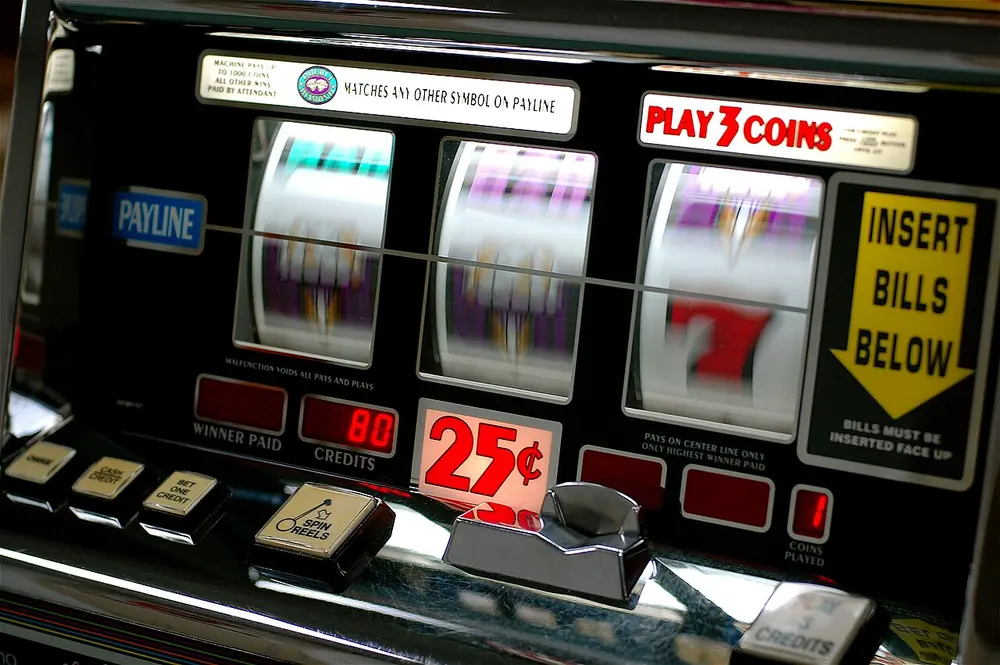
My guy, if you've looked at a crypto casino from Nigeria, you've seen hundreds of slots with flashy names, all ready to take bitcoin. People search for bitcoin slots in Nigeria because crypto avoids a lot of the payment wahala with naira cards, and because the games look fun. Fair enough. But before you spin, you should know exactly what you're paying for each hour, why some slots empty your balance in ten minutes while others drip slowly, and what crypto adds to the picture. This guide breaks it down with numbers you can check, no hype.
18+ only. Since the Supreme Court judgment of 22 November 2024 (SC/1/2008), gambling in Nigeria is regulated by each state, for example the LSLGA in Lagos, while the NLRC covers the FCT. Cloudbet, the crypto casino we link to, is licensed in Curaçao and is not licensed by any Nigerian state regulator. Slots are games of chance with a built-in house edge: over time, players as a group lose. All figures here are examples or script-computed estimates, and any naira amounts use a made-up example rate of ₦1,500 per US$1.

What "bitcoin slots" actually means
There's no special kind of slot machine that runs on bitcoin. A "bitcoin slot" is simply an online slot played with a balance funded in crypto. In practice you'll find two kinds of games at crypto casinos:
- Studio slots: games made by game studios and licensed to many casinos. The same title can appear at dozens of sites. They use certified random number generators, and the maths is set by the studio (sometimes with several versions the casino can choose from, which we'll come back to).
- In-house or "originals" games: simple games made by the casino itself, sometimes marked as provably fair, meaning you can verify each result with cryptographic seeds. See our provably fair casino guide for how that works.
Your balance might be shown in BTC, in another coin, or converted to US dollars on screen. Either way, the game maths is the same as with any other currency. What crypto changes is how money gets in and out, what it costs, and the fact that the coin's price can move while it sits in your account.
RTP and house edge, in plain words
Every slot has a return to player figure, or RTP. If a slot's RTP is 96%, the game is designed to pay back, on average over a very large number of spins, 96 out of every 100 units staked. The other 4% is the house edge: the casino's built-in share.
Three things people get wrong about RTP:
- It's not what you get back in one session. RTP is a long-run average across millions of spins. In a single evening you can be far above or far below it.
- It applies to every naira you stake, again and again. If you deposit ₦15,000 and spin it around ten times, you've staked ₦150,000, and the edge applies to that whole turnover, not to your deposit.
- The same game can have different RTP versions. Many studios offer a slot in several RTP settings, and the casino chooses which one to run. The game's information or help screen usually shows the RTP for the version you're playing. Check it there instead of trusting a figure on a review site.
How a slot's maths is built
Under the colourful graphics, every slot is a table of outcomes and payouts. When you press spin, the random number generator picks an outcome, and the screen shows you reels landing to match it. The studio sets how often each outcome happens and how much it pays, and those two things together give the RTP.
Two numbers decide how a slot feels:
- Hit frequency: how often a spin pays anything at all. A slot with 25% hit frequency pays something on roughly one spin in four.
- Payout spread: how the RTP is shared between small, medium and huge wins. This is what volatility describes.
Hit frequency fools a lot of people. Imagine you stake ₦150 a spin and the reels flash "WIN ₦75" with music and coins. You didn't win; you lost ₦75. Many slots are full of these small returns below your stake, which feel like wins but steadily drain the balance. When you read a paytable, compare each prize to your total stake per spin, not to the line bet.
Paylines, ways and cluster pays
You'll see slots described in different ways, and the label doesn't change the house edge, but it does change how often small wins land:
- Payline slots pay when matching symbols land along fixed lines across the reels. Your stake is spread across all lines.
- "Ways" slots pay for matching symbols on adjacent reels in any position, which creates lots of small combinations and a high hit frequency.
- Cluster slots pay for groups of touching symbols, often with symbols dropping into place for chain wins.
- Reel-changing slots vary how many symbols each reel shows on each spin, creating huge numbers of possible combinations.
Whatever the system, the questions stay the same: what's the RTP for this version, how volatile is it, and what does a typical win pay compared with my stake?
Free spins features and multipliers
Most modern slots save a big share of their RTP for a bonus feature, usually free spins with multipliers, sticky symbols or expanding reels. The base game then pays back noticeably less than the headline RTP, and the feature makes up the difference. That's why sessions without a feature tend to feel like a slow bleed, and why one good feature can turn a session around.
It also explains why the feature feels "due" after a long drought. It isn't. The chance of triggering it is the same on every spin. If a slot triggers its feature on average once every 200 spins, there's still roughly a one-in-three chance you go 200 spins without seeing it (the chance of missing it each spin, multiplied 200 times). Budget for that before you start.
What a slot really costs you per hour
This is the number nobody shows you. Online slots are fast: with quick spin or autoplay, a few hundred spins an hour is normal. Here's the expected cost per hour at different speeds, stakes and RTPs (US dollars, with naira at the example ₦1,500 rate):
| Spins per hour | Stake per spin | Turnover per hour | Cost per hour at 96% RTP | Cost per hour at 94% RTP |
|---|---|---|---|---|
| 400 | $0.10 (₦150) | $40 | $1.60 (₦2,400) | $2.40 (₦3,600) |
| 400 | $0.50 (₦750) | $200 | $8.00 (₦12,000) | $12.00 (₦18,000) |
| 600 | $0.50 (₦750) | $300 | $12.00 (₦18,000) | $18.00 (₦27,000) |
| 600 | $1.00 (₦1,500) | $600 | $24.00 (₦36,000) | $36.00 (₦54,000) |
And here's how much difference RTP makes at the same speed and stake (600 spins an hour at $0.50):
| RTP | House edge | Expected cost per hour |
|---|---|---|
| 98% | 2% | $6.00 (₦9,000) |
| 97% | 3% | $9.00 (₦13,500) |
| 96% | 4% | $12.00 (₦18,000) |
| 94% | 6% | $18.00 (₦27,000) |
Two practical lessons. First, spin speed is a cost. Turning off turbo and autoplay literally lowers what you pay per hour. Second, a game at 94% costs you half again as much as one at 96%. Choosing higher-RTP versions is one of the very few things you control.
Volatility: why two 96% slots feel completely different
Two slots can both have 96% RTP and still behave like different planets. The difference is volatility (some sites say variance): how the payouts are spread.
- Low volatility slots pay small wins often. Your balance goes up and down gently.
- High volatility slots pay nothing for long stretches, with most of the RTP locked in rare big hits. Your balance usually slides down, and once in a while jumps.
To show this, we built two made-up "toy" slots, both with exactly 96% RTP. They are not real games, just simple models to show the pattern:
| Toy slot | RTP | Spins that pay something | Biggest prize | Swing per spin (standard deviation) |
|---|---|---|---|---|
| Low volatility | 96% | about 26.4% | 100× stake | about 4 stakes |
| High volatility | 96% | about 11.8% | 5,000× stake | about 30 stakes |
Note: "spins that pay something" includes small wins that return less than or equal to your stake. A "win" on screen is often a loss in disguise.
What 1,000 spins actually looks like
We ran each toy slot for 1,000 spins at 1 unit per spin, 20,000 times over. Think of 1 unit as your stake, for example $0.10 (₦150):
| Toy slot | Average result | Middle result | Unlucky 10% | Lucky 10% | Sessions that finished ahead |
|---|---|---|---|---|---|
| Low volatility | about −40 units | about −51 units | −195 units or worse | +129 units or better | about 35% |
| High volatility | about −45 units | about −407 units | −626 units or worse | +662 units or better | about 28% |
Look at the middle result for the high-volatility slot. The average loss is about the same as the low-volatility game (around 40 units, which is the 4% edge on 1,000 units staked), but the typical session loses about ten times more. That's because the average includes the rare sessions where a huge hit lands. Most people never see that hit, so most people lose much more than "4%" in a session. The few who do hit it are the ones posting screenshots.
How likely is it you lose your whole session budget?
Now a more realistic test. You bring a fixed budget, spin until it's gone or until you reach the spin limit, and stop. Again 20,000 simulated sessions per row:
| Toy slot | Budget | Spin limit | Lost the whole budget | Finished ahead |
|---|---|---|---|---|
| Low volatility | 100 units | 500 spins | about 29% | about 36% |
| Low volatility | 200 units | 1,000 spins | about 15% | about 35% |
| High volatility | 100 units | 500 spins | about 90% | about 8% |
| High volatility | 200 units | 1,000 spins | about 86% | about 13% |
This is the table to remember. With a high-volatility slot and a budget of 100 spins' worth of stake, you'll bust out the large majority of the time. That's not bad luck; it's how those games are built. If you enjoy chasing big features, accept that the budget is the price of the ticket. If you want your money to last, choose low-volatility games, or lower your stake so the budget covers many more spins.
A simple rule: your session budget should cover at least a few hundred spins at your stake. A $20 budget at $0.10 a spin is 200 spins; at $1 a spin it's 20 spins, which on a volatile slot is gone before the game has really started.
What a month of slots really costs
It helps to think of slots as entertainment with a price, like a cinema ticket, and to work out that price for your own habits. Using the 96% RTP figures from earlier:
| Habit | Turnover per session | Expected cost per session | Expected cost for 8 sessions a month |
|---|---|---|---|
| 1 hour, 400 spins at $0.10 | $40 | $1.60 (₦2,400) | $12.80 (₦19,200) |
| 1 hour, 400 spins at $0.50 | $200 | $8.00 (₦12,000) | $64 (₦96,000) |
| 1 hour, 600 spins at $0.50 | $300 | $12.00 (₦18,000) | $96 (₦144,000) |
| 1 hour, 600 spins at $1.00 | $600 | $24.00 (₦36,000) | $192 (₦288,000) |
These are averages. Your real month will be higher or lower, and with high-volatility games the typical month is usually worse than the average because the rare big hits pull the average up. If the number in your row would hurt your pocket, lower the stake, slow down or play fewer sessions. That's not advice to play more cheaply forever; it's simply knowing what you're paying.
Low or high volatility: which suits you?
There's no "best" volatility. It depends on what you want from a session:
- You want your budget to last an evening: low volatility, small stake, slow spins.
- You want a shot at a big feature and accept losing the budget most nights: high volatility, smaller budget you can truly afford to lose, strict stop rules.
- You're clearing a bonus: the wagering cost is the same either way on average, but low volatility gives you a much better chance of finishing the requirement before the balance runs out.
What doesn't work is switching to a high-volatility game after losses "to win it back quickly". That raises your chance of busting the rest of the budget and is one of the classic signs of chasing.
Bonus buys: paying for the feature
Many slots let you buy straight into the bonus feature, often for around 100 times your stake (the exact price varies by game). It feels efficient because you skip the "boring" spins. Here's the maths:
- If the bonus buy returns 96% on average, each buy at 100× stake costs about 4 stakes on average.
- At 96.5%, it costs about 3.5 stakes on average.
So the edge per unit is similar to normal spins. The problem is the size and speed. One bonus buy is like 100 spins in one click, with very high volatility. Five buys at $0.50 stake means $250 of turnover in a couple of minutes. If you use bonus buys at all, count each one as 100 spins against your session plan, and check the bonus-buy RTP in the game info, which can differ from the base game's figure.
Jackpots and progressive slots
Progressive jackpot slots take a small slice of every bet to build a growing prize. That slice usually comes out of the base game's return, so the RTP you experience while not hitting the jackpot is lower. The jackpot itself is extremely rare. Treat these games as a lottery ticket with extra spins attached: fine for fun with a small stake, a bad choice if you're trying to make your budget last.
Slot myths you can drop today
- "This slot is due to pay." Each spin is independent. A game that hasn't paid for 300 spins is not more likely to pay on spin 301.
- "Play at night, the slots are looser." Certified studio slots don't change their maths by time of day.
- "Raise your stake after losses to win it back." The edge stays the same; you're just increasing turnover and your cost per hour.
- "Stopping and restarting the spin changes the result." The outcome is decided when the spin is triggered.
- "Telegram slot hacks and signals." There are no signals for a certified random number generator. These channels exist to sell you something or to steal your login.
How to check a slot before you play
Open the game's information or help screen (usually an "i" or menu button) and look for:
- RTP for this version of the game, and separate RTP for bonus buy if offered.
- Volatility rating, if the studio provides one.
- Maximum win, often stated as a multiple of your stake. Very high maximum wins usually signal high volatility.
- Paytable, to understand what a "win" really pays.
- Malfunction rules: "malfunction voids all pays and plays" is standard wording.
Many crypto casinos also offer a free demo mode. Play 100 demo spins first. If the demo bores you or drains fast, the real-money version will do the same, with real money.
The crypto side: three costs nobody mentions
Playing slots with crypto adds costs and risks on top of the house edge:
1. Network fees on small deposits
Every blockchain transaction has a network fee, and it hurts most on small amounts. Here's what a flat fee does to different deposit sizes:
| Deposit | Fee of $1 as a share | Fee of $0.20 as a share |
|---|---|---|
| $5 (₦7,500) | 20% | 4% |
| $10 (₦15,000) | 10% | 2% |
| $20 (₦30,000) | 5% | 1% |
| $50 (₦75,000) | 2% | 0.4% |
| $100 (₦150,000) | 1% | 0.2% |
A 20% fee on a $5 deposit is five times the house edge of a 96% slot. Choose a cheap network, avoid many tiny deposits, and check the casino's minimum deposit for your coin (Cloudbet shows the minimum on the deposit screen, and amounts below it aren't credited, according to its help centre when we checked). Our guide on depositing at a crypto casino walks through it.
2. Price swings while you play
If your balance is held in bitcoin, its value moves with the market. Here's what typical swings do to a balance:
| Balance | BTC price −20% | −10% | +10% | +20% |
|---|---|---|---|---|
| $20 | $16 | $18 | $22 | $24 |
| $100 | $80 | $90 | $110 | $120 |
That's a second gamble on top of the slot. If you want your session budget to stay a session budget, a stablecoin like USDT (pegged to the US dollar) removes most of that swing. If you choose bitcoin, decide upfront that the coin's price movement is part of the risk.
3. Converting back to naira
Turning winnings into naira usually means withdrawing crypto to your own wallet and selling it, which can involve a withdrawal fee, a network fee and a spread between buying and selling prices. Even a 1% to 3% spread on each side adds up if you move money in and out often. Our crypto withdrawal guide covers the steps and the traps.
Bonuses and wagering: read before you claim
Casino bonuses often come with wagering requirements: you must stake the bonus a set number of times before you can withdraw. The cost of that wagering is the house edge on all that turnover. Some examples:
| Bonus | Wagering | Slot house edge | Turnover needed | Expected cost of wagering | Expected value of the bonus |
|---|---|---|---|---|---|
| $50 | 35× | 4% | $1,750 | $70 | about −$20 |
| $50 | 40× | 4% | $2,000 | $80 | about −$30 |
| $100 | 35× | 3% | $3,500 | $105 | about −$5 |
So a bonus with heavy wagering on an average slot can be worth less than nothing on average, and you're tied up spinning for hours to clear it. Also check which games count. Cloudbet's terms, when we checked, say that wagering contribution varies by game, with very high-RTP slots and table games counting only a small share (10% in the cases listed), so check the current terms for the offer you take.
Cloudbet's welcome package works differently from a classic deposit-match bonus. According to its help centre when we checked, new players get a 30-day reward programme worth up to $2,500, built from casino rakeback and cash drops, described as wager-free cash rewards. Rewards are calculated in USDT and paid in your active currency. Programmes change, so read the current terms before you deposit.
18+. Crypto deposits. Cloudbet is licensed in Curaçao, not in Nigeria. Ad: we may earn a commission. Bet only what you can afford to lose.
Rakeback: what it's really worth
Rakeback gives you back a share of the house edge on your play. It sounds generous, but it's calculated on the casino's expected profit, not on your stake or your losses. Here's what it's worth for every $1,000 you spin:
| House edge | Expected loss per $1,000 staked | Rakeback at 5% of edge | Rakeback at 10% of edge | Net expected loss at 10% |
|---|---|---|---|---|
| 3% (97% RTP) | $30 | $1.50 | $3.00 | $27 |
| 4% (96% RTP) | $40 | $2.00 | $4.00 | $36 |
| 6% (94% RTP) | $60 | $3.00 | $6.00 | $54 |
For reference, Cloudbet's help centre, when we checked, listed base casino rakeback of 5% of the house edge on lower loyalty levels, with the welcome package rakeback at 10%. That's a small discount on the edge, not a way to make money. Never spin more just to earn rakeback; more turnover always means more expected loss. Our high roller guide explains how loyalty rewards scale with very large turnover.
Choosing a bitcoin slot: a quick checklist
- RTP: pick the highest version you can find in the game info. Avoid anything you can't verify.
- Volatility: match it to your budget. Small budget, lower volatility.
- Stake: set it so your session budget covers at least a few hundred spins.
- Features: know whether bonus buys and jackpots change the RTP.
- Demo: try it free first if a demo exists.
- Coin: stablecoin for a steady budget; bitcoin only if you accept the price swing.
- Fees: one larger deposit on a cheap network beats several tiny ones.
A simple session plan
- Set the budget before you open the site, and treat it as spent. Money for bills, rent or family is never slot money.
- Pick the stake so the budget covers 300 or more spins. For a $30 (₦45,000) budget, that's $0.10 a spin.
- Turn off turbo and autoplay. Slower spins mean lower cost per hour.
- Set a time limit, for example 45 minutes, and a phone alarm.
- Set a win stop, for example if the balance doubles, withdraw most of it.
- Never top up mid-session. If the budget is gone, the session is over.
- Write it down: date, game, RTP, budget, result. After a month you'll see your real cost of entertainment.
Most casinos, Cloudbet included, offer account tools like deposit limits and self-exclusion. Set a deposit limit on day one, when you're calm, not after a bad night.
Slots compared with other casino games
Slots aren't the only option at a crypto casino, and they're rarely the cheapest per hour. Blackjack played with correct basic strategy usually carries a much lower house edge than a typical slot, though table speed and side bets change the picture. Our crypto blackjack guide explains the maths. For a broader look at which games return the most, see online casino games that pay real money in Nigeria. Slots win on entertainment and simplicity, not on value.
Crypto slots versus naira casino slots
Many Nigerian players compare crypto casinos with naira-based sites. An honest comparison:
- Game maths: the same studio game can run at different RTP versions on different sites, so check the info screen wherever you play. Currency doesn't change the maths.
- Payments: crypto avoids card declines and some bank delays, but adds network fees, exchange spreads and the risk of sending coins on the wrong network. Naira sites use local payment methods you already know.
- Price risk: naira balances don't swing with the bitcoin price; crypto balances do unless you use a stablecoin.
- Protection: crypto casinos like Cloudbet are licensed abroad, not by any Nigerian state regulator. Disputes go through the casino's own process and its foreign licensing body.
- Tools: check that whichever site you use offers deposit limits, time-outs and self-exclusion.
Neither choice makes slots profitable. Choose the payment route that's cheapest and safest for you, then manage the game with the same session rules.
A worked example session
Let's put everything together with one illustrative evening. All numbers are examples.
- Budget: $30 (₦45,000 at the example rate), already set aside as entertainment money.
- Deposit: one deposit in USDT on a low-fee network. Say the network fee is $0.20, about 0.7% of the deposit, instead of three separate $10 deposits paying three fees.
- Game: you open the info screen, find a version with 96.5% RTP and a "medium" volatility rating, and play 100 demo spins first.
- Stake: $0.10 a spin, so the budget covers 300 spins even if nothing pays.
- Speed: no turbo, no autoplay, about 400 spins an hour. Expected cost for the hour is about $1.40 (₦2,100), though the real result will swing well above or below that.
- Stops: 60-minute alarm; withdraw most of the balance if it reaches $60; session ends if the balance hits zero, no top-ups.
- Record: you write down the game, RTP, spins, result and time played.
Nothing here guarantees a win. What it guarantees is that you know the price of the evening before it starts, and that a bad night costs $30, not your transport money for the week.
Common bitcoin slot mistakes
- Making many tiny deposits and paying a network fee every time.
- Ignoring the RTP version and assuming every copy of a game pays the same.
- Using turbo and autoplay without realising it multiplies the hourly cost.
- Choosing high volatility with a small budget, then being surprised when it's gone in minutes.
- Counting small "wins" below the stake as winning.
- Claiming heavy-wagering bonuses without working out the turnover cost.
- Leaving winnings in a volatile coin and watching the price move them away.
- Chasing losses with bigger stakes or bonus buys.
What to do if you hit a big win
It happens, especially on volatile games, and the next hour decides whether you keep it. A calm plan:
- Stop the session. The win doesn't make the next spin any better; the edge is the same.
- Withdraw most of it to your own wallet. Money left in a casino balance tends to get played back.
- Consider moving it into a stablecoin if you hold it in bitcoin and don't want price swings eating it.
- Expect checks. Larger withdrawals can trigger identity verification. Have your documents ready instead of panicking.
- Keep records of the deposit, the win and the withdrawal, in case you need them later for tax or a dispute.
- Don't raise your normal stake because of one lucky night. Your session plan stays the same.
Questions to ask before you deposit anywhere
- Which licence does the casino hold, and where can I check it?
- Which coins and networks does it accept, and what's the minimum deposit for each?
- What are the withdrawal minimums, fees and usual processing times?
- When does it ask for identity verification?
- Does it offer deposit limits, time-outs and self-exclusion in the account settings?
- Do the game info screens show RTP clearly?
- What exactly are the bonus terms, including game contribution and maximum bet rules?
If a site can't answer these clearly in its help pages, play somewhere else. Our guide on how to play online casino for real money covers the basics of choosing a site.
Slot terms in plain English
- RTP: the share of stakes a game pays back on average over a very long run.
- House edge: 100% minus RTP; the casino's built-in share of every stake.
- Volatility: how spread out the payouts are. High volatility means rare big wins and long dry spells.
- Hit frequency: how often a spin returns anything at all, even less than your stake.
- Max win: the biggest possible payout, usually shown as a multiple of your stake.
- Wild: a symbol that substitutes for others to complete wins.
- Scatter: a symbol that usually triggers the bonus feature wherever it lands.
- Bonus buy: paying a fixed price, often around 100× stake, to enter the feature directly.
- RNG: random number generator, the software that decides each outcome.
- Provably fair: a system, mostly on in-house games, that lets you verify each result using cryptographic seeds.
- Wagering requirement: how many times you must stake a bonus before you can withdraw it.
- Rakeback: a share of the house edge on your play returned to you as a reward.
Staying safe with crypto casinos
- Type the casino address yourself or use a bookmark. Fake sites and phishing links are common in WhatsApp and Telegram groups.
- Turn on two-factor authentication on both your casino account and your exchange.
- Double-check deposit addresses and networks. Crypto sent on the wrong network can be lost.
- Never share your login with anyone offering "slot signals", account management or "guaranteed wins".
- Expect identity checks at some point, especially before larger withdrawals. Cloudbet's terms, when we checked, allow limits and verification requirements based on cumulative deposits. Our page on Cloudbet and KYC explains the details.
Why the big-win screenshots are misleading
Social media and betting groups are full of screenshots of huge slot wins. They're real enough, but they're a filtered picture. In our high-volatility toy slot, the luckiest 10% of 1,000-spin sessions finished at least 662 units ahead, while the middle session lost about 407 units. Nobody posts the middle session. If a thousand people play the same game tonight, the few big winners share their screenshots and the hundreds of quiet losers say nothing.
The same goes for streamers and promoters who play with large balances: they may be paid to play, playing with promotional funds, or simply showing the best clips. Judge a slot by its RTP and volatility, not by the wins people choose to show you.
Setting limits that actually work
Good intentions disappear at 1 AM after a losing run, so put the limits where you can't easily undo them:
- Casino deposit limits: set a daily, weekly or monthly cap in your account settings. Many sites make increases take effect only after a waiting period, which is exactly the point.
- Session reminders: turn on reality checks if the site offers them, so you see how long you've played.
- Separate wallet: keep your entertainment crypto in a different wallet from your savings, so topping up takes deliberate effort.
- Time-outs and self-exclusion: if you notice chasing, take a break of days or weeks through the account tools. Our responsible gambling page explains the options.
Licensing, tax and your protection
Since 22 November 2024, after the Supreme Court decision in SC/1/2008, each Nigerian state regulates gambling, through bodies like the LSLGA in Lagos and the NLRC for the FCT. Crypto casinos are licensed abroad. Cloudbet holds a Curaçao licence and is not licensed by any Nigerian state regulator, so a Nigerian regulator can't settle a dispute with it for you. Keep records of deposits, play and withdrawals. For more, read is casino legal in Nigeria, is online betting legal in Nigeria and betting tax in Nigeria.
Should you play slots at all?
That's your call as an adult, and plenty of people enjoy an occasional session without any harm. The honest framing is this: slots are a paid form of entertainment with an unpredictable bill. If you can name the monthly amount you're happy to spend, play at a speed and stake that fits it, and walk away when it's gone, slots can stay fun. If you're playing to fix money problems, to win back yesterday's losses or because you feel you have to, the maths on this page says the games will make things worse, not better. In that case, the best move is to close the app and reach out for support.
When it stops being fun
Slots are built to be fast, bright and easy to repeat, which is exactly why they can turn into a problem. Warning signs: spinning to win back losses, topping up again and again, playing late into the night, borrowing, or hiding how much you spend. If that sounds familiar, stop and talk to someone. Gamble Alert offers free help on +234 916 295 7989, or toll-free on +234 705 889 0073 and +234 705 889 0074. Our responsible gambling page explains deposit limits and self-exclusion.
Bottom line
Bitcoin slots in Nigeria are the same slots you'd find anywhere, played with a crypto balance. The game maths doesn't care what coin you use: RTP sets your long-run cost, volatility decides how wild the ride is, and spin speed decides how much you pay per hour. Crypto adds network fees, price swings and conversion costs on top. Pick high-RTP versions, match volatility to your budget, slow down, use limits, and treat every session budget as the price of entertainment, never as an investment. 18+ only. Cloudbet is licensed in Curaçao and is not licensed by any Nigerian state regulator.
Questions punters ask
What are bitcoin slots?
They're normal online slots played with a balance funded in crypto. The game maths is the same as with any currency; crypto only changes deposits, withdrawals, fees and price risk.
What RTP should I look for?
The highest version you can verify in the game's info screen. At 600 spins an hour and $0.50 a spin, a 96% slot costs about $12 an hour on average and a 94% slot about $18.
Are high-volatility slots better?
Not better, just wilder. In our toy model with the same 96% RTP, a high-volatility slot lost the whole 100-unit budget in about 90% of 500-spin sessions, against about 29% for a low-volatility one.
Are bonus buys worth it?
They carry about the same edge per unit staked, but one buy is like 100 spins in one click. Count each buy as 100 spins in your session plan.
Should I use bitcoin or USDT for slots?
USDT keeps your session budget steady in dollar terms. With bitcoin, the coin's price can move 10% or more while you play.
Is Cloudbet licensed in Nigeria?
No. Cloudbet is licensed in Curaçao and is not licensed by any Nigerian state regulator.
Where can I get gambling help in Nigeria?
Gamble Alert: +234 916 295 7989, or toll-free +234 705 889 0073 and +234 705 889 0074.
18+. Crypto deposits. Cloudbet is licensed in Curaçao, not in Nigeria. Ad: we may earn a commission. Bet only what you can afford to lose.
If betting has stopped being fun, talk to someone. Gamble Alert, a Nigerian non-profit, runs a free, confidential 24/7 helpline: +234 916 295 7989, toll-free +234 705 889 0073 / 0074. Source: gamblealert.org.