How to Bet on Formula 1 in Nigeria: Race Weekends, Markets, Teammate Head-to-Heads, WAT Times and Value Maths
Welcome bonus for new players + fast crypto payouts. Just helping a brother out.
18+. Crypto deposits. Cloudbet is licensed in Curaçao, not in Nigeria. Ad: we may earn a commission. Bet only what you can afford to lose.
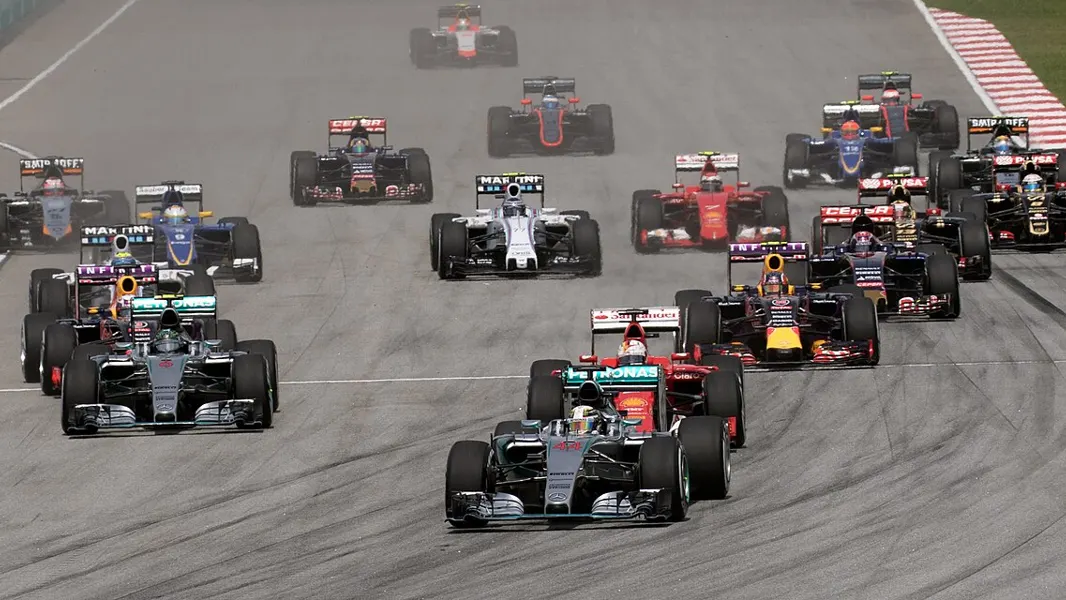
Formula 1 has a growing crowd in Nigeria. Plenty of us now plan Sunday afternoon around a Grand Prix the same way we plan around a big Premier League match. Betting on it is a different game from football, though. The car matters more than the driver, the grid order shapes the race, and one safety car can turn the whole order upside down. This guide shows how to bet on Formula 1 in Nigeria step by step: how a race weekend works, which markets make sense, how to turn odds into chances, where the honest value usually hides, and what time the races land on WAT. No sure banker here, my brother, just the method I would show a friend.
18+ only. Since the Supreme Court judgment of 22 November 2024, gambling in Nigeria is regulated at state level (LSLGA in Lagos, for example), while the NLRC still covers the FCT. Cloudbet, the crypto sportsbook we link to, is licensed in Curaçao and is not licensed by any Nigerian state regulator. Drivers in our examples are labelled A, B, C and so on, and every price and stake on this page is illustrative.
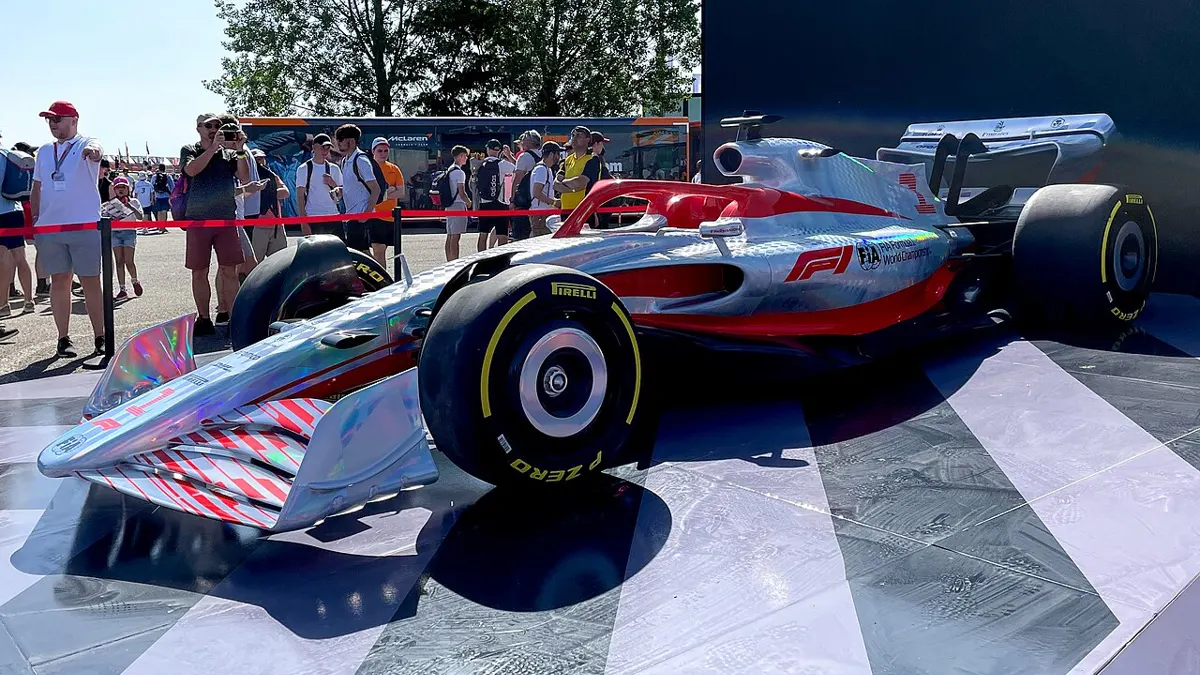
How an F1 race weekend works
Before you stake one naira, understand the shape of the weekend, because each session gives you information that the bookmaker is also watching.
- Practice. Normal weekends have practice sessions on Friday and Saturday. Lap times here are messy: teams run different fuel loads and tyres, so a fast practice lap does not always mean a fast car on Sunday.
- Qualifying. Usually on Saturday. It is a knockout in three parts (Q1, Q2, Q3). The slowest cars drop out in each part, and the fastest driver in Q3 takes pole position. Qualifying sets the starting grid for the race.
- Sprint weekends. A handful of rounds each season use a sprint format: a shorter Saturday race with its own qualifying session and fewer points. Practice time is cut, so teams have less data and surprises are more common.
- The race. Usually Sunday, around 300 km and normally between one and a half and two hours. Points go to the top ten finishers: 25, 18, 15, 12, 10, 8, 6, 4, 2 and 1.
Grid penalties for new engine parts or gearboxes are common, so the qualifying order is not always the starting order. Always check the final grid before betting on the race, not just the qualifying result.
Why F1 betting is not like football betting
In football, a smaller club can park the bus and nick a 1-0. In F1, the gap between the best car and a midfield car is usually too big for talent alone to close in normal conditions. That changes how you should think:
- Car first, driver second. Rate the car's pace on this type of track, then the driver. Two drivers in the same team have the same machinery, which is why teammate battles are such a useful market.
- Track type matters. On tight street circuits overtaking is hard, so qualifying position counts for more. On tracks with long straights and heavy tyre wear, a driver starting further back has a better chance of moving up.
- Chaos is part of the sport. Crashes, rain, mechanical failures and safety cars all happen. A favourite can lose a race he was controlling because of one bad pit-stop.
- Small fields, big margins. There are only about twenty cars, and the bookmaker often builds a fat margin into outright prices. That is why you need to de-margin before you judge any price.
The main F1 betting markets
| Market | What you are betting on | Notes |
|---|---|---|
| Race winner | Who takes the chequered flag first | Most popular, often the biggest margin |
| Podium finish | Driver finishes in the top 3 | Lower odds, steadier results |
| Top 6 / top 10 (points finish) | Driver finishes inside that range | Good for midfield drivers |
| Head-to-head | Driver X finishes ahead of driver Y | Often teammates; check DNF rules |
| Pole position / fastest qualifier | Who sets the fastest time in qualifying | Settled on qualifying, not grid after penalties |
| Winning constructor | Which team's car wins the race | Combines both drivers of a team |
| Safety car (yes/no) | Whether a safety car is deployed in the race | Check if virtual safety car counts |
| Classified finishers | How many cars are classified at the end | Linked to the retirement rate |
| Winning margin | Gap between first and second | Bands like under 2 seconds, 2–5, 5–10 |
| Drivers' / constructors' championship | Season title outrights | Long-term, money tied up for months |
Settlement rules vary from book to book. Most race bets are settled on the official result at the podium presentation, and later stewards' changes often do not change already-settled bets, but this is not universal. Read the market rules before you bet, especially for head-to-head and safety car markets.
Turning F1 odds into chances
Every decimal price hides a probability: divide 1 by the odds. If you add these up across the whole board, the total is above 100%. The extra is the bookmaker's margin. Here is an illustrative race-winner board:
| Driver | Odds | Implied chance | My model chance | My fair odds | Value on ₦1,000 |
|---|---|---|---|---|---|
| A | 2.60 | 38.5% | 34.0% | 2.94 | −₦116 |
| B | 4.50 | 22.2% | 20.9% | 4.79 | −₦60 |
| C | 9.00 | 11.1% | 12.2% | 8.17 | +₦98 |
| D | 10.00 | 10.0% | 8.8% | 11.35 | −₦120 |
| E | 19.00 | 5.3% | 5.6% | 17.91 | +₦64 |
| F | 26.00 | 3.8% | 4.3% | 23.23 | +₦118 |
| Any other driver | 6.00 | 16.7% | 14.2% | 7.04 | −₦148 |
The implied chances add up to about 107.6%, so the book holds roughly 7.6% before you even start. The "value" column is the expected profit per ₦1,000 staked: model chance × odds − 1, times ₦1,000. Notice something important: the favourite, the one everybody in the group chat is backing, is the worst bet on the board in this example. Favourites in F1 are often over-bet because people remember the wins and forget the races thrown away by a slow stop or a retirement.
Where does "my model chance" come from? For this page we simulated 300,000 races. Each driver got a pace rating, every car had an 8% chance of not finishing, and finishing positions were drawn in proportion to pace. It is a simple model, and the ratings are invented, but the method is the same one serious punters use: build your own number first, then compare it with the price.
Be honest with yourself here. In real life you will rarely see three value spots on one board. If your numbers keep finding value everywhere, your model is probably too generous to outsiders, not the bookmaker being foolish.
Podium and top 6 markets: steadier money
If race winner prices feel like a lottery, podium and top 6 markets let you back a driver's general level rather than one perfect afternoon. From the same simulation:
| Driver | Model podium | Podium odds | Value on ₦1,000 | Model top 6 | Top 6 odds | Value on ₦1,000 |
|---|---|---|---|---|---|---|
| A | 74.1% | 1.30 | −₦37 | 90.6% | 1.08 | −₦22 |
| B | 58.9% | 1.60 | −₦58 | 86.5% | 1.12 | −₦31 |
| C | 41.2% | 2.25 | −₦73 | 76.9% | 1.30 | ±₦0 |
| D | 31.5% | 3.50 | +₦102 | 67.7% | 1.45 | −₦18 |
| E | 21.2% | 4.50 | −₦46 | 53.4% | 1.75 | −₦66 |
| F | 16.3% | 6.50 | +₦60 | 44.0% | 2.50 | +₦100 |
Two lessons. First, very short prices like 1.08 leave almost no room for value; one retirement wipes out twelve wins. Second, value in this example sits with drivers the market is less excited about. D was a poor race-winner bet but a decent podium bet, because the book priced the two markets with different margins. Always check the same driver across several markets before you pick one.
Teammate head-to-heads: the purest F1 market
Two teammates drive the same car, so a head-to-head between them removes the biggest unknown in F1. You are mostly betting on driver form, qualifying pace and reliability. But read the dead-car rule first, because it changes the maths.
Example: in our model driver A beats teammate B in 60% of races where both finish. Each car has an 8% chance of retiring.
| Scenario | Chance |
|---|---|
| Both finish | 84.6% |
| A finishes, B retires | 7.4% |
| B finishes, A retires | 7.4% |
| Both retire | 0.6% |
Now the rules:
- "Both must finish, otherwise void". Only the 84.6% where both finish counts, so A's chance is simply 60%. Fair odds 1.67.
- "A retirement counts as a loss for that driver". A wins when he beats B with both running (84.6% × 60% = 50.8%), plus every race where only B retires (7.4%). That is 58.1%, and if both retiring makes the bet void, A's chance becomes about 58.5%. Fair odds about 1.71.
| Odds on A | Value per ₦1,000 (void rule) | Value per ₦1,000 (retirement loses) |
|---|---|---|
| 1.60 | −₦40 | −₦64 |
| 1.70 | +₦20 | −₦5 |
| 1.75 | +₦50 | +₦24 |
Same driver, same race, same price, but the rule flips 1.70 from a small value bet to a small losing one. The stronger driver loses some of his edge when retirements count, because a breakdown does not care who is faster. Use that to your advantage: when the better driver is in a team with shaky reliability, the void-on-retirement version is the friendlier market for him.
What makes a good head-to-head read? Qualifying gaps over the last several races, who usually gets the better strategy call, how each driver handles the specific track, and fresh grid penalties. A five-place grid drop for one teammate on a street circuit can be worth more than any form trend.
Safety car markets
"Will there be a safety car?" sounds like a coin toss, but it is not. Some tracks, especially street circuits with walls close to the racing line, see safety cars much more often than wide open permanent circuits. Rain pushes the chance up further.
A simple way to price it is to think of an average number of safety car periods per race on that track, then use the Poisson formula: the chance of at least one is 1 − e−average.
| Average safety cars per race (your estimate) | Chance of at least one | Fair "yes" odds |
|---|---|---|
| 0.6 (open circuit, dry) | 45.1% | 2.22 |
| 0.9 (typical) | 59.3% | 1.69 |
| 1.6 (street circuit or wet) | 79.8% | 1.25 |
If the book offers "yes" at 1.50 on a street circuit where you estimate 1.6 per race, the value is 79.8% × 1.50 − 1 = about +20%, or +₦197 on ₦1,000. On an open circuit at the same 1.50, it is about −32%. Your estimate of the average is the whole bet, so build it from several past seasons at that track, not just last year. Check whether a virtual safety car counts; many books settle only on a full safety car.
Classified finishers and retirements
Retirement markets are less glamorous but easy to reason about. With about 22 cars on the grid and an 8% retirement chance per car, you expect about 1.8 retirements. From a simple binomial model:
| Classified finishers | Model chance |
|---|---|
| 18 or more | 97.3% |
| 19 or more | 90.6% |
| 20 or more | 74.4% |
| 21 or more | 46.5% |
| All 22 | 16.0% |
Real races are messier than this: crashes often take out two cars at once, and new rules or hot weather can raise the failure rate. Treat the table as a starting point and adjust for the track. "Classified" also has a technical meaning: a car that stopped near the end may still be classified if it completed enough of the distance, so read how your book settles it.
Qualifying and pole position bets
Qualifying is closer to a pure speed test than the race. There are no pit-stops, no strategy and usually no safety cars, so the fastest car wins pole more often than it wins races. That makes pole prices short for the favourite. Value tends to appear in two spots:
- Changeable weather. A wet or drying track in qualifying can reshuffle the order, and books are slow to price that in until the forecast is certain.
- Teammate qualifying head-to-heads. Some drivers are much stronger over one lap than over a race distance. A driver who regularly beats his teammate on Saturday but loses on Sunday is a classic split.
Remember that pole bets settle on the qualifying result. If the polesitter then gets a grid penalty, your pole bet still wins, but your race bet on him just got harder.
What time are F1 races in Nigeria?
Nigeria stays on West Africa Time (UTC+1) all year, so how a race lines up with our clock depends on where it is and whether that country is on summer time. Typical patterns, which you should always confirm against the official schedule:
| Where the race is | Typical local start | Roughly in WAT |
|---|---|---|
| Central Europe in summer (UTC+2) | 15:00 | 14:00 |
| Britain in summer (UTC+1) | 15:00 | 15:00 |
| Gulf evening race (UTC+4) | 17:00 to 20:00 | 14:00 to 17:00 |
| Eastern North America in summer (UTC−4) | 15:00 | 20:00 |
| Japan (UTC+9) | 14:00 | 06:00 |
| Australia in March (UTC+11) | 15:00 | 05:00 |
Two practical points. Early-morning Asian and Australian races are where tired punters make lazy bets, so place pre-race bets the evening before with a clear head. And for Americas races that start in our evening, qualifying is often around midnight WAT the day before, which means grid news lands while most of Naija is asleep. Check the final grid in the morning before you lock anything in.
18+. Crypto deposits. Cloudbet is licensed in Curaçao, not in Nigeria. Ad: we may earn a commission. Bet only what you can afford to lose.
Live F1 betting
In-play F1 markets move fast: positions change at pit-stops, tyre choices play out over long stints, and safety cars bunch the field. A few rules keep you sane:
- Watch with a live timing screen. Gaps and tyre age tell you more than the TV pictures. A driver five seconds behind on tyres twelve laps fresher is a real threat.
- Price the next pit-stop. A car that still has to stop may lead now but drop back after the stop. Books sometimes overreact to the leader.
- Expect suspended markets. Under a safety car or after a crash, markets lock. Do not chase a price you missed.
- Mind your data. Live streams in Nigeria can lag. If your stream is 30 seconds behind, you are betting on old news against people who already know.
If you like live markets in general, our guide to crypto live betting covers the habits that apply to every sport.
Championship outrights
Season titles are the most talked-about F1 bets, but they tie up your money for months. Some quick maths helps. A normal race weekend offers a maximum of 25 points to one driver, and a sprint weekend adds up to 8 more. So if the leader is 60 points ahead with three normal rounds left, the chaser can still score 75, and the title is mathematically open, but he needs the leader to have bad luck too.
Outright value usually comes early, before the first few rounds show the true pecking order, or after a rule change that the market underrates. Mid-season, prices tend to track the points table closely. If you do bet outrights, keep the stake small, because a ₦2,000 stake locked up from March to December is ₦2,000 you cannot use on better spots in between.
Many books also offer cash-out on outrights. Work out your own fair value before you accept it. If you hold ₦2,000 at 6.00 (potential return ₦12,000) and you now rate the driver at 30%, fair value is about ₦3,600. A cash-out offer of ₦3,000 is the book charging you about 17% for convenience.
Accumulators across a race weekend
It is tempting to stack "safe" F1 legs: the favourite on pole, a podium for the favourite and a safety car on a street circuit. Here is why that is dangerous. Three legs at 1.40 each give total odds of 1.40 × 1.40 × 1.40 = 2.74. If each leg is really 68% likely, the chance all three land is 0.68 × 0.68 × 0.68 ≈ 31.4%, so fair odds would be about 3.18. Your expected loss is about ₦137 per ₦1,000, compared with about ₦48 on a single 1.40 leg. Accas multiply margins as well as odds. If you must combine, check the result with our accumulator calculator.
Also be careful with linked legs. "Driver A on pole" and "Driver A wins" are strongly connected. Some books will not let you combine them, and when they do, the price may already account for the link.
A simple naira staking plan for an F1 season
F1 runs from around March to December with a race most weekends. Treat it as a long season, not a single jackpot. A sensible plan:
| Item | Example |
|---|---|
| Season bankroll | ₦30,000 you can afford to lose |
| Unit (1%) | ₦300 |
| Normal value bet | 1 unit (₦300) |
| Strong value bet | 2 units (₦600), maximum |
| Long-shot / outright | 0.5 unit (₦150) |
| Weekend cap | 4 units (₦1,200) |
A sample weekend under this plan: 1 unit on a teammate head-to-head at 1.75, 1 unit on "safety car yes" at 1.50 on a street circuit, and half a unit on a podium for driver F at 6.50. Total risk ₦750. If all three land you get back ₦525 + ₦450 + ₦975 = ₦1,950. If all lose, you lose ₦750, which is 2.5% of the bankroll. Nothing here ruins your season. For more on unit sizes, see our staking plan guide.
Keep a log: market, price, your fair price, stake and result. After ten or fifteen races you will see whether you actually beat the prices you took or just had a good run.
Funding with crypto from Nigeria
Cloudbet works in crypto, so many Nigerian F1 fans fund with USDT or another coin bought through a peer-to-peer platform with naira. A few honest points:
- Use the right network for your deposit address. Sending on the wrong network can mean losing the coins.
- Network and conversion fees eat into small stakes. Depositing ₦3,000 at a time with a fixed fee each time is wasteful; plan a smaller number of deposits.
- If you hold a volatile coin rather than a stablecoin, your bankroll moves with the market even when you are not betting.
- Crypto does not change the legal position. Cloudbet is licensed in Curaçao and is not licensed by any Nigerian state regulator.
Common F1 betting mistakes
- Backing the favourite every race. As the board above shows, the most popular driver is often the worst price.
- Ignoring grid penalties. Always bet off the final grid, not the qualifying sheet.
- Reading too much into practice times. Fuel loads and tyre plans hide true pace.
- Skipping the rules. Head-to-head and safety car settlement changes the value of a bet.
- Treating every track the same. Street circuits, high-speed tracks and wet races behave differently.
- Chasing an early-morning loss. Asian races are early in WAT. A bad bet at 6 AM is not a reason for three more at 7 AM.
- Locking up too much in outrights. Long bets should be a small slice of the bankroll.
Pre-race checklist
- Check the final starting grid, including penalties and pit-lane starts.
- Note the track type: street, permanent, high-speed, high tyre wear.
- Check the weather forecast for race time.
- Read the settlement rules for your chosen market.
- Write down your own fair price before you look at the odds.
- Bet only when the offered price beats your fair price, at your unit size.
- Log the bet, then enjoy the race.
Our odds calculator converts between formats and shows implied chances in seconds.
Quick F1 glossary
- Pole position: first place on the starting grid, earned with the fastest qualifying lap.
- DNF: did not finish. A car that retires from the race.
- Safety car: a car that leads the field at reduced speed after an incident. A virtual safety car slows everyone without a physical car on track.
- Undercut: pitting earlier than a rival to gain time on fresh tyres.
- Constructor: the team that builds and runs the car.
- Grid penalty: places lost on the starting grid, often for using extra engine parts.
- Sprint: a short Saturday race on some weekends with fewer points.
Know your limits
F1 races are spread across time zones, so some weekends mean very late nights or very early mornings. If you notice you are betting with money meant for rent, food or school fees, borrowing to bet, or chasing losses across races, stop and talk to someone. Gamble Alert offers free, confidential support in Nigeria 24/7 on +234 916 295 7989, or toll-free on +234 705 889 0073 and +234 705 889 0074. Read our responsible gambling page, and check whether online betting is legal in Nigeria in your state.
Bottom line
To bet on Formula 1 well from Nigeria, learn the weekend, rate the car before the driver, read the final grid and the track type, and build your own fair prices before you look at the odds. Teammate head-to-heads, podium markets and well-priced safety car bets usually give more honest value than backing the favourite to win. Keep stakes small and flat, log everything, and treat outrights and long shots as entertainment. 18+ only. Cloudbet is licensed in Curaçao and is not licensed by any Nigerian state regulator. Only stake what you can afford to lose.
Questions punters ask
How do you bet on Formula 1 in Nigeria?
Choose a market such as race winner, podium, teammate head-to-head or safety car, check the final grid, track type and weather, estimate your own fair price, and bet only when the offered odds beat it.
What is the best F1 betting market for beginners?
Teammate head-to-heads and podium markets are easier to reason about than race winner, because the car is the same or the outcome is less all-or-nothing.
What time are F1 races in Nigeria?
It depends on the location. European summer races usually start around 14:00 to 15:00 WAT, Americas races in the evening, and Asian or Australian races early in the morning WAT. Always check the official schedule.
Does a DNF lose a head-to-head bet?
It depends on the book. Some void the bet if either driver retires, others count a retirement as a loss. Read the rules before betting.
How is the safety car market priced?
Estimate the average number of safety cars per race at that track, then the chance of at least one is 1 minus e to the power of minus that average.
Is Cloudbet licensed in Nigeria?
No. Cloudbet is licensed in Curaçao and is not licensed by any Nigerian state regulator.
Where can I get help with gambling in Nigeria?
Gamble Alert, 24/7: +234 916 295 7989; toll-free +234 705 889 0073 or +234 705 889 0074.
18+. Crypto deposits. Cloudbet is licensed in Curaçao, not in Nigeria. Ad: we may earn a commission. Bet only what you can afford to lose.
If betting has stopped being fun, talk to someone. Gamble Alert, a Nigerian non-profit, runs a free, confidential 24/7 helpline: +234 916 295 7989, toll-free +234 705 889 0073 / 0074. Source: gamblealert.org.